CONTENTS
Quick Answer:
Diabetic foot ulcer stages are usually graded with the Wagner system, from Grade 0 (an at-risk foot with no open wound) to Grade 5 (gangrene of the whole foot). Grades 1 and 2 are open ulcers of increasing depth. Grades 3 to 5 involve deep infection or dead tissue and need hospital care.
A small blister from new shoes, a crack in the heel or a callus that darkens underneath can look harmless. For a person with diabetes, it can be the start of a foot ulcer. Knowing the diabetic foot ulcer stages helps you judge how serious a wound is and how soon it needs attention.
This matters in Singapore. According to the Agency for Care Effectiveness (ACE), almost five lower-limb amputations take place every day, on average, in people with diabetes. About 85% of these amputations are preceded by a foot ulcer. Many ulcers begin small and painless, because nerve damage dulls feeling in the feet.
This guide explains what each stage looks like, how each is treated and which warning signs need same-day care.
What Is a Diabetic Foot Ulcer?
A diabetic foot ulcer is an open wound on the foot of a person with diabetes that heals more slowly than normal. It most often forms on the sole, toes or heel, and it is the most common type of diabetic wound.
Three problems usually combine to cause it. The first is peripheral neuropathy, which is nerve damage caused by long-term high blood sugar. It reduces feeling in the feet, so a blister or cut may go unnoticed for days. The second is poor circulation, which limits the oxygen and nutrients that reach the skin and slows repair.
The third is pressure from walking on a numb foot, tight shoes or areas of hard skin. High blood sugar in diabetes also weakens the body’s ability to fight infection.
Diabetic Foot Ulcer Stages: The Wagner Grades Explained
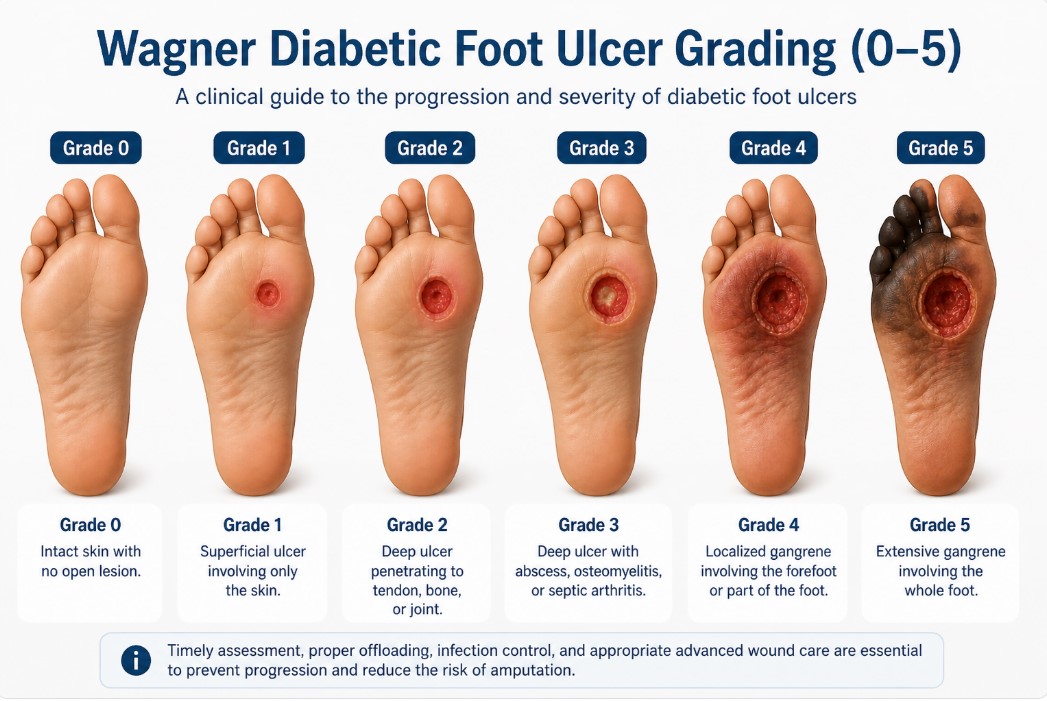
Doctors commonly describe diabetic foot ulcer stages with the Wagner classification. It grades a wound from 0 to 5 by how deep it goes and whether infection or gangrene is present. An early stage diabetic foot ulcer usually means Grade 0 or Grade 1. Some doctors also use the University of Texas system, which adds whether infection or reduced blood flow is present.
Grade 0: At-Risk Foot (Early Warning Signs)
The skin is intact, but the foot shows warning signs. These may include thick callus, a bunion, clawed toes or numbness. A diabetic foot blister, often after a long walk or new shoes, is a common starting point. A callus with dark spots inside it is another sign, as it can mean bleeding under the skin and a hidden ulcer beneath.
Cracks in dry heels and nail problems such as an ingrown toenail can also open the skin. There is no open wound yet, which makes this the most useful stage to act. Care focuses on protecting the skin, reducing pressure and checking your feet every day, including between the toes.
Grade 1: Superficial Ulcer (Early Stage Ulcer)
The skin has broken down, but the wound is shallow and limited to the surface layers. It may look like a small open sore or a red or purple patch that feels warmer than the rest of the foot. Clear or yellow fluid may stain your socks. It does not reach tendon or bone. Grade 1 ulcers are often painless, so they are easily ignored. With prompt wound care and pressure relief, many can be managed in a GP clinic.
Grade 2: Deep Ulcer
The ulcer has gone through the skin into deeper layers, such as tendon, ligament or the joint capsule (the tissue around a joint). There is no abscess or bone infection. These wounds usually take longer to heal and need regular review by a doctor.
Grade 3: Deep Ulcer With Infection
The ulcer is deep and infected. This may mean an abscess (a pocket of pus), a joint infection or osteomyelitis, which is infection of the bone. Swelling, redness, discharge, odour or fever may appear, although the signs can be subtle. A foot infection at this level needs hospital assessment.
Grade 4: Partial Gangrene
Part of the foot, often the toes or forefoot, has died because of poor blood flow or infection. Gangrene means dead tissue, which may look black, grey or dark purple. This is a medical emergency.
Grade 5: Gangrene of the Whole Foot
Gangrene affects most or all of the foot. Urgent hospital treatment is needed, which may include surgery to protect the rest of the leg and the person’s overall health.
| Wagner Grade | What You May Notice | Usual Level of Care |
|---|---|---|
| Grade 0 | Intact skin, callus, blister or numbness | Daily foot checks, footwear review, GP follow-up |
| Grade 1 | Shallow open sore, often painless | Prompt GP assessment and wound care |
| Grade 2 | Deeper sore that is slow to heal | Regular GP wound care, possible advanced wound treatment |
| Grade 3 | Pus, swelling, odour or fever | Same-day hospital care |
| Grade 4 | Black or dark skin on the toes or forefoot | Emergency Department |
| Grade 5 | Black or dark skin across the foot | Emergency Department |
Grades adapted from the Wagner classification of diabetic foot ulcers.
How Quickly Can a Diabetic Foot Ulcer Get Worse?
A diabetic foot ulcer can move to a more serious stage within days once it becomes infected, especially when blood sugar is high. A shallow ulcer that is walked on every day may also deepen over several weeks.
In diabetes, bacteria spread into deeper tissue and bone more easily because the immune response is weaker. Poor blood flow adds to the risk, because antibiotics and healing cells reach the area less easily. A foot wound that has not improved after a few days should be checked rather than watched.
How Is Each Diabetic Foot Ulcer Stage Treated?
Grades 0 to 2 can usually be managed in a GP clinic, while Grades 3 to 5 need hospital care. At every stage, diabetic foot ulcer treatment also includes blood sugar control and taking pressure off the foot. Both affect how well a wound heals.
Grade 0: Protecting an At-Risk Foot
The aim at this stage is to stop an ulcer from forming. A doctor examines the foot and treats blisters and cracks before they open. Thick callus should be trimmed by a doctor or podiatrist rather than at home. Advice on footwear and daily foot checks forms part of the visit. Reviewing blood sugar, diabetes medication and diet helps protect the skin from further damage.
Grade 1: Treating a Superficial Ulcer
A shallow ulcer is cleaned and covered with a suitable dressing, which is changed at set intervals. Dead or hard skin around the edge may be removed so the wound can heal from a clean base. This step, called debridement, is one of the minor procedures done in a GP clinic. Pressure is taken off the wound with protective footwear, padding or rest, because an ulcer that is walked on heals poorly.
The doctor also checks for signs of infection, such as spreading redness, warmth or discharge. A mild infection may be treated with oral antibiotics and close follow-up. The wound is measured at each visit to confirm it is shrinking.
Grade 2: Treating a Deep Ulcer
A deep ulcer needs the same wound cleaning, dressing, pressure relief and infection checks, with more frequent reviews. The doctor also assesses blood flow to the foot, because poor circulation slows healing. A podiatrist, who is a foot care professional, may help with custom footwear or a removable boot to offload the wound.
If a Grade 1 or 2 ulcer is slow to heal despite regular wound care, Autologous Blood Clot Therapy may be considered. “Autologous” means it uses your own blood. A small blood sample is taken from the arm and prepared into a clot, which is placed over the wound. The clot forms a protective covering over the wound. It also provides a natural fibrin framework, a mesh of protein holding blood cells, platelets and other proteins that support repair.
It is usually applied weekly alongside ongoing wound care. It is generally suitable only when blood flow is adequate and infection is under control, so a doctor assesses the wound first. At DR+, this treatment is available at our Marsiling clinic, where blood clot therapy for diabetic wounds is provided alongside ongoing diabetes care.
Grades 3 to 5: Hospital Treatment for Infection and Gangrene
Deep infection and gangrene need hospital care, usually on the same day. Treatment may include intravenous antibiotics, surgery to drain pus or remove infected or dead tissue, and procedures to restore blood flow to the leg. In severe cases, amputation may be needed to protect the rest of the leg and the person’s health.
In Singapore, hospitals such as SGH run fast-access clinics for diabetic foot ulcers that bring several teams together. A GP can refer you when needed. After discharge, a GP can continue wound dressing and blood sugar control as part of ongoing care.
Speak to a DR+ doctor in Singapore today to take the first step toward a clearer diagnosis.
Are You at Higher Risk of a Diabetic Foot Ulcer?
Some people with diabetes are more likely to develop a foot ulcer than others. ACE clinical guidance groups people into low, moderate and high risk. Moderate risk includes foot deformity, thick callus, nerve damage or peripheral arterial disease, which means narrowed arteries in the legs.
High risk includes a previous foot ulcer or amputation, severe kidney disease or dialysis, callus with bleeding underneath, or two or more moderate-risk factors. People at higher risk need their feet checked more often, so ask your doctor how often yours should be reviewed.
Smoking, many years of diabetes and poorly controlled blood sugar also raise the risk. In Singapore’s humid climate, sweaty feet in closed shoes can soften the skin, and walking barefoot can cause injuries that go unnoticed.
When Should You See a Doctor for a Diabetic Foot Wound?
See a doctor if a blister, cut, crack or sore on your foot has not improved within a few days. You should also be seen if a wound is getting larger, deeper or more painful, or if a callus has dark spots inside it. Early assessment helps confirm the stage and start suitable care sooner.
Red flags: go to the nearest Emergency Department if you have a foot wound with:
- Fever or chills
- Redness or swelling spreading quickly up the foot or leg
- Pus or a foul-smelling discharge
- Black, grey or dark purple skin on the toes or foot
- A foot that suddenly turns cold, pale or very painful
- Bone or tendon visible in the wound
For wounds without these signs, a GP can assess the wound, start diabetic wound care and arrange hospital referral if needed. No referral is required to see a doctor at DR+.
Conclusion
Diabetic foot ulcer stages range from an at-risk foot with intact skin to gangrene that needs emergency care. The early stages are often painless, which is why so many ulcers are found later than they should be. Checking your feet daily and acting on small changes can make a real difference.
If a foot wound is slow to heal, or you notice a darkened callus or other skin changes, have it assessed early. Prompt care gives more treatment options and may lower the chance of serious complications.
Book a consultation with our DR+ team.
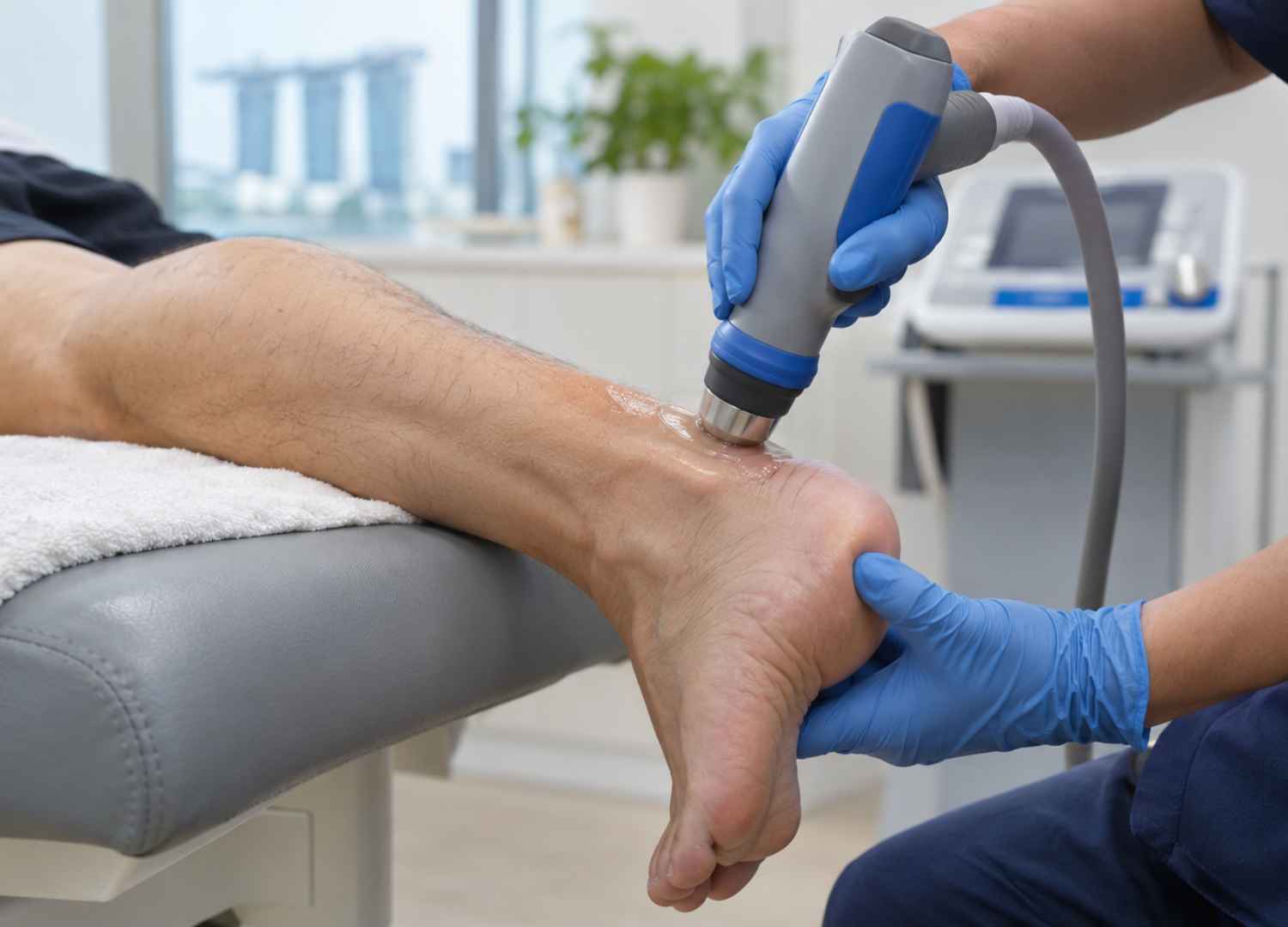
[Image: Doctor examining an early stage diabetic foot ulcer on a patient’s heel at a GP clinic]
Frequently Asked Questions
What are the stages of a diabetic foot ulcer?
Diabetic foot ulcers are commonly staged with the Wagner classification, which runs from Grade 0 to Grade 5. Grade 0 is an at-risk foot with intact skin. Grade 1 is a shallow ulcer, and Grade 2 is a deep ulcer reaching tendon or joint. Grade 3 involves deep infection such as an abscess or bone infection. Grades 4 and 5 involve gangrene of part or all of the foot.
What does the beginning of a diabetic foot ulcer look like?
The beginning of a diabetic foot ulcer may look like a blister, a small crack or a red or purple patch. It can also look like a callus with dark spots inside it. The area may feel warm or leak clear or yellow fluid that stains your socks. Because nerve damage can reduce pain, these early changes are easy to miss, so daily foot checks are important for anyone with diabetes.
How long does a diabetic foot ulcer take to heal?
Healing time depends on the ulcer’s depth, blood flow, infection and blood sugar control. A small, shallow ulcer that is treated early and kept off pressure may heal within several weeks. Deeper or infected ulcers can take months. Regular wound reviews help track progress, and treatment can be adjusted if the wound is not improving as expected.
Can a diabetic foot ulcer heal on its own?
A diabetic foot ulcer is unlikely to heal well without proper care, because diabetes slows repair and raises the risk of infection. Walking on the wound, high blood sugar and poor circulation can all make it worse. Even a small ulcer should be assessed by a doctor, who can clean and dress it, check for infection and advise on relieving pressure.
How do you know if a diabetic foot ulcer is healing?
A healing diabetic foot ulcer usually becomes smaller and shallower over time. Healthy pink or red tissue forms at its base, and there is less fluid on the dressing. Signs that it is not healing include a growing wound, a pale or dark base, more discharge, odour, spreading redness or new pain. Measuring the wound at each clinic visit gives the clearest picture of progress.
When should a diabetic foot ulcer be seen by a doctor?
Any open wound on the foot of a person with diabetes should be seen by a doctor, ideally within a few days. Seek same-day emergency care for fever, spreading redness, pus or a foul smell. The same applies to black or grey skin, or a foot that turns cold and pale. Early assessment helps identify the stage and start suitable care sooner.
What is a Wagner grade 2 ulcer?
A Wagner grade 2 ulcer is a deep diabetic foot ulcer that reaches tendon, ligament or joint capsule. There is no abscess or bone infection. It usually needs regular wound care, pressure relief and blood sugar control. If it is slow to heal, a doctor may consider advanced wound treatments after checking blood flow and infection.
About DR+ Medical & Paincare
DR+ Medical & Paincare is a network of 12 GP clinics across Singapore and part of Singapore Paincare Holdings. Our doctors provide family medicine, chronic disease management and pain care, with training under the Painostic® methodology. DR+ is a Healthier SG enrolled clinic network, and no referral is required.
Medical Disclaimer
This article is intended for general informational purposes only and does not constitute medical advice. Please consult a qualified healthcare professional for diagnosis and treatment tailored to your individual condition.
Latest Articles