
Diabetic Wound Care & Foot Ulcer Treatment
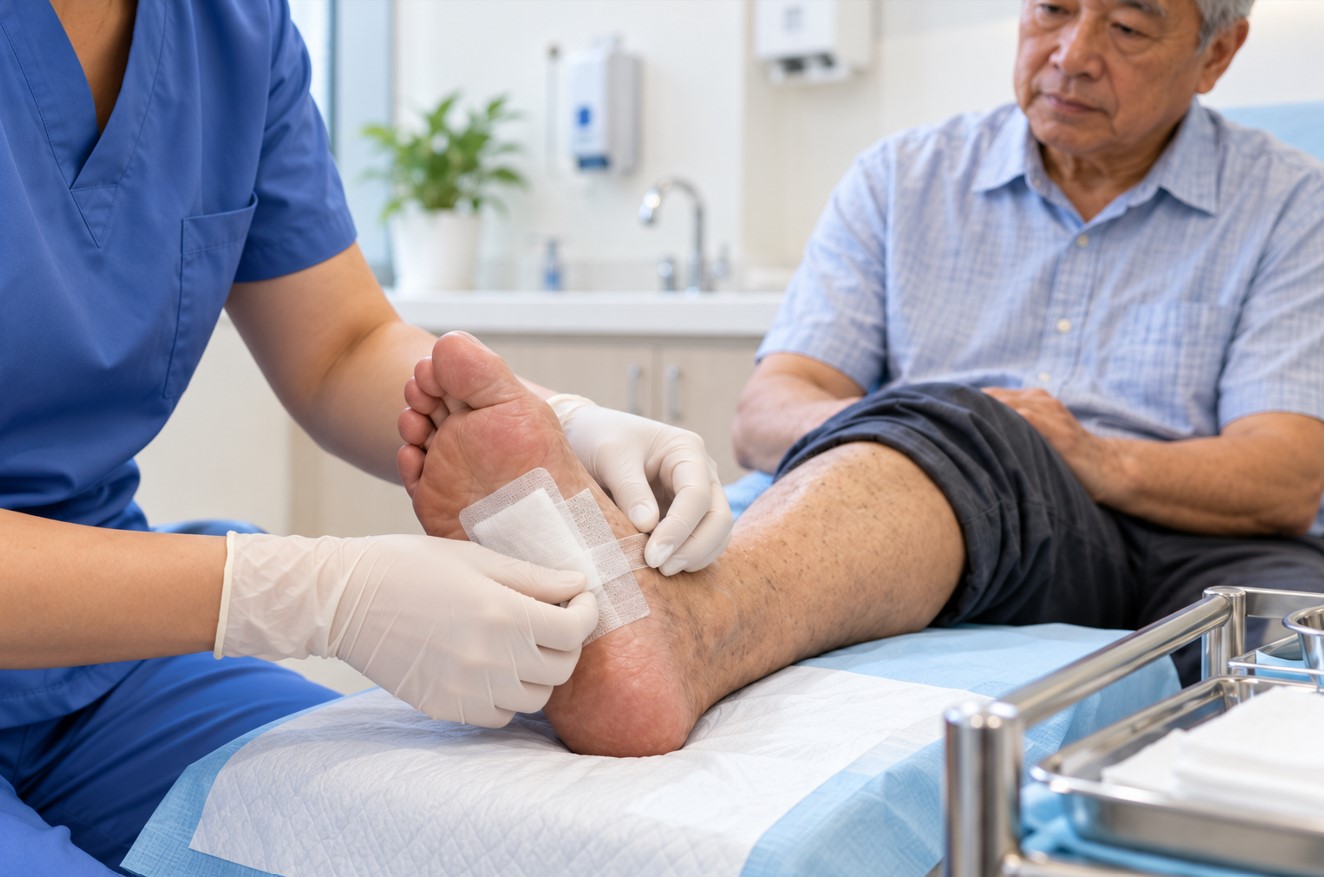
Have a diabetic wound that is taking longer to heal? At DR+, we care for diabetic wounds, from early blisters to deeper, slow-healing diabetic foot ulcers. Treatments range from routine wound care to advanced options such as autologous blood clot therapy.
Overview
Diabetes can make even small cuts, blisters and sores slow to heal, especially on the feet. Early intervention helps to reduce the risk of infection and other serious complications, including amputation, which is why a wound that is not improving should be assessed by a doctor. Diabetic wound care is the medical treatment of these wounds.
At DR+ Medical & Paincare Clinic, our doctors assess and treat diabetic wounds close to home. For wounds that are large, deep or slow to heal, we also offer autologous blood clot therapy, a treatment made from your own blood. Our doctors will advise whether it is suitable for you.
What Is Diabetic Wound?
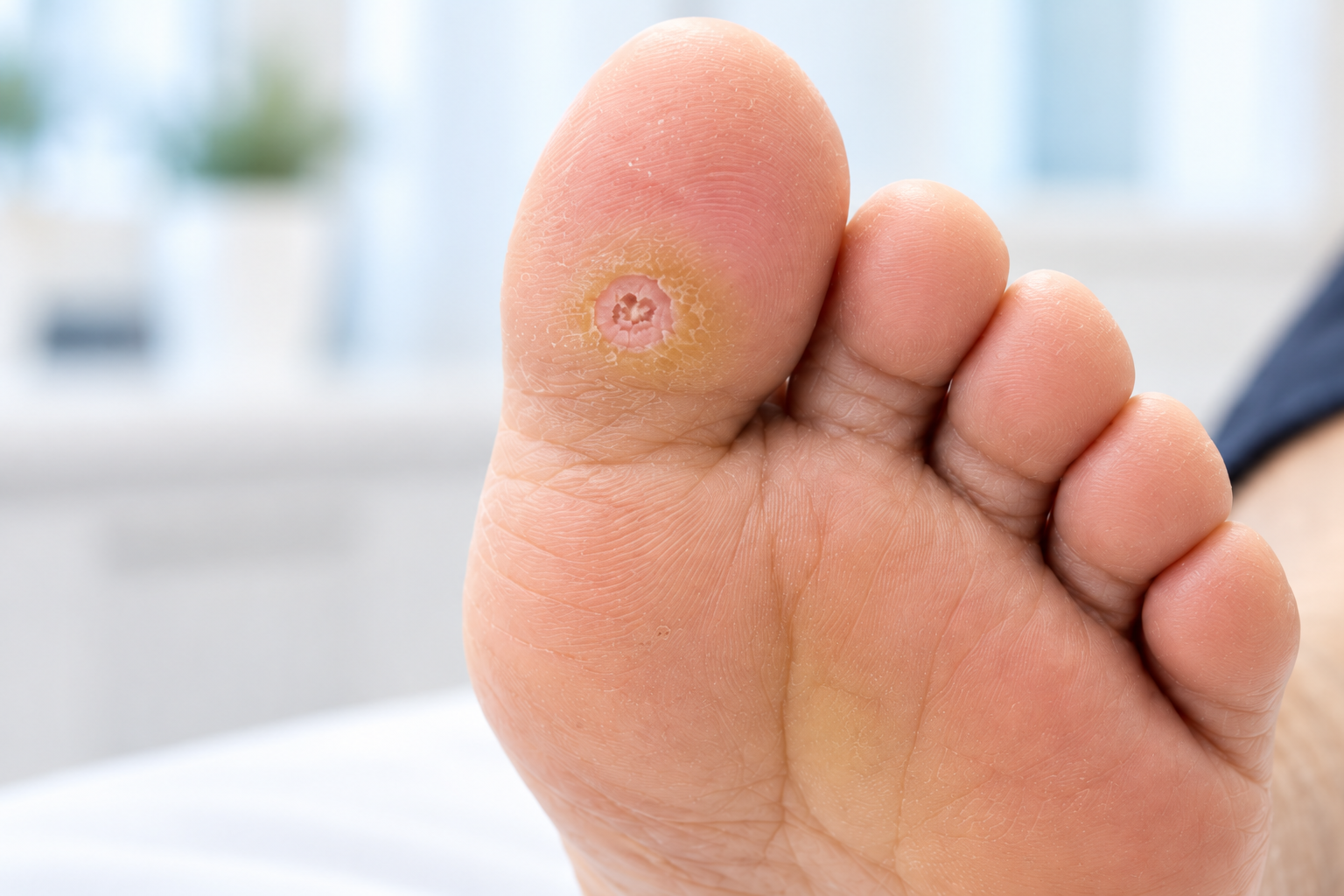
A diabetic wound is a break in the skin of a person with diabetes that heals more slowly than normal, most often on the feet. The most common type is a diabetic foot ulcer: an open sore on the sole, toes or heel that forms where nerve damage, poor blood flow and pressure combine. Without proper care, it can become infected and, in serious cases, lead to amputation.
Many diabetic wounds start small: a blister from new shoes, a crack in dry skin, a cut while trimming nails, or a callus that breaks down underneath. Because feeling in the feet is often reduced, these can go unnoticed until they are larger or infected.
| Where Diabetic Wounds Commonly Occur | Why Wounds Form Here |
|---|---|
| Ball of the Foot (Under the Toes) | Takes much of your weight when you walk, and pressure builds up, especially when feeling is reduced |
| Big Toe | Pushes off with every step and can rub against shoes |
| Heel | Bears pressure when you stand, and the skin can dry and crack |
| Tips of the Toes | May have reduced blood flow, while tight shoes can create additional pressure and friction |
| Tops of the Toes and Knuckles | Shoes rub on bent or curled toes |
| Outer Edge of the Foot | Rubbing from ill-fitting shoes or a change in foot shape |
Types of Diabetic Foot Ulcer
| Type | Main Cause | What It Usually Looks Like |
|---|---|---|
| Neuropathic Ulcer | Nerve damage, so pressure and injury go unnoticed | Often painless; under the ball of the foot or big toe; surrounded by thick callus; foot feels warm |
| Ischaemic Ulcer | Poor blood flow from narrowed arteries | Often painful; on toe tips, heel or edges of the foot; pale base; foot feels cool with weak pulses |
| Neuro-ischaemic Ulcer | Both nerve damage and poor blood flow | Mixed features; slower to heal and needs closer monitoring |
Knowing the type matters, because it decides the treatment: a neuropathic ulcer needs pressure taken off it, while an ischaemic ulcer may need blood flow restored first.
Early Warning Signs of A Diabetic Foot Ulcer
Check your feet daily, including between the toes and the soles. See a doctor promptly if you notice:
- A blister, cut or crack that has not improved in a few days
- Red, purple or darkened skin, or a spot that feels warmer than the rest of the foot
- Swelling of the foot or ankle
- Fluid or pus staining your socks
- An unusual smell from the foot
- Hard, thick skin (callus) with dark spots underneath, which can hide an ulcer
- A wound that has become larger, deeper or more painful
Red flags: go to A&E immediately
Go to the nearest Emergency Department if you have a foot wound with fever or chills, rapidly spreading redness, black or grey skin, a foul-smelling discharge, or a foot that is suddenly cold, pale and painful. These can be signs of serious infection, gangrene or blocked blood flow, which need hospital care the same day.
Noticed any of these signs?
Get your foot wound checked early. Send us an enquiry and our clinic team will get back to you.
How Are Diabetic Wounds Managed?
Diabetes can make wounds slower to heal. Reduced sensation from nerve damage can mean an injury goes unnoticed, while poor circulation and high blood sugar can affect the body’s ability to repair tissue and fight infection.
Early assessment and care help address these challenges. At DR+, diabetic wound treatment usually involves cleaning and dressing the wound, managing infection, reducing pressure on the affected area.
For diabetic ulcers that remain slow to heal despite regular wound care, doctors may consider blood clot therapy alongside ongoing care.
Advanced Wound Care for Slow-Healing Diabetic Wounds
Chronic or non-healing wounds may be associated with diabetes, poor circulation or infection. Reduced blood flow can limit the oxygen and nutrients reaching the wound, affecting the body’s ability to repair damaged tissue. When standard wound care has not led to sufficient improvement, advanced treatments may be considered as part of a personalised care plan.
Autologous Blood Clot Therapy
Autologous blood clot therapy may be considered for suitable chronic wounds, including diabetic foot ulcers, venous and arterial ulcers, and pressure ulcers, following a doctor’s assessment.
A small sample of your blood is used to prepare a clot, which is placed over the wound. It forms a protective covering and a natural fibrin framework containing blood cells, platelets and proteins that support tissue repair.
Treatment is typically applied weekly alongside ongoing wound care and management of underlying conditions, such as diabetes and poor circulation.
Benefits of Blood Clot Therapy

Uses your own blood
The clot is prepared from a small sample of your own blood, reducing the risk of allergic reactions.

Clinic-based treatment
The clot is a simple, safe and straightforward procedure prepared and applied in the clinic during the same appointment, without the need for hospital admission.

Low risk of complications
Blood clot therapy is designed to be exceptionally safe, with a low risk of complications that is identical to everyday wound care.

Part of comprehensive diabetes care
At DR+, blood clot therapy is provided alongside ongoing holistic management of your wound and diabetes.
Is blood clot therapy suitable for you?
Blood clot therapy may suit wounds that are large, deep or slow to heal, as long as blood flow is adequate and any infection is under control. Our doctors will advise whether it is right for your wound.
What to Expect During A Diabetic Wound Consultation and Blood Clot Therapy?
Assessment
Our doctor assesses the wound’s size, depth, tissue health and fluid drainage, checks for signs of infection, and evaluates blood circulation around the affected area.
Wound care tailored to you
Based on the assessment, our doctor recommends the right starting point: standard wound care alone for small, new wounds; or combining standard management with blood clot therapy for larger, slow-to-heal wounds.
Blood sugar management
Your diabetes medication and diet are reviewed as part of your overall chronic disease care to support healing from the inside out.
Blood clot therapy (if suitable):
- Clearing and Cleaning: Removing any damaged or unhealthy tissue to create a clean surface for healing.
- Drawing Blood: Collecting a small sample (about 16 to 18 ml) from your arm, just like a routine blood test.
- Forming the Clot: Using a specialized, single-use kit to solidify your blood into a protective clot.
- Applying the Protective Layer: Placing the freshly formed clot directly over the wound to provide a protective covering, with blood cells, platelets and proteins held within a natural fibrin framework to support healing.
Weekly monitoring
Your doctor reviews the wound’s progress, cleans the area and applies a fresh clot if needed, adjusting your care plan accordingly.
Dr Jeffrey Loh
DR+ Medical & Paincare Marsiling
MCR No: M10324A | MBBS (SG) |DIP. OCC. HEALTH (SG) | CERT. PRACTICAL ANDROLOGY (SG)
Dr Jeffrey Loh is a family physician at DR+ Medical & Paincare Marsiling, where he has cared for the community since 2006. His clinical interests include diabetes management, wound care and minor surgery for skin conditions and minor traumatic injuries.
Before joining DR+, Dr Loh ran minor procedure clinics at National Healthcare Group Polyclinics and worked in accident and emergency and orthopaedics. He draws on this experience to assess and treat wounds while managing underlying conditions, such as diabetes, that can affect recovery.
Dr Loh graduated in Medicine and Surgery from the National University of Singapore in 2001 and has been accredited as a Family Physician by the Singapore Medical Council since 2012.

Still have questions about your wound?
Our clinic team is happy to help. Send us your question and we will get back to you.
Why Choose DR+ Medical & Paincare for Diabetic Wound Care?

Blood clot therapy available in the clinic
For wounds that are large, deep or slow to heal, autologous blood clot therapy can be done in the clinic, often from your first visit if suitable.

No referral required
You do not need a referral to see our doctors. Walk in during opening hours or contact us to check the queue.

CHAS and Healthier SG clinic
Eligible patients may use CHAS or Healthier SG chronic subsidies, as well as MediSave, for diabetes care, within each scheme’s limits. Our team will explain what applies to you.

Integrated care
Your wound, blood sugar, medication and diet are managed together by the same doctor, as part of your ongoing chronic disease care
Our Clinics

Singapore 730018
- Mon: 8:00am – 9:00pm
- Tue – Fri: 8:00am – 4:30pm, 7:00pm – 9:00pm
- Sat: 8:00am – 12:30pm
- Sun & PH: Closed
-
Kindly note that clinic’s last registration is 15 minutes before closing time.
-
(Last registration timing – Mon: 8:45pm, Tue – Fri: 4:15pm & 8:45pm, Sat: 12:15pm)
Frequently Asked Questions
Why is my diabetic wound not healing?
Diabetic wounds often stall because diabetes alters the body’s natural repair systems. The most common obstacles include poor blood circulation, underlying infections, elevated blood sugar, and constant pressure on the area. Habits like smoking or wearing ill-fitting shoes also delay recovery. A doctor can evaluate your wound to pinpoint exactly what is holding back your healing.
What is the best treatment for a diabetic wound that won't heal?
There is no single best treatment. A non-healing diabetic wound needs cleaning and removal of dead tissue, infection control, pressure offloading and good blood sugar control. For wounds that are large, deep or not improving, advanced options such as blood clot therapy may be added, provided blood flow is adequate and infection is under control.
Does DR+ Medical & Paincare offer blood cot therapy for diabetic wounds?
Yes. At DR+ Medical & Paincare Marsiling, Dr Jeffrey Loh treats slow-healing diabetic wounds with autologous blood clot therapy, alongside general wound management. A consultation is needed to assess and prescribe a personalised wound treatment care plan.
What is blood clot therapy for diabetic wounds?
It is a treatment that uses your body’s native biological factors to help the healing of diabetic wounds. A small sample of your own blood is made into a personalized healing pad and placed on the wound as a natural protective covering to activate deep tissue repair and restart the recovery process. It is used alongside your usual wound care for wounds that are large, deep or slow to heal.
What are the risks of blood clot therapy?
As with any wound treatment, there is a small risk of irritation or infection. Most people feel only a small needle prick when blood is drawn. Our doctors check the wound at every visit.
Can blood clot therapy start on my first visit?
Yes, if our doctor determines that your wound is suitable for immediate treatment. Our doctor evaluates your wound, circulation, and infection signs during your initial assessment. If the wound bed is clean and blood flow is healthy, the therapy can be applied that same day. If infection or poor circulation is present, we prioritise treating those conditions first.
How long does a diabetic wound take to heal?
Healing may take several weeks to months, depending on the wound’s size and depth, blood circulation, infection, blood sugar control and pressure on the affected area. Your doctor will monitor your progress and review your treatment plan if the wound is not improving as expected.
How do I know if my diabetic wound is infected?
Signs of infection include increasing redness, warmth, swelling, pain, pus or a bad smell. Fever or rapidly spreading redness is an emergency and needs same-day hospital care.
How should I care for my diabetic wound at home?
- Keep the dressing clean and dry, and change it as instructed.
- Avoid walking barefoot, even at home.
- Reduce pressure on the wound and wear the footwear or boot recommended by your doctor.
- Take your medication and monitor blood sugar as advised.
- Avoid smoking, which affects blood circulation.
- Do not apply unprescribed products or use heat or sharp tools
Do I need a referral to see a doctor at DR+ Marsiling?
No referral is needed. You can walk in to DR+ Medical & Paincare Marsiling during clinic opening hours.
Can I use Medisave or CHAS for diabetic wound care?
Depending on your eligibility and the care you receive. Diabetes is one of the chronic conditions under MOH’s Chronic Disease Management Programme, so MediSave and CHAS or Healthier SG chronic subsidies may help pay for consultations, tests and medicines to manage diabetes and its complications, within each scheme’s limits. Whether a specific wound treatment can be claimed depends on the scheme rules, so our clinic team will explain what applies to you before treatment starts.
Can a family physician/ general practitioner treat a diabetic foot ulcer?
Yes. Many superficial and moderate diabetic foot ulcers can be safely managed by a family physician or general practitioner (GP) with dedicated wound care experience. However, complex conditions involving deep infections, gangrene, or poor circulation require specialized hospital or vascular care, and your GP will promptly refer you to the appropriate specialist.
Updated on 15 Oct 2026
Need Advice On Your Condition?
Please fill out the form and we will be in touch with you shortly