CONTENTS
Quick Answer:
An ingrown toenail occurs when the edge of the nail grows into the surrounding skin, causing pain, redness, swelling, and sometimes infection. In mild cases, warm water soaks and careful nail care may relieve early discomfort. However, once the nail is infected, repeatedly recurring, or causing significant pain, professional ingrown nail removal is needed. A GP doctor can assess the severity, prescribe antibiotics if infection is present, and perform a minor in-clinic procedure called nail avulsion under local anaesthesia, often in a single visit.
That familiar throbbing along the side of your big toe. You notice the skin looks redder than usual, and even the light pressure of a shoe feels unbearable. For many people in Singapore, this is the beginning of an ingrown toenail, and it often goes ignored for far longer than it should.
Ingrown toenails, medically known as onychocryptosis, are one of the most common foot conditions seen in Singapore GP clinics. They affect people of all ages, though they are particularly prevalent among adolescents and young adults, a pattern noted in research published in the Singapore Medical Journal. The warm, humid climate, long hours in enclosed footwear, and a cultural tendency to delay medical care until the pain becomes unbearable all contribute to cases that present later, and more severely, than necessary.
This article explains what causes ingrown toenails, how to recognise when home care is no longer enough, and what a GP doctor can do to help you find lasting relief, safely and conveniently, close to where you live.
Understanding Ingrown Toenails: Why the Nail Grows the Wrong Way
The toenail grows from a structure called the nail matrix, at the base of the nail, and normally tracks straight outward toward the tip of the toe. An ingrown toenail develops when the edge or corner of the nail deviates from this path and pierces the soft skin fold alongside it, called the periungual skin. The big toe is overwhelmingly the most commonly affected, as it bears the greatest mechanical load during walking and is most exposed to pressure from footwear.
Once the nail edge penetrates the skin, the body mounts an inflammatory response. The surrounding tissue swells, becomes tender, and, without intervention, can develop a bacterial infection, sometimes producing pus or the formation of granulation tissue, a soft overgrowth of healing tissue that bleeds easily. Globally, the condition has a prevalence of approximately 2.5 to 5% in the general population according to research in StatPearls (National Institutes of Health), with incidence peaking in the 11 to 30 age group and a male-to-female ratio of roughly 2 to 1.
What Causes an Ingrown Toenail?
Understanding the cause of your ingrown toenail matters because treating the nail without addressing the underlying trigger often leads to recurrence. Several factors are commonly responsible, and in Singapore’s context, a few deserve special attention.
- Incorrect nail trimming is the single most preventable cause. Cutting the nail too short, rounding the corners, or leaving a sharp spike at the edge encourages the nail to dig into the skin as it regrows. Straight-across cutting, level with the tip of the toe, is the correct technique.
- Tight or ill-fitting footwear is particularly relevant in Singapore, where school children wear enclosed canvas shoes for long hours and working adults frequently wear narrow dress shoes or heels. Footwear that compresses the toes forces the nail edge against the surrounding skin with every step.
- Trauma to the nail from stubbing the toe, having it stepped on, or repeated micro-impacts during running or contact sports can alter the nail’s growth trajectory. This is a common but underappreciated cause among younger patients and athletes.
- Genetic nail shape plays a meaningful role. Some people are born with naturally curved or fan-shaped nails that are structurally predisposed to grow inward, even with perfect nail care habits. If ingrown toenails run in your family, this may be your situation.
- Hyperhidrosis (excessive foot sweating) softens the periungual skin and makes it easier for the nail edge to penetrate. Singapore’s year-round heat and humidity compounds this effect, particularly in people who spend long hours in socks and enclosed shoes.
- Diabetes and peripheral vascular disease deserve a separate mention. Patients with these conditions have impaired wound healing and reduced sensation in the feet. An ingrown toenail that would cause pain and prompt most people to seek help early can go unnoticed in a diabetic patient until infection, or even cellulitis, has taken hold. For this group, early intervention is not just advisable, it is medically important.
Recognising the Stages: How to Interpret Your Symptoms
Ingrown toenails tend to progress through recognisable stages, and knowing which stage you are in helps guide the right response.
In the earliest stage, the toe feels tender and slightly sore at the nail edge, particularly when pressure is applied. The skin alongside the nail may look slightly pink and feel firm. At this point, home management with warm soaks and careful nail care has a reasonable chance of resolving the problem without medical intervention.
In the intermediate stage, the discomfort becomes more constant. The skin alongside the nail is visibly swollen and red, and even resting the toe against a bedsheet may be uncomfortable. Walking in closed footwear becomes difficult. This stage may or may not involve early infection, and it is generally the point at which seeing a GP is worthwhile, before the condition escalates further.
In the advanced stage, there is frank infection. Yellow or green discharge is present, the toe may feel warm, and in some cases there is an overgrowth of granulation tissue alongside the nail edge. At this stage, antibiotics are likely needed, and the ingrown nail itself will not resolve without removal. It is important to note that this symptom picture does not replace a clinical assessment. A GP examination is needed to confirm infection, assess its extent, and determine the appropriate treatment approach.
Symptoms That Signal You Need Professional Care
Most people are aware that redness and pain around the toenail suggest an ingrown nail. However, some accompanying symptoms warrant prompt attention. The following signs indicate that home care is insufficient and that you should see a GP.
Red flags that require prompt medical assessment:
- Pus or discharge from around the nail
- Spreading redness up the toe or foot (possible cellulitis)
- Fever alongside a painful swollen toe
- Granulation tissue (soft red tissue overgrowth) alongside the nail edge
- Increasing pain despite days of warm soaks
- Any ingrown toenail in a person with diabetes or poor circulation
How Is an Ingrown Toenail Diagnosed?
Diagnosing an ingrown toenail is largely clinical, meaning a GP can make the assessment through a conversation about your symptoms and a direct examination of the toe. There is no imaging or blood test required in uncomplicated cases.
During the consultation, the doctor will ask when symptoms began, how the pain has changed over time, and whether there has been any discharge. They will examine the toe visually and with gentle palpation to assess the degree of inflammation, check for infection, and evaluate the nail plate and surrounding skin folds. In patients with diabetes or circulatory concerns, the doctor may assess the foot more comprehensively, including checking sensation and skin integrity. If there is any concern about deeper infection extending to bone, or if the presentation is unusual, the GP may arrange an X-ray or refer for further specialist evaluation.
Ingrown Nail Removal in Singapore: What Your GP Can Do
The good news for most patients is that a GP is well-equipped to manage the full spectrum of ingrown toenail care, from early conservative treatment through to minor surgical removal, all within a single clinic visit in many cases.
At DR+ Medical & Paincare, our doctors are trained to assess and treat common foot conditions as part of comprehensive primary care. Here is a clear overview of the treatment pathway.
Conservative Management
For early-stage ingrown toenails without infection, conservative measures are tried first. The GP will advise warm water soaks for the affected foot two to three times daily to reduce inflammation and soften the surrounding skin. Gently pulling the skin fold away from the nail edge and securing it with a small piece of medical tape or cotton can help redirect the nail’s growth. Keeping the foot dry between soaks and wearing open-toed footwear reduces ongoing irritation. These measures require patience, but they can be effective when the nail has not yet deeply penetrated the skin.
Antibiotics for Infected Ingrown Toenails
When bacterial infection is present, the GP will prescribe a course of oral antibiotics to clear the infection before any procedure is performed. Common choices include antibiotics that cover skin-associated bacteria. Treating the infection first reduces procedural risk and may allow the acute inflammation to settle, making any subsequent nail procedure more comfortable and straightforward.
Nail Avulsion (Minor Surgical Removal)
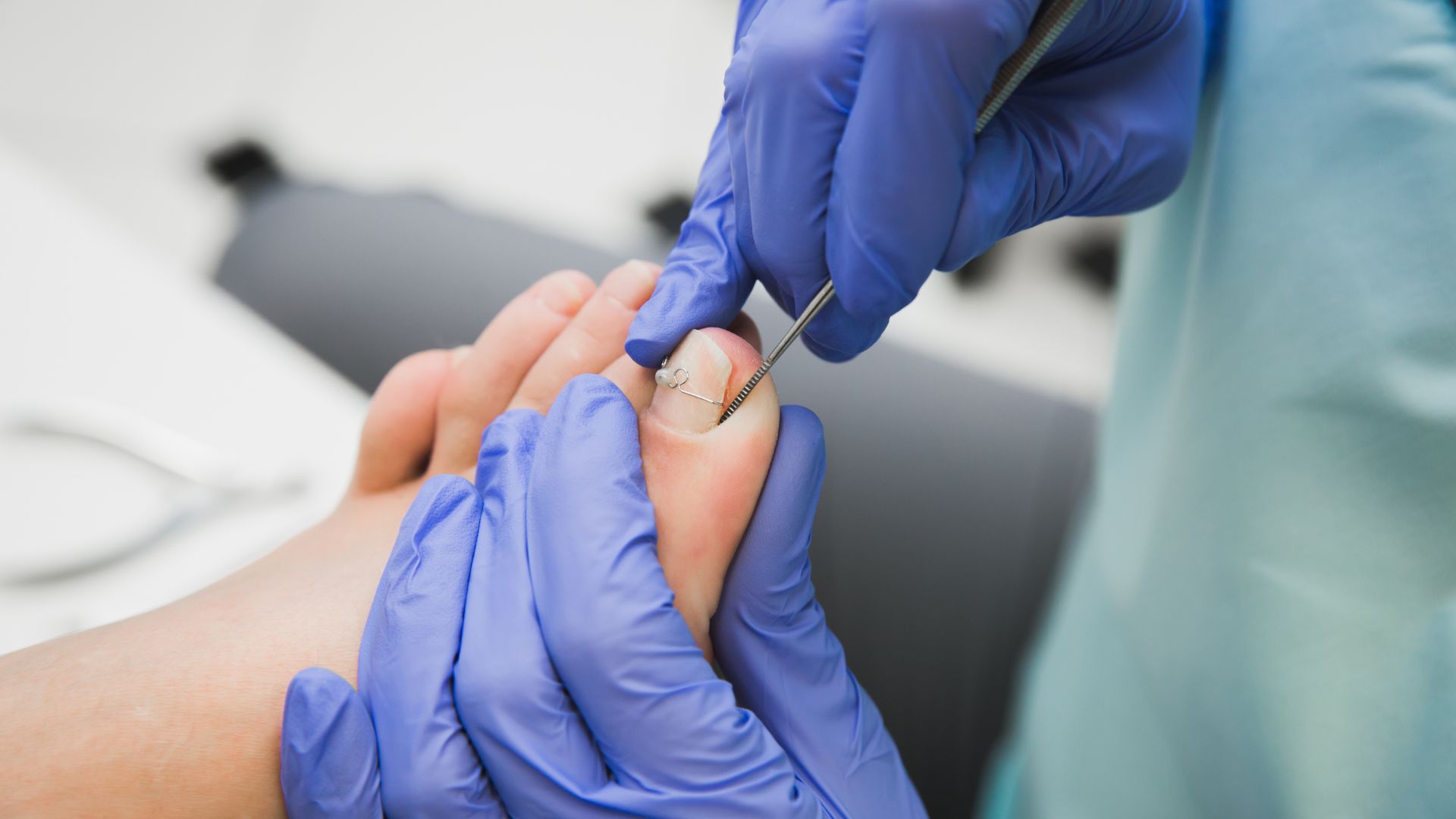
Nail avulsion is the standard in-clinic procedure for ingrown nail removal and is a routine part of GP practice. The procedure is performed under local anaesthesia, meaning an injection is given to numb the affected toe before any work begins. Once the area is fully numb, the doctor carefully removes the offending nail edge, which is the narrow strip of nail that has been growing into the skin fold. The procedure itself is brief and, with adequate anaesthesia, causes no pain. After removal, the toe is dressed, and most patients are able to walk home the same day.
For patients with recurring ingrown toenails on the same nail edge, the doctor may perform the procedure alongside a chemical treatment to prevent that portion of the nail from regrowing. This approach is called nail avulsion with matrix ablation and offers a more lasting solution for those who have experienced the problem repeatedly. Recovery typically takes three to six weeks, during which dressing changes and basic wound care are needed.
When Referral Is Appropriate
Most ingrown toenail cases can be managed fully at GP level. Referral to a podiatrist or specialist may be considered if the nail deformity is unusually complex, if there is a fungal nail disease complicating the presentation, or if advanced diabetic foot care is needed. Your DR+ doctor will advise you clearly if this applies to your situation.
For patients seeking ingrown nail removal in Singapore, DR+ offers accessible, walk-in-friendly consultations across 12 clinic locations islandwide.
Managing Ingrown Toenails Day to Day: Practical Advice
Prevention and good daily foot care go a long way in reducing the likelihood of ingrown toenails returning after treatment. Cutting the toenail straight across, following the natural shape of the nail tip without curving down at the corners, is the single most important preventive step. The nail should be trimmed to just past the end of the toe, not so short that the skin fold can override the cut edge.
Footwear choice matters more than many people appreciate. In a climate like Singapore’s, the feet spend long hours in enclosed shoes. Choosing shoes with a rounded or square toe box, rather than a pointed one, and ensuring adequate room in the toe area reduces the constant compressive force on the nail edges. Where workwear permits, alternating with open-toed footwear or sandals gives the feet regular relief.
After any nail avulsion procedure, keeping the dressing clean and dry is critical in the first week, particularly in Singapore’s heat. The GP will advise on a dressing schedule and provide guidance on when the area is safe to get wet. Swimming should be avoided until the wound is fully healed.
These are supportive measures, not substitutes for a proper diagnosis. If symptoms are present or recurring, a GP consultation is the right starting point.
When Should You See a GP in Singapore?
You do not need a referral or a specialist appointment to have an ingrown toenail assessed and treated. A GP is the appropriate first point of care for this condition, and in most cases, the problem can be resolved within one to two visits.
See a GP if the pain around your toenail has not improved after three to five days of home care, if you notice any discharge or swelling, or if you have any reason to believe the nail has broken the skin. Do not wait until infection is well established. As a general principle, the earlier the presentation, the simpler and less uncomfortable the treatment.
If you have diabetes, peripheral arterial disease, or any condition that affects wound healing or foot sensation, you should see a GP at the first sign of an ingrown toenail rather than attempting home management.
The team at DR+ Medical & Paincare is available across 12 locations in Singapore, with walk-in appointments welcome. You can also speak to one of our GP doctors about minor surgical procedures including nail avulsion during a standard consultation.
Conclusion
An ingrown toenail is a common, treatable condition, but one that worsens meaningfully when left unaddressed. Most cases can be fully managed by a GP in a single clinic visit, with local anaesthesia making the procedure comfortable. The key is not waiting until infection has taken hold. Whether you are dealing with your first episode or a recurring problem that keeps coming back, a GP consultation gives you a clear diagnosis, appropriate treatment, and the guidance to prevent it happening again.
Speak to a DR+ doctor at a location near you to take the first step toward resolving your ingrown toenail for good.
Read More: Minor Surgical Procedures
FAQ
Can an ingrown toenail go away on its own?
A very mild ingrown toenail, where the nail edge is only beginning to press against the skin and there is no infection, may resolve with warm water soaks and careful nail care over one to two weeks. However, once the nail has penetrated the skin, caused significant swelling, or become infected, it will not resolve without professional treatment. In these cases, attempting to manage the problem at home, including cutting the nail edge down, typically worsens the situation. A GP consultation is the safest and most effective approach.
Is ingrown nail removal painful?
The procedure itself is performed under local anaesthesia, which means the toe is fully numbed before any work begins. Most patients report that the anaesthetic injection causes brief discomfort, but the nail removal itself is painless. After the anaesthesia wears off, some tenderness around the treated area is normal for a few days, which can be managed with standard over-the-counter pain relief. Your doctor will advise on wound care and what to expect during recovery.
Can a GP remove an ingrown toenail, or do I need a specialist?
A GP can assess, diagnose, and perform ingrown nail removal for the majority of cases. Nail avulsion under local anaesthesia is a routine in-clinic procedure within GP practice. Referral to a podiatrist or orthopaedic surgeon is generally only considered if the nail has a complex structural deformity, there is an underlying fungal infection complicating the presentation, or the patient has significant diabetic foot disease requiring specialist wound management.
How long does recovery take after nail avulsion?
Recovery after a partial nail avulsion typically takes three to six weeks. The toe will be dressed, and dressing changes will be required at regular intervals as the wound heals. Most people can walk immediately after the procedure, though wearing open-toed footwear for the first week is advisable. Swimming and activities that risk trauma to the toe should be avoided until the area is fully healed. Your GP will guide you through the recovery process and confirm when the wound has closed properly.
What happens if an ingrown toenail is left untreated?
An untreated ingrown toenail typically progresses from localised discomfort to infection, with swelling, pus, and increasing pain. If the infection is not treated, it can spread to the surrounding tissues, potentially causing cellulitis of the toe or foot. In patients with diabetes or poor circulation, untreated infections carry a risk of serious complications including deep tissue infection. Additionally, the chronic inflammation of an untreated ingrown nail can cause granulation tissue to form alongside the nail, which complicates subsequent treatment. Seeking early care is always the better choice.
About DR+ Medical & Paincare
DR+ Medical & Paincare (pronounced Doctor Plus) is a GP clinic brand under Singapore Paincare Holdings Limited, offering comprehensive primary care and pain management services across 12 heartland locations in Singapore. Walk-ins are welcome. Visit drplus.com.sg for clinic locations and operating hours.
Medical Disclaimer
This article is intended for general informational purposes only and does not constitute medical advice. Please consult a qualified healthcare professional for diagnosis and treatment tailored to your individual condition.
Latest Articles