
Minor Surgical Procedures
Knee Aspiration in Singapore: Draining Fluid from a Swollen Knee
Swollen, painful knee? Have the fluid drained and your knee assessed at a DR+ clinic near you.
Overview
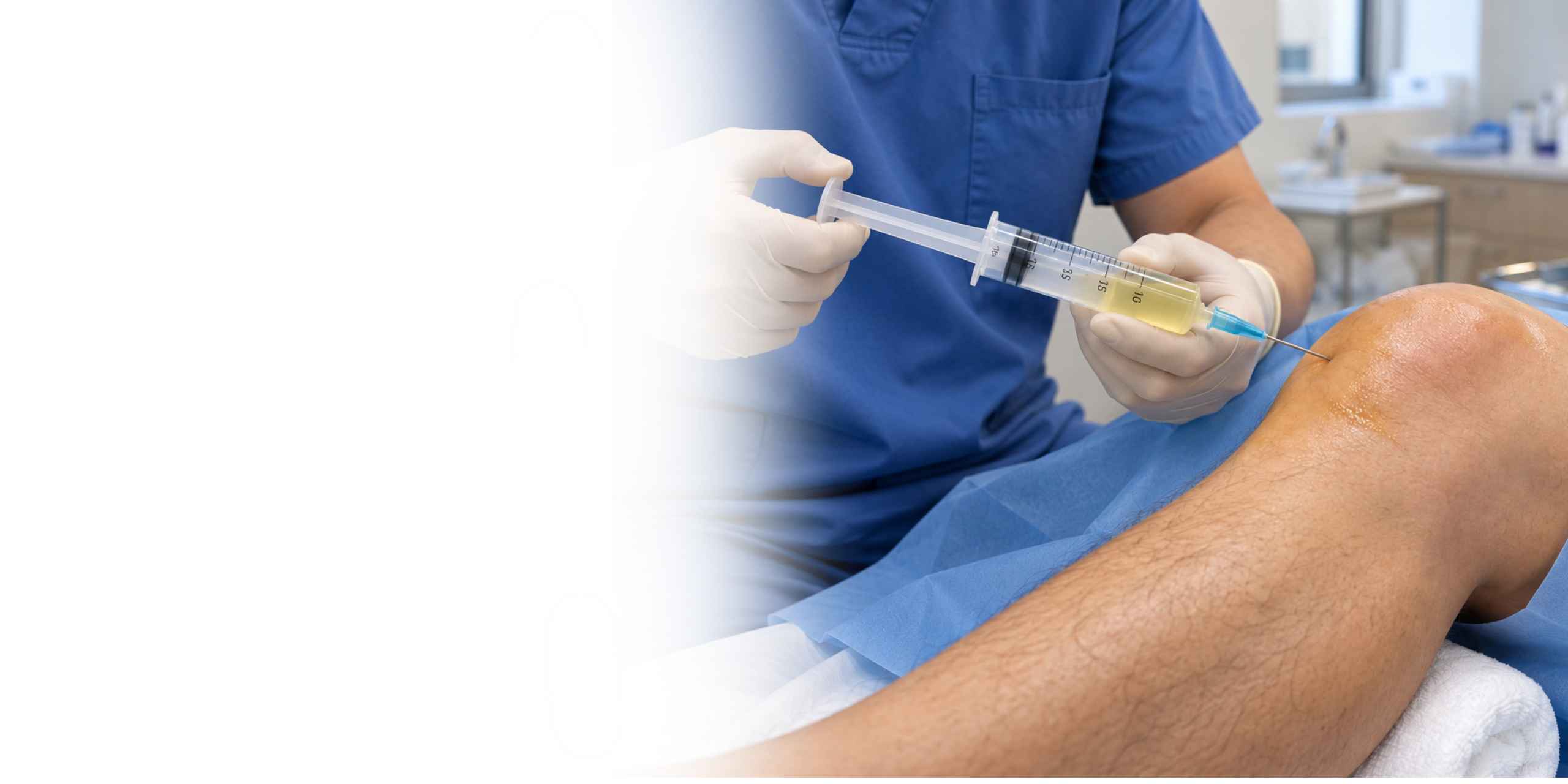
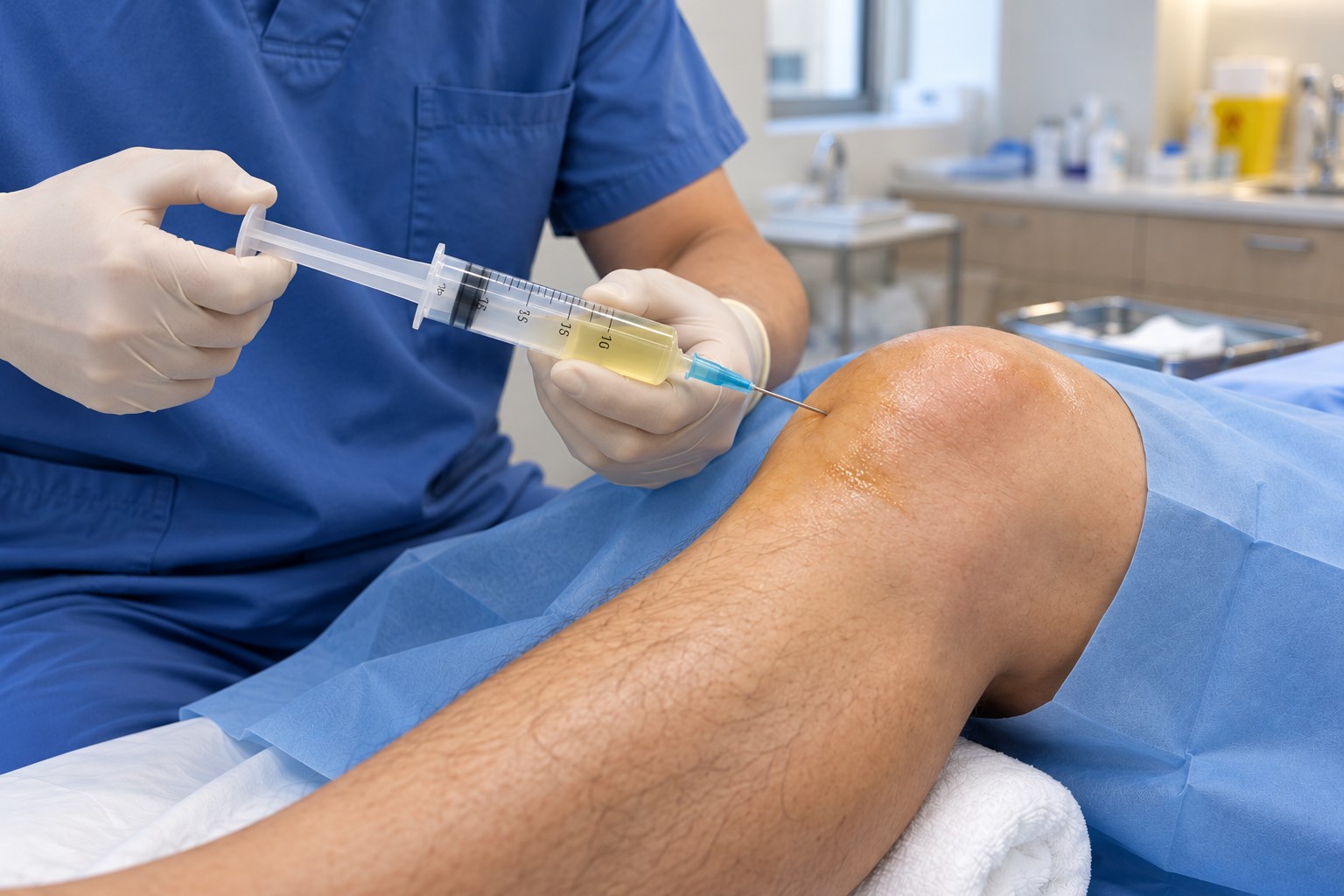
Knee aspiration, also called arthrocentesis, is a minor procedure in which a doctor uses a fine needle to remove excess fluid from a swollen knee. Draining the fluid relieves pressure and pain. Sending it for further testing can help find the cause of the swelling, such as osteoarthritis, gout, injury or infection.
At DR+ Medical & Paincare, knee aspiration is done in the clinic under local anaesthetic by GPs trained in pain management. It takes only a few minutes, and you can head home on the very same day. No appointment or referral is needed. Knee aspiration is MediSave claimable up to S$240, subject to eligibility.
What Is Knee Aspiration?
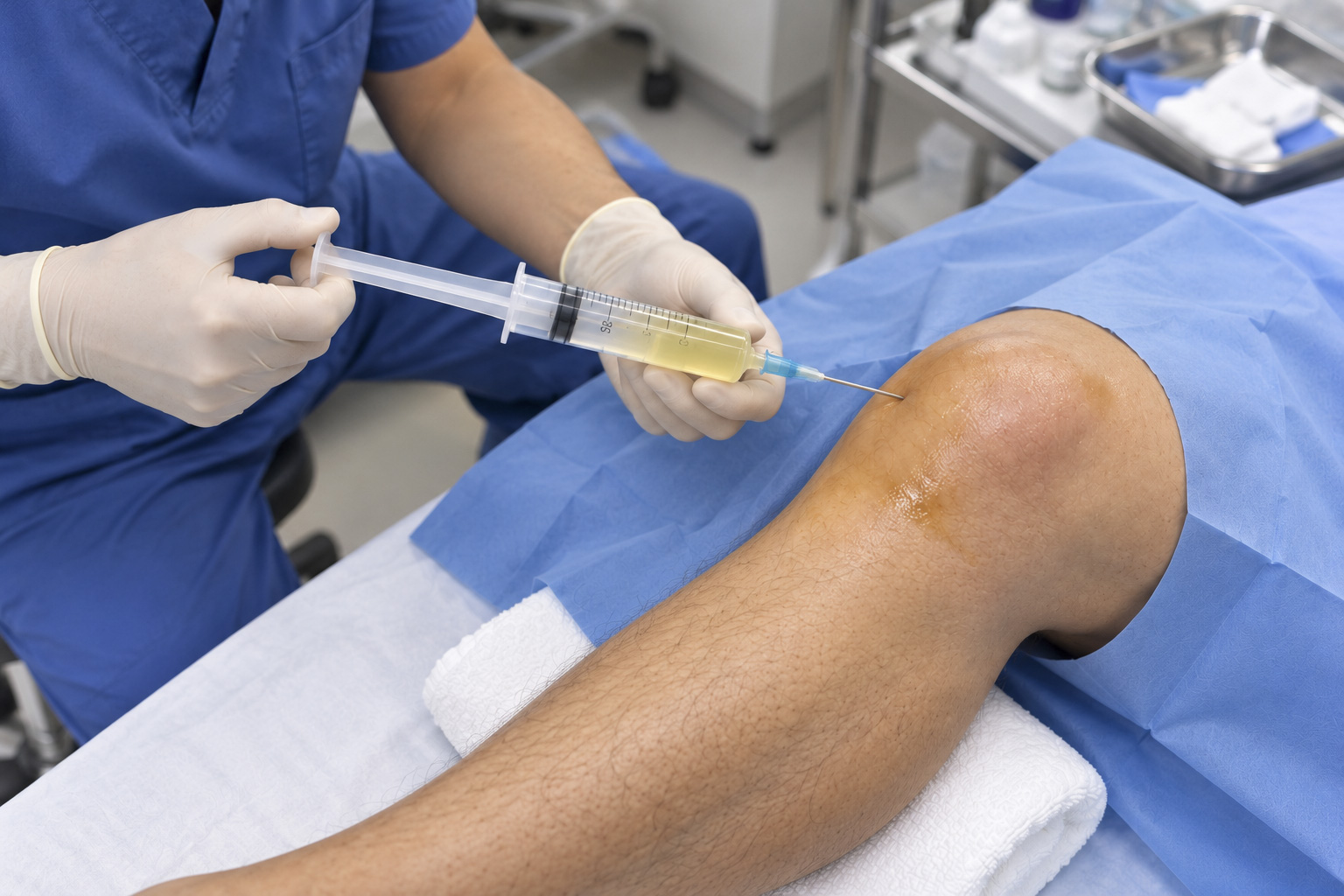
Knee aspiration, also called knee joint aspiration or arthrocentesis, uses a fine needle to draw fluid out of the knee joint.
A healthy knee contains a small amount of fluid that keeps the joint moving smoothly. When the knee is injured, worn or inflamed, it can produce too much fluid. This is called a knee effusion, often known as “water on the knee”. The extra fluid causes swelling, stiffness and pain.
Removing the fluid eases the pressure inside the joint, so you can bend and straighten your knee more comfortably.
Symptoms of Fluid on the Knee (Knee Effusion)
Fluid on the knee, or knee effusion, usually shows up as swelling, tightness and stiffness in the joint. Common signs include:
- Swelling around or above the kneecap
- A tight or heavy feeling in the knee
- Difficulty bending or straightening the leg
- Pain when climbing stairs, squatting or kneeling
- Warmth or redness over the knee
- Swelling that returns after activity
Common Causes of Fluid on the Knee
| Cause | Common Signs |
|---|---|
| Knee Osteoarthritis | Gradual swelling and stiffness, often worse after activity |
| Gout or Pseudogout | Sudden, severe pain with a hot, red and swollen knee |
| Knee Meniscus Tear or ligament injury | Swelling within hours of a twisting or sports injury; the knee may feel unstable or locked in place |
| Bursitis | Swelling at the front of the knee, often from frequent kneeling |
| Inflammatory Arthritis, such as rheumatoid arthritis | Swelling in more than one joint, with morning stiffness |
| Joint Infection | A hot, very painful knee, sometimes with fever. This needs emergency medical assessment. |
Warning Signs: When a Swollen Knee Needs A&E Care
Most swollen knees can be assessed at a GP clinic. Go to the nearest Emergency Department if you have:
- A hot, red, swollen knee with fever or chills
- Swelling after a fall, accident or major injury, especially if you cannot put weight on the leg
- A visibly deformed knee, or a knee that is locked and cannot move
- Pain, redness or swelling in the calf
- Swelling in a knee replacement. Contact your orthopaedic surgeon, as replaced joints are managed by the surgical team.
Meet Dr Farah Khairi
DR+ Medical & Paincare Telok Blangah
MCR No: M63471I | MB BCh BAO (Ireland) | BCLS | ACLS
Dr Farah’s previous clinical rotations included General Surgery, Plastic Surgery, and Hand & Reconstructive Microsurgery. She is trained in the Painostic® methodology and assesses patients with knee pain and swelling to determine whether knee aspiration is suitable.

Knee Aspiration Procedure at DR+: Step by Step
Assessment
Your doctor reviews your symptoms, medical history and current medications, and examines your knee. Let your doctor know if you take blood thinners, have diabetes, or have any allergies.
Locating the fluid
You lie on the couch with your knee supported.
Cleaning and numbing
The skin is cleaned with antiseptic. A local anaesthetic is given to numb the area.
Draining the fluid
A fine sterile needle is inserted into the joint, usually at the side of the kneecap. The fluid is drawn out with a syringe. You may feel some pressure, and most patients feel relief as the swelling goes down.
Intra-articular injection (if recommended)
Draining the knee removes the fluid, but the inflammation that caused it may still be present. If suitable, your doctor may recommend an intra-articular injection, one of our Myospan specialised injections. It is given through the same needle entry, so no extra puncture is needed. With the fluid removed, the medication is delivered directly into the joint:
- Anti-inflammatory agents reduce inflammation in the joint lining, easing pain and swelling.
- Viscosupplements (hyaluronic acid) are a gel-like fluid that helps restore the lubrication of a healthy joint. They are commonly used for knee osteoarthritis.
Your doctor will explain whether an injection is suitable before proceeding. If an infection is suspected, no injection will be given until the fluid results are back.
Dressing and going home
A small plaster is applied over the needle site. With little to no downtime, you can head home on the very same day. If your fluid is sent for testing, we will inform you when the results are ready and arrange a follow-up review to discuss the cause and next steps.
Knee Aspiration Aftercare and Recovery: What to Do in the First 48 Hours
You can return to light daily activities straight after the procedure. For the first 48 hours:
- Rest: walking is fine, but avoid running, sports, squatting and heavy lifting.
- Ice: apply a cold pack wrapped in a cloth for 15 to 20 minutes at a time.
- Elevate: rest your leg on a cushion or stool when sitting.
- Plaster: keep it clean and dry. Then remove it after 24 hours.
- Pain relief: take medication as advised by your doctor.
- If you had an anti-inflammatory (corticosteroid) injection and have diabetes, monitor your blood sugar more closely for a few days, as it may rise.
Return to the clinic or seek medical care urgently if you develop fever, increasing redness, warmth or swelling, severe pain, or pus at the needle site.
After Knee Aspiration: Finding and Treating the Cause of the Swelling
Knee aspiration removes the fluid that has built up, but it does not treat the cause on its own. Your doctor will look at the fluid and, where needed, send it for laboratory testing, for example, if gout, inflammatory arthritis or infection is suspected, or the cause is unclear. This helps your doctor understand what is causing the swelling, and plan treatment to reduce the chance of it coming back.
What your knee fluid can show
The appearance of the fluid gives your doctor early clues. If laboratory tests are needed, they help confirm the cause. Results usually take a few working days; tests for infection may take longer.
| Fluid Appearance | What It May Indicate | What Happens Next |
|---|---|---|
| Clear, Pale Yellow | Osteoarthritis or a mild injury | Pain relief, strengthening exercises, physiotherapy, or an intra-articular injection |
| Cloudy Yellow | Inflammation, such as gout, pseudogout or inflammatory arthritis | Medication to control the flare and prevent future attacks; referral to a rheumatology specialist if needed |
| Thick, Cloudy or Pus-like | Possible joint infection | Urgent referral to hospital for assessment and treatment |
| Red or Blood-stained | Injury inside the joint, such as a ligament or meniscus tear, or bleeding related to blood thinners | Further imaging and referral to an orthopaedic specialist if needed |
Will the swelling come back?
This depends on the cause:
- Minor injury or flare: the swelling often settles as the knee heals.
- Osteoarthritis or gout: fluid can build up again if the condition is not managed.
At your follow-up review, your doctor will go through your results and your treatment plan with you. If the swelling keeps returning, we can refer you to Singapore Paincare Center or an orthopaedic or rheumatology specialist.
Get Your Swollen Knee Checked Today
Have the fluid drained and the cause assessed in one visit at a DR+ clinic near you.
Who Is Suitable for Knee Aspiration?
Knee aspiration may be suitable for you if you have a swollen knee caused by fluid in the joint, and:
- The swelling is making your knee tight, stiff or painful to bend
- Your doctor needs to find out the cause, such as gout, osteoarthritis or an injury
- The swelling keeps coming back after activity
- An intra-articular injection is being considered to ease inflammation
Before the procedure, your doctor will check that knee aspiration is right for you. Do let your doctor know if you have a skin infection over the knee, a bleeding disorder, or take blood thinners. Please do not stop any blood thinners without medical advice.
Is knee aspiration safe?
Knee aspiration is a low-risk procedure done under sterile conditions. Some patients may notice mild, short-lived effects such as:
- Mild soreness, bruising or minor bleeding at the needle site
- Return of swelling
- A short flare of pain for a day or two after an injection
- Joint infection, which is rare as the procedure is done under sterile conditions
- Allergic reaction to the antiseptic or anaesthetic (uncommon)
Knee Aspiration Cost in Singapore
Knee aspiration at DR+ starts from S$240, including local anaesthetic and dressing. Consultation, laboratory tests and any injection are charged separately.
Note: The fee is based on DR+ Telok Blangah rates and may differ at other clinics
Is Knee Aspiration Medisave-Claimable?
| Procedure | MOH Procedure Code (TOSP) | MediSave Limit |
|---|---|---|
| Knee Aspiration (Arthrocentesis) | SB745J (Table 1A) | Up to S$240* |
| Aspiration of Blood After Acute Knee Injury | SB702K | Not MediSave claimable |
* MediSave claims are subject to eligibility and applicable CPF withdrawal limits. Our clinic team can assist in checking your MediSave eligibility. For company or personal insurance claims, please check your coverage with your insurance provider.
Why Choose DR+ Medical & Paincare for Abscess Drainage?

Treated in one visit
Assessment, aspiration and, if suitable, an intra-articular injection can be done on the same visit.

Pain-trained GPs
Every DR+ GP is trained by the Singapore Paincare Academy in the Painostic® methodology, Singapore Paincare’s approach to pain assessment, diagnosis and treatment planning.

12 clinics islandwide.
DR+ clinics are located in residential estates across Singapore.

No appointment or referral needed
Walk-in to any DR+ clinic during opening hours.
Our Clinics

Singapore 730018
- Mon: 8:00am – 9:00pm
- Tue – Fri: 8:00am – 4:30pm, 7:00pm – 9:00pm
- Sat: 8:00am – 12:30pm
- Sun & PH: Closed
-
Kindly note that clinic’s last registration is 15 minutes before closing time.
-
(Last registration timing – Mon: 8:45pm, Tue – Fri: 4:15pm & 8:45pm, Sat: 12:15pm)
988 Upper Serangoon Rd, Singapore 534733
- Mon to Fri: 8:30am – 2:30pm, 6:00pm – 10:00pm
- Sat & Sun: 8:30am – 12:30pm
- PH: Closed
-
(Kindly note that clinic’s last registration is 15 minutes before closing time.)
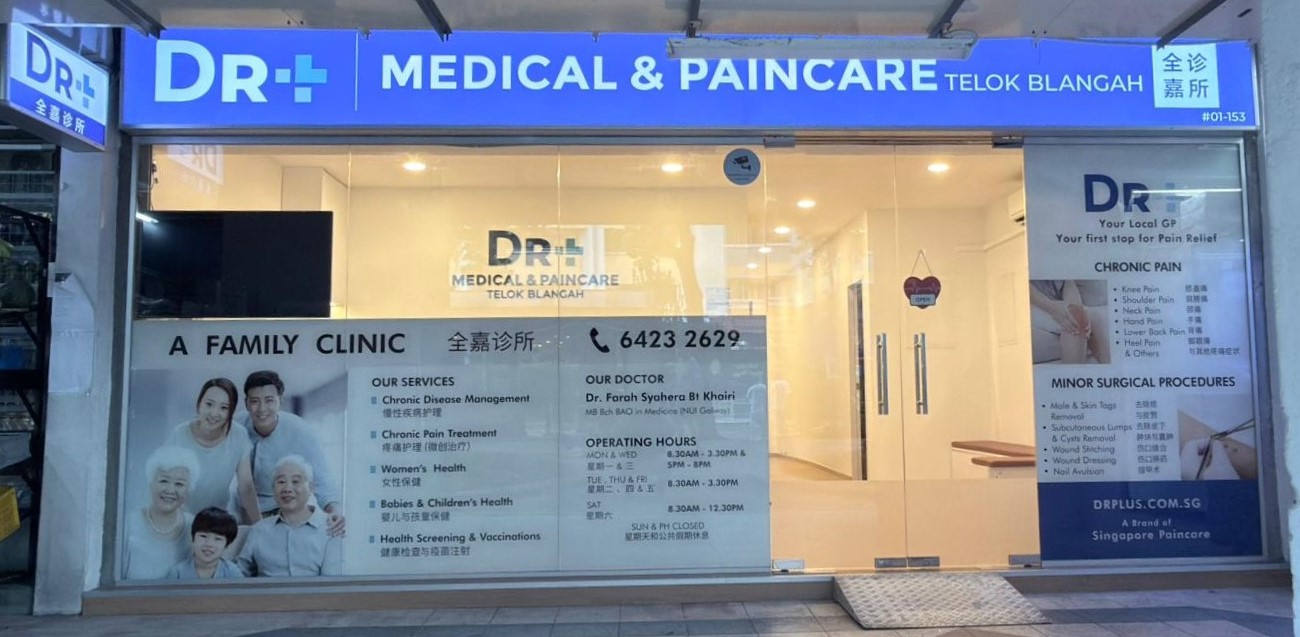
- Mon & Wed: 8:30am – 3:30pm, 5pm – 8pm
- Tue , Thu & Fri: 8:30am – 3:30pm
- Sat: 8:30am – 12:30pm
- Closed on Sun & PH
-
(Kindly note that clinic’s last registration is 15 minutes before closing time.)

- Mon, Wed & Fri: 8:30am – 12:30pm, 1:30pm – 4:30pm, 6:00pm – 9:00pm
- Tue & Thu: 8:30am – 12:30pm, 1:30pm – 4:30pm
- Sat: 8:30am – 12:30pm
- Closed on Sun & PH
-
(Kindly note that clinic’s last registration is 15 minutes before closing time.)
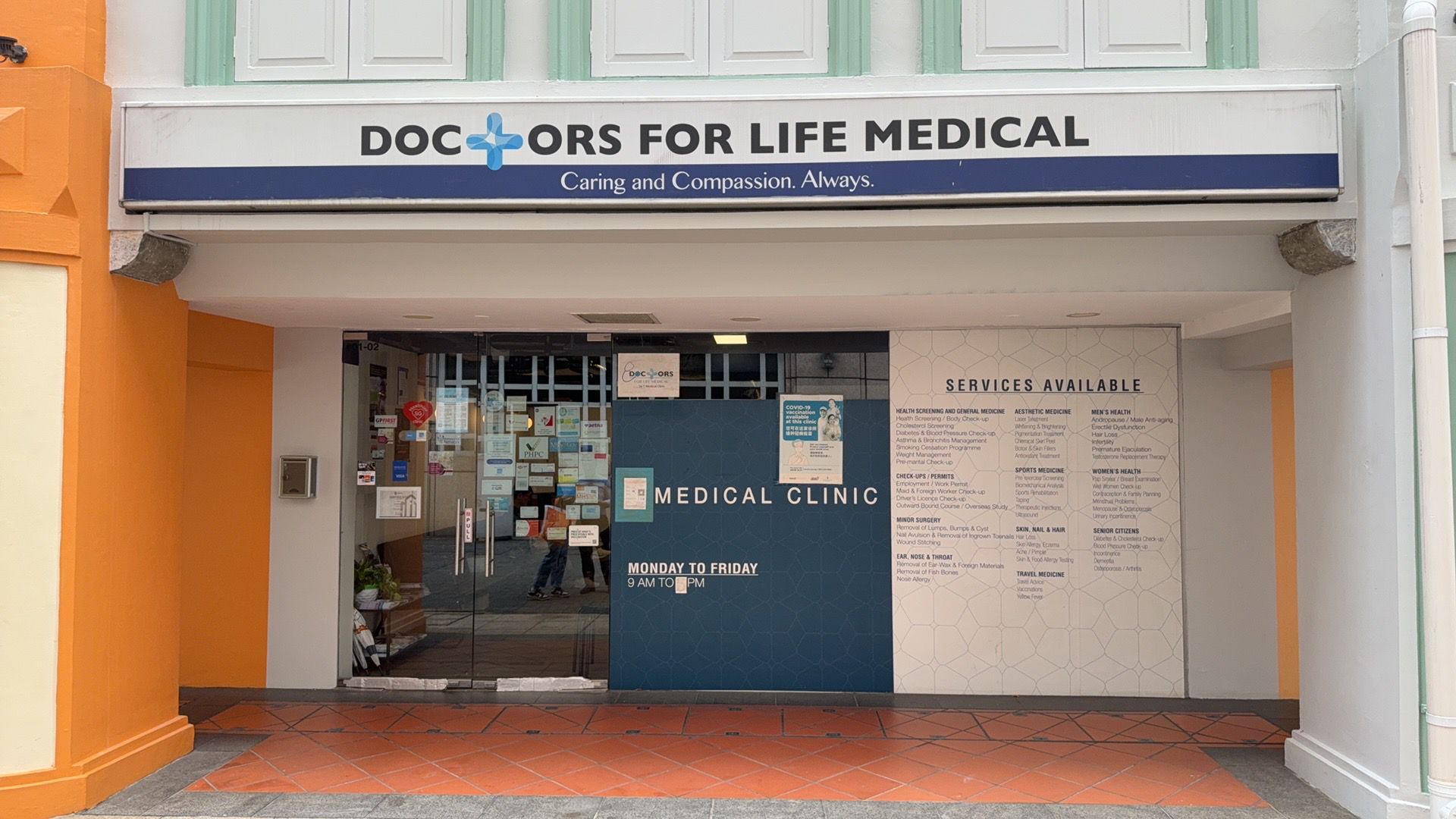
- Mon – Fri: 9:00 am–5:30 pm
- Closed on Sat, Sun & PH
-
(Kindly note that clinic’s last registration is 15 minutes before closing time.)

Singapore 640221
- Mon to Fri: 8:00am – 4:00pm
- Sat: 8:00am – 12:00pm
Sun: Closed - PH: Closed
-
(Kindly note that clinic’s last registration is 15 minutes before closing time.)
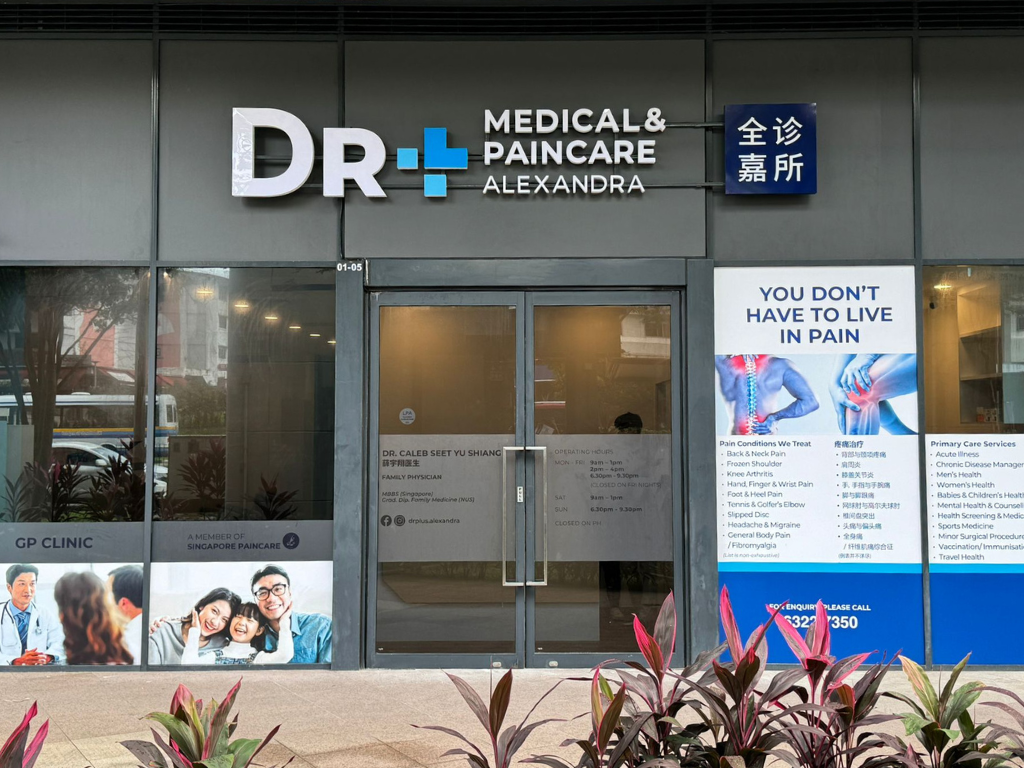
- Mon & Tue: 9am to 1pm, 2pm to 4pm, 6:30pm to 9:30pm
- Wed, Thu & Fri: 9am to 1pm, 2pm to 5pm
- Sat: 9am to 1pm
- Closed on Sun & PH
-
(Kindly note that clinic’s last registration is 15 minutes before closing time.)

#01-54 The Midtown, Singapore 533971
- Mon & Tue: 8:00am – 12:30pm, 1:30pm – 5:00pm, 6:00pm – 9:00pm
- Wed: 8:00am – 12:30pm, 6:00pm – 9:00pm
- Thu: 8:00am – 12:30pm, 1:30pm – 5:00pm
- Fri: 8:00am – 12:30pm, 6:00pm – 9:00pm
- Sat: 8:00am – 12:00pm
- Sun & PH: Closed
(Kindly note that clinic’s last registration is 15 minutes before closing time.)

Thomson Imperial Court, Singapore 574424
- Mon to Wed: 8:30am – 10:00pm
- Thu: 8:30am – 3:00pm, 6:00pm-9:30pm
- Fri: 8:30am – 6:00pm
- Sat & Sun: 9:00am – 3:00pm
- PH: Closed
-
(Kindly note that clinic’s last registration is 15 minutes before closing time.)
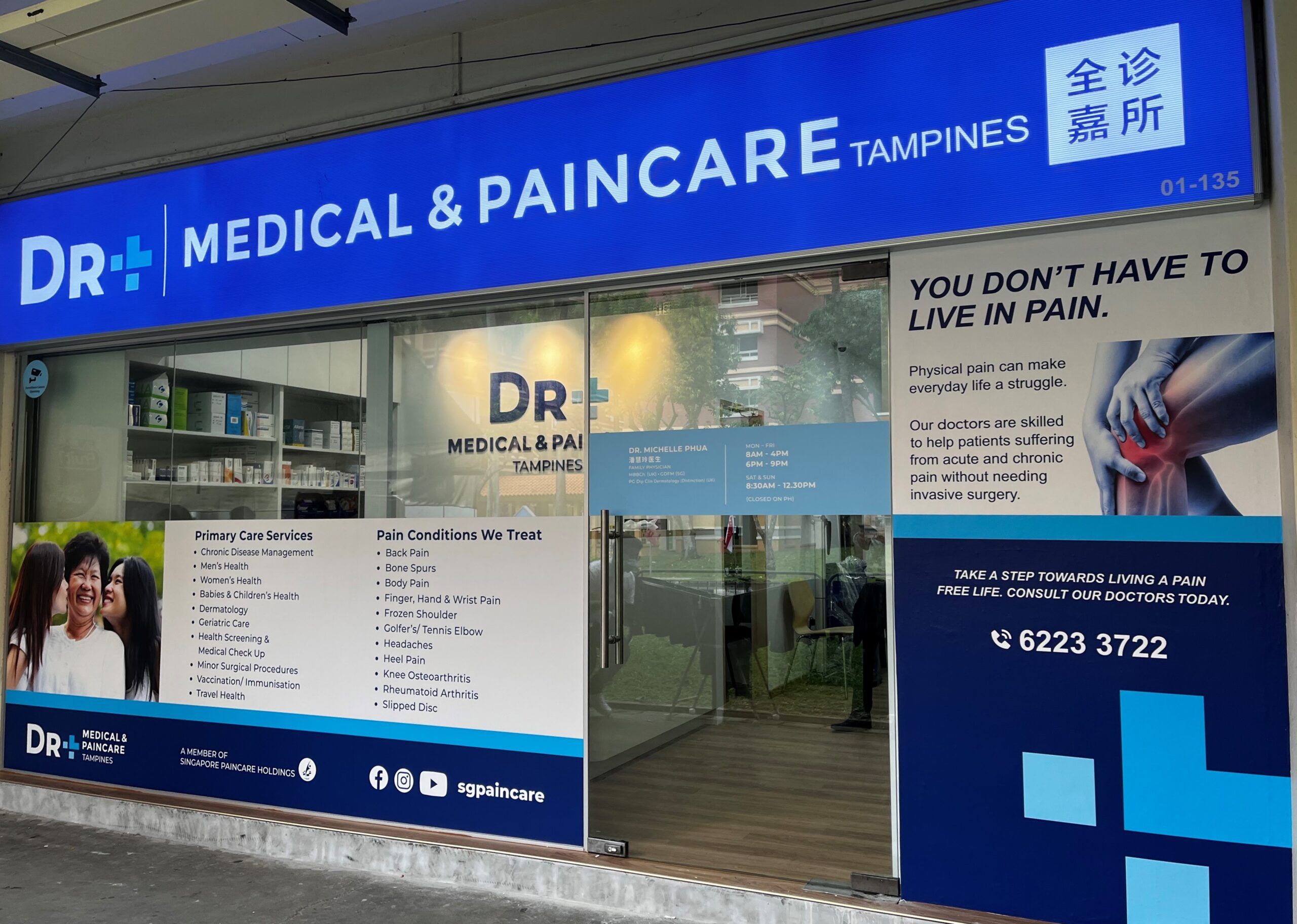
Singapore 520844
- Mon, Tue, Thu, Fri: 8:00am – 4:00pm
- Wed: 8:00am – 4:00pm, 6:00pm – 9:00pm
- Sat: 8:30am – 12:30pm
- Sun & PH: Closed
-
-
(Our clinic is open during lunch hours)
#01-95, Singapore 570121
- Mon, Wed, Thu & Fri: 8:00am – 5:00pm, 6:00pm – 9:00pm
- Tue: 8:00am – 5:00pm
- Sat & Sun: 8:00am – 1:00pm
- PH: Closed
-
(Kindly note that clinic’s last registration is 15 minutes before closing time but may close earlier if the queue is unusually long.)
- Mon: 8:00am – 2:00pm, 6:00pm – 9:00pm
- Tue & Wed: 8:00am – 3:00pm
- Thu: 8:00am – 3:00pm, 6:00pm – 9:00pm
- Fri: 8:00am – 2:00pm
- Sat: 8:00am – 12:00pm
- Sun: 10:00am – 1:00pm
- PH: Closed
Frequently Asked Questions
What is knee aspiration?
Knee aspiration is a minor procedure that uses a fine needle to drain excess fluid from a swollen knee joint. It relieves pressure and pain, and the fluid can be tested to find the cause of the swelling. It is also called arthrocentesis or knee joint aspiration.
How long does knee aspiration take?
Knee aspiration itself takes a few minutes. Including assessment, preparation and dressing, the clinic visit usually takes about 20 to 30 minutes, and you can go home the same day.
Does knee aspiration hurt?
Knee aspiration is done under local anaesthetic, so most patients feel only a brief sting and some pressure during drainage. Many feel relief afterwards as the swelling goes down. Mild soreness for a day or two is normal.
How should I prepare for knee aspiration?
To prepare for knee aspiration, wear shorts or loose pants that can be rolled above the knee. Bring a list of your medications, including blood thinners and supplements, and any previous knee X-ray or scan reports. No fasting is needed.
Will the fluid come back after knee aspiration?
Knee fluid may come back, depending on the cause. Swelling from a minor injury often settles as the knee heals, while osteoarthritis or gout can cause fluid to build up again if not treated. Checking the fluid, and testing it where needed, helps your doctor choose the right treatment.
Can I walk after knee aspiration?
Yes, you can walk straight after knee aspiration and resume light daily activities. Avoid sports, running, squatting and heavy lifting for 24 to 48 hours to help the knee settle.
Can I drive after knee aspiration?
Most patients can drive after knee aspiration if the knee feels comfortable and they can brake safely. If your knee feels numb or unsteady, arrange for someone to drive you home.
Can a GP do knee aspiration in Singapore?
Yes, knee aspiration is a common outpatient procedure that a trained GP can do in clinic. At DR+, every GP is trained in the Painostic® methodology by the Singapore Paincare Academy, and patients who need further care are referred to a specialist.
Will the abscess come back after it is drained?
Most abscesses heal fully after drainage. Some come back, especially infected cysts, pilonidal abscesses, and abscesses in people with diabetes or hidradenitis suppurativa. Treating the underlying cause lowers the risk.
How much does knee aspiration cost in Singapore?
At DR+, knee aspiration starts from S$240, including local anaesthetic and dressing; consultation, lab tests and any injection are charged separately.
Is knee aspiration claimable under MediSave?
Yes, knee aspiration is MediSave claimable up to S$240, subject to eligibility. It is listed in the MOH Table of Surgical Procedures as SB745J (Table 1A). Aspiration of blood after an acute knee injury (SB702K) is not MediSave claimable.
Why would I need an injection after my knee is drained?
An injection after knee aspiration treats the inflammation that caused the fluid, which draining alone does not remove. An intra-articular injection of anti-inflammatory agents or hyaluronic acid delivers medication directly into the joint. Your doctor will advise if it is suitable.
How often can knee aspiration be done?
Knee aspiration can be repeated if fluid builds up again. Frequent swelling means the underlying cause needs further review, and your doctor may recommend more tests or a specialist referral.
Is knee aspiration safe?
Knee aspiration is a low-risk procedure done under sterile conditions. Side effects such as soreness or bruising are usually mild, and joint infection is rare. Tell your doctor if you take blood thinners or have a skin infection over the knee.
Updated on 21 Oct 2026; Medically reviewed by Dr. Farah Khairi, MB BCh BAO (Ireland) | BCLS | ACLS
Need Advice On Your Condition?
Please fill out the form and we will be in touch with you shortly