
HPV Vaccine in Singapore
Help protect yourself or your child from cervical cancer and other HPV-related cancers. The HPV vaccine works most effectively when given early. Speak to a DR+ doctor about the right time for you or your child. No referral required.

overview
The HPV vaccine helps protect against the virus types that cause most cervical cancers, other HPV-related cancers and genital warts.
Two vaccines are available in Singapore: HPV2 and HPV9. HPV2 is subsidised for eligible females aged 9 to 26, and HPV9 will be subsidised from 1 January 2027. DR+ offers both vaccines at selected clinics, with no referral required.
What Is HPV?
HPV (human papillomavirus) is a common infection that spreads through close skin-to-skin contact during sexual activity, including vaginal, anal and oral sex. Most sexually active people will be infected at some point in their lives. As most infections cause no symptoms, many people are unaware that they carry the virus and may pass it to others.
There are many types of HPV. Most HPV infections are cleared naturally by the body’s immune system within one to two years, without causing any health problems. A small number of high-risk types can stay in the body for years and cause abnormal changes in cells. Over time, these changes may develop into cancer of the cervix, anus, throat, penis, vulva or vagina. Other, low-risk types cause genital warts.
Why Is the HPV Vaccine Important?
The HPV vaccine helps prevent infection with the high-risk HPV types that cause most cervical cancers, as well as other HPV-related cancers. It should ideally be given before any exposure to HPV, which is why it is recommended from age 9.
Two HPV vaccines are available in Singapore:
- HPV2 (Cervarix): Protects against the 2 high-risk types that cause about 70% of all cervical cancers. It is registered for use in females.
- HPV9 (Gardasil 9): Protects against seven high-risk HPV types associated with about 90% of cervical cancers, and HPV types 6 and 11, which cause most genital warts. It is registered for females and males aged 9 to 45.
Who Should Get the HPV Vaccine in Singapore?
Females aged 9 to 26
HPV vaccination is recommended for this age group. It is offered to Secondary 1 and 2 female students through the school-based HPV vaccination programme. Those who missed it may receive the vaccine at a GP clinic. The vaccine is most effective when given before any sexual contact. However, it is still recommended for those who are already sexually active, as they may not have been exposed to every HPV type the vaccine covers.
Females aged 27 to 45
Vaccination may still offer some benefit, particularly for those with limited previous exposure to HPV. Our doctor will review your medical history to determine whether vaccination is suitable.
Males aged 9 to 45
The HPV9 vaccine is registered for males aged 9 to 45 in Singapore. It helps prevent vaccine-type HPV infections and associated conditions, including anal cancer and genital warts.
Not sure if the HPV vaccine is right for you?
Our doctors can review your age, history and health, and advise on the right time to start.
How Much Does the HPV Vaccine Cost at DR+?
At DR+ East Coast, the HPV9 vaccine costs $250 per dose before GST . Prices at other DR+ clinics may differ, please check with your preferred clinic.
Note: This is the price without government subsidies.
HPV Vaccine Subsidies in Singapore (2027 Update)
The HPV vaccine is part of Singapore’s national immunisation schedules for children and adults. Eligible Singaporean females aged 9 to 26 can receive government subsidies for the HPV2 vaccine at CHAS GP clinics and polyclinics. Full subsidies apply to those aged 9 to 17. Those aged 18 to 26 receive partial subsidies, which are means-tested (based on household income).
From 1 January 2027, the HPV9 vaccine, also known as Gardasil 9, will be added to these schedules and subsidised for the same groups. HPV2 will remain available as an alternative. Adults aged 18 to 26 will receive means-tested subsidies of up to 75% (MOH).
| Eligible Group | Available Subsidies |
|---|---|
| Singaporean Females Aged 9 to 17 | Full subsidies at CHAS GP clinics and polyclinics |
| Singaporean Females Aged 18 to 26 | Partial subsidies at CHAS GP clinics and polyclinics, based on household income. From 1 January 2027, subsidies of up to 75%. |
| Permanent Resident Females Aged 9 to 26 | Subsidies at polyclinics, subject to eligibility |
Note:
1) HPV vaccination started after age 26 is generally self-funded. If you started your course by age 26 and have remaining doses, our team can check whether subsidies and MediSave apply. Vaccination for males and foreigners is self-funded.
2) Eligible patients may use MediSave for approved remaining vaccination charges, subject to the applicable eligibility rules, withdrawal limits and available balance. This applies to HPV2 at present and to HPV9 from 1 January 2027.
Not sure what you will pay?
Our team can check which subsidies apply to you and confirm HPV9 availability at your nearest DR+ clinic.
How Many Doses of the HPV Vaccine Do You Need?
Most people need two doses if vaccination starts between ages 9 and 14, or three doses if it starts at age 15 or older. The schedule also depends on the vaccine, previous doses and immune status.
| Vaccine | Age at First Dose | Usual Schedule |
|---|---|---|
| HPV2 (Cervarix) | 9 to 14 years | Two doses: second dose generally 6 months after the first |
| HPV2 (Cervarix) | 15 years and above, within the recommended group | Three doses: second dose 1 month after the first; third dose 6 months after the first |
| HPV9 (Gardasil 9) | 9 to 14 years | Two doses: second dose generally 6 to 12 months after the first |
| HPV9 (Gardasil 9) | 15 to 45 years | Three doses: second dose 2 months after the first; third dose 6 months after the first |
Your doctor will confirm the appropriate schedule based on your vaccination history and medical circumstances.
What Can You Expect After the HPV Vaccine?
The HPV vaccine is generally well tolerated, and most people can resume normal activities immediately after vaccination.
Common side effects
These are usually mild and resolve within one to two days:
- Pain, redness or swelling at the injection site
- Headache
- Mild fever
- Tiredness
- Muscle or joint aches
- Nausea or mild dizziness
Some people may faint after any injection, particularly teenagers. This is why a 15-minute observation period is recommended after each dose.
Rare but serious reactions
Serious allergic reactions (anaphylaxis) are rare. Seek urgent medical attention if you develop any of the following after vaccination:
- Difficulty breathing
- Swelling of the face, lips or tongue
- A widespread rash
- Sudden dizziness or weakness
Meet Our Doctors




Why Choose DR+ for Your HPV Vaccination?
DR+ Medical & Paincare is a network of GP clinics in Singapore's heartland estates, offering both HPV2 and HPV9 vaccination alongside everyday family medicine.
Subsidies at the Clinic
DR+ clinics take part in CHAS and Healthier SG. Eligible patients can use HPV2 subsidies and MediSave during the visit now, and HPV9 subsidies from 1 January 2027.
12 Clinics Islandwide
DR+ clinics are located across Singapore’s heartland estates, with evening or weekend hours at selected clinics. This makes it easier to fit each dose around work or school.
Integrated Care
The same clinic provides cervical screening, women’s health and men’s health care. Your follow-up stays in one place, and your medical records are kept together.
Planning your HPV vaccination?
Our doctors can check which vaccine and subsidies apply to you and plan your schedule.
Our Clinics
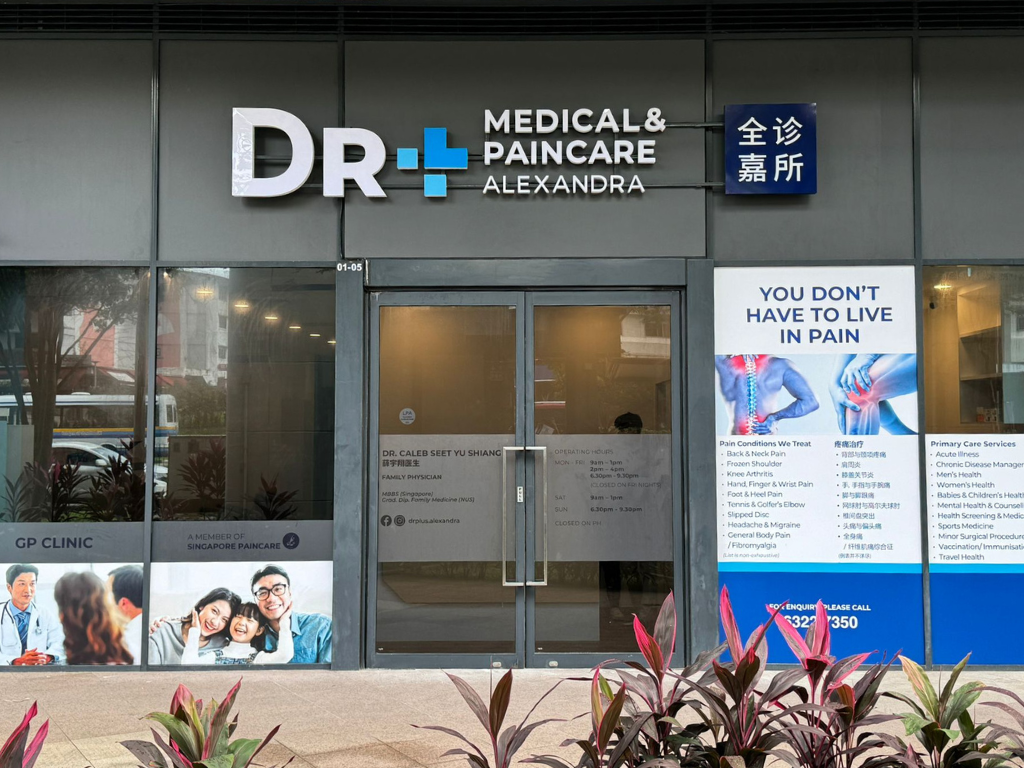
- Mon & Tue: 9am to 1pm, 2pm to 4pm, 6:30pm to 9:30pm
- Wed, Thu & Fri: 9am to 1pm, 2pm to 5pm
- Sat: 9am to 1pm
- Closed on Sun & PH
-
(Kindly note that clinic’s last registration is 15 minutes before closing time.)

#01-95, Singapore 570121
- Mon, Wed, Thu & Fri: 8:00am – 5:00pm, 6:00pm – 9:00pm
- Tue: 8:00am – 5:00pm
- Sat & Sun: 8:00am – 1:00pm
- PH: Closed
-
(Kindly note that clinic’s last registration is 15 minutes before closing time but may close earlier if the queue is unusually long.)
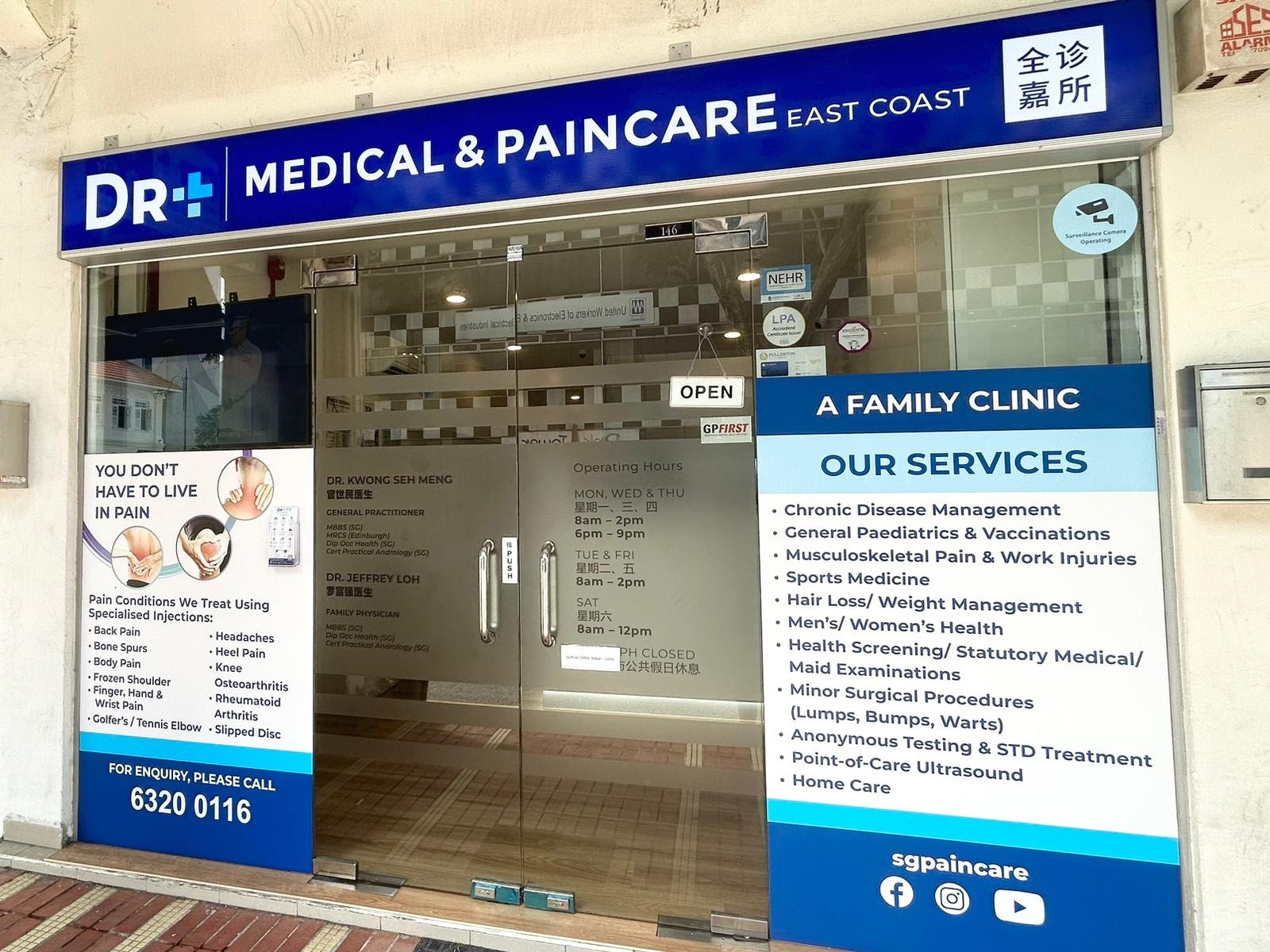
- Mon: 8:00am – 2:00pm, 6:00pm – 9:00pm
- Tue & Wed: 8:00am – 3:00pm
- Thu: 8:00am – 3:00pm, 6:00pm – 9:00pm
- Fri: 8:00am – 2:00pm
- Sat: 8:00am – 12:00pm
- Sun: 10:00am – 1:00pm
- PH: Closed

#01-54 The Midtown, Singapore 533971
- Mon & Tue: 8:00am – 12:30pm, 1:30pm – 5:00pm, 6:00pm – 9:00pm
- Wed: 8:00am – 12:30pm, 6:00pm – 9:00pm
- Thu: 8:00am – 12:30pm, 1:30pm – 5:00pm
- Fri: 8:00am – 12:30pm, 6:00pm – 9:00pm
- Sat: 8:00am – 12:00pm
- Sun & PH: Closed
(Kindly note that clinic’s last registration is 15 minutes before closing time.)
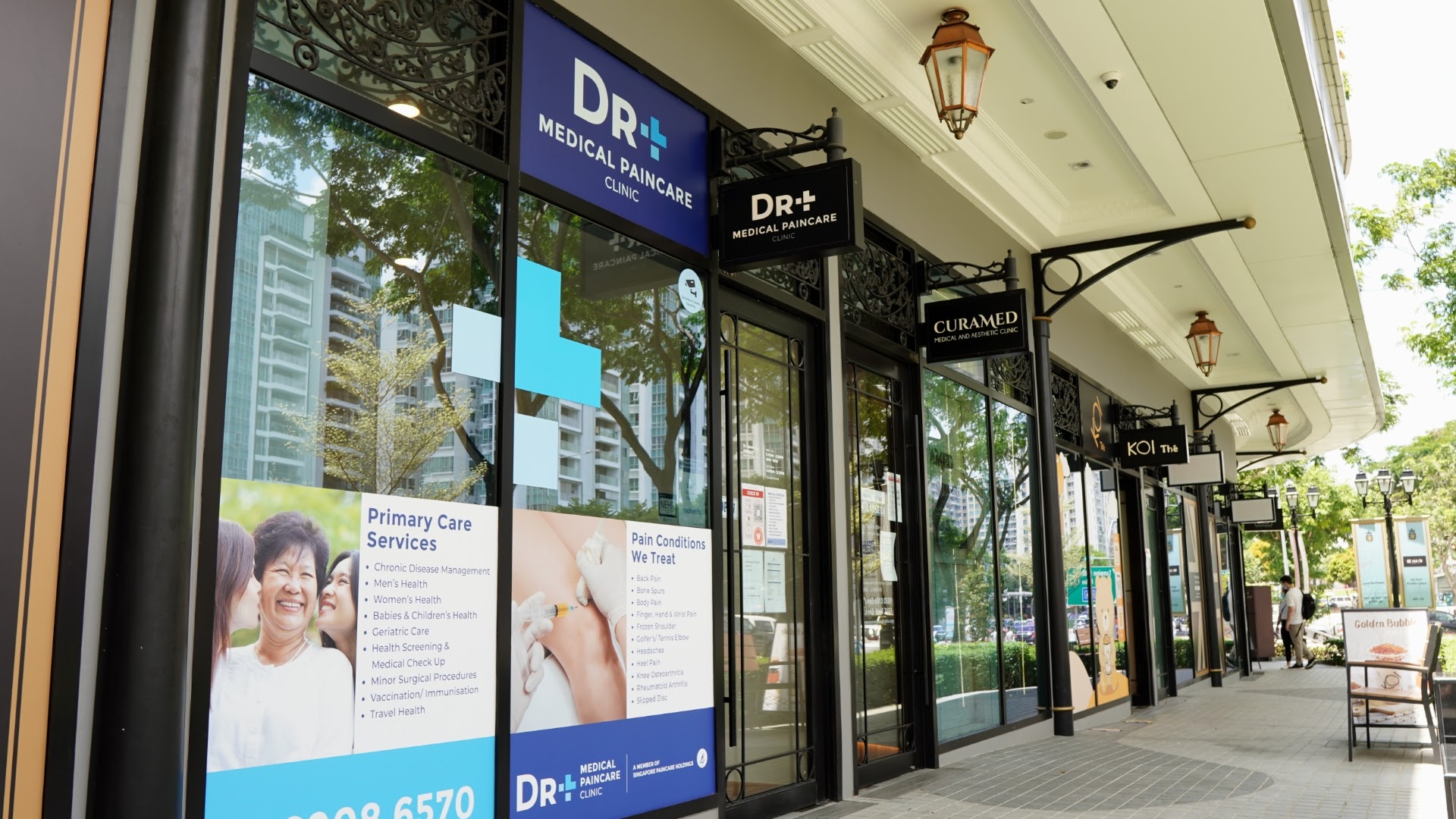
988 Upper Serangoon Rd, Singapore 534733
- Mon to Fri: 8:30am – 2:30pm, 6:00pm – 10:00pm
- Sat & Sun: 8:30am – 12:30pm
- PH: Closed
-
(Kindly note that clinic’s last registration is 15 minutes before closing time.)

Singapore 730018
- Mon: 8:00am – 9:00pm
- Tue – Fri: 8:00am – 4:30pm, 7:00pm – 9:00pm
- Sat: 8:00am – 12:30pm
- Sun & PH: Closed
-
Kindly note that clinic’s last registration is 15 minutes before closing time.
-
(Last registration timing – Mon: 8:45pm, Tue – Fri: 4:15pm & 8:45pm, Sat: 12:15pm)
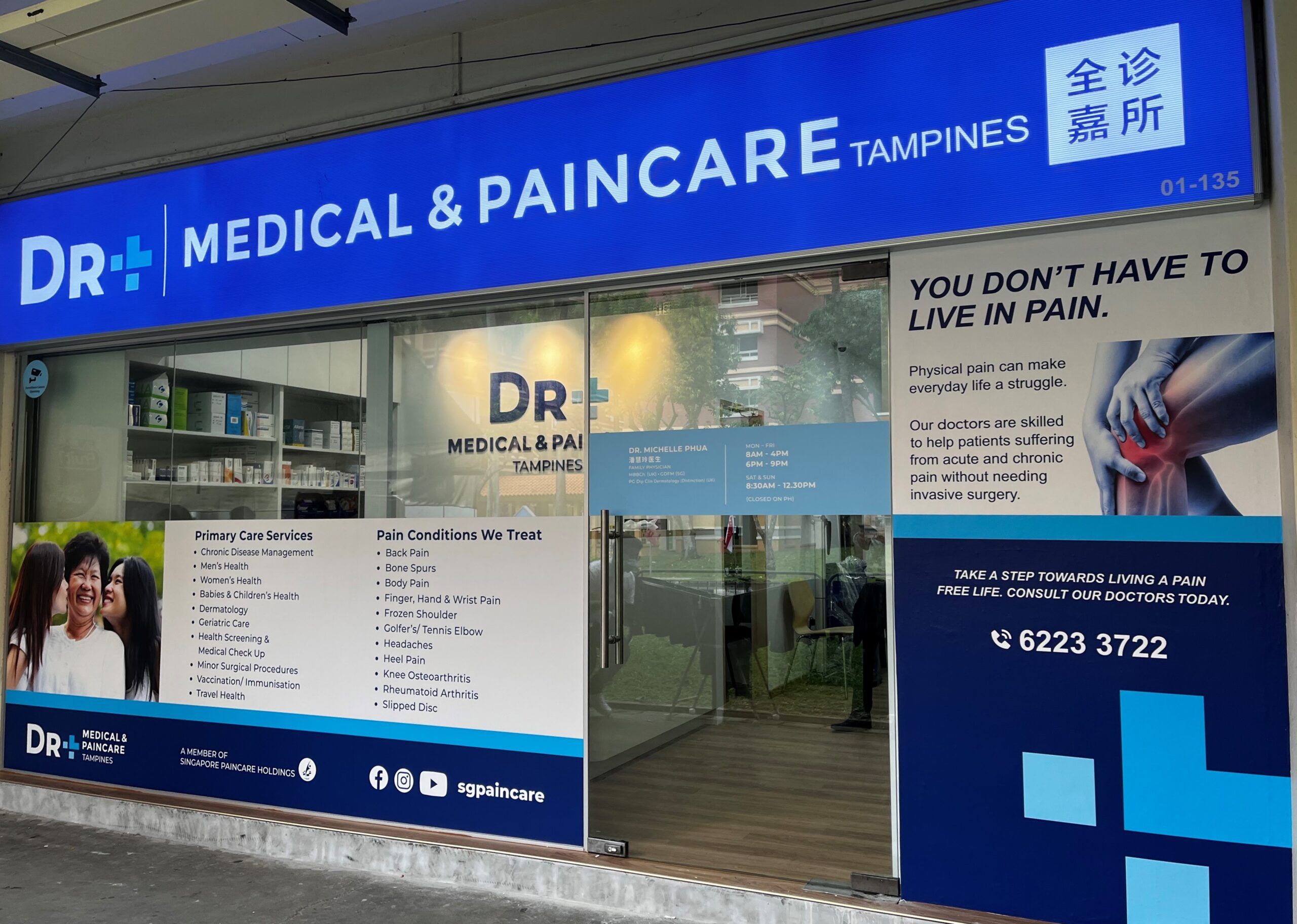
Singapore 520844
- Mon, Tue, Thu, Fri: 8:00am – 4:00pm
- Wed: 8:00am – 4:00pm, 6:00pm – 9:00pm
- Sat: 8:30am – 12:30pm
- Sun & PH: Closed
-
-
(Our clinic is open during lunch hours)

Thomson Imperial Court, Singapore 574424
- Mon to Wed: 8:30am – 10:00pm
- Thu: 8:30am – 3:00pm, 6:00pm-9:30pm
- Fri: 8:30am – 6:00pm
- Sat & Sun: 9:00am – 3:00pm
- PH: Closed
-
(Kindly note that clinic’s last registration is 15 minutes before closing time.)

Singapore 640221
- Mon to Fri: 8:00am – 4:00pm
- Sat: 8:00am – 12:00pm
Sun: Closed - PH: Closed
-
(Kindly note that clinic’s last registration is 15 minutes before closing time.)

- Mon, Wed & Fri: 8:30am – 12:30pm, 1:30pm – 4:30pm, 6:00pm – 9:00pm
- Tue & Thu: 8:30am – 12:30pm, 1:30pm – 4:30pm
- Sat: 8:30am – 12:30pm
- Closed on Sun & PH
-
(Kindly note that clinic’s last registration is 15 minutes before closing time.)
Need Advice On Your Condition?
Please fill out the form and we will be in touch with you shortly.
Frequently Asked Questions
Is the HPV vaccine compulsory?
No. HPV vaccination is not compulsory in Singapore. It is offered free to Secondary 1 and 2 female students through the school-based HPV vaccination programme, with parental consent. It is nationally recommended for females aged 9 to 26. Males are not included in the national immunisation schedules, but may be vaccinated after consulting a doctor.
Can I still get the HPV vaccine after 26?
Yes. The HPV9 vaccine may be given up to age 45 after a doctor’s assessment. Females in their 30s and early 40s may still benefit, although the benefit may be smaller if they have already been exposed to several HPV types. Vaccination started after age 26 is not subsidised. Those who started their vaccination series by age 26 may complete the remaining doses up to age 45. Please check with your clinic whether subsidies apply to these doses.
Can I switch from HPV2 to HPV9?
Yes, if the vaccination series has not been completed. From 1 January 2027, MOH guidance allows females who started with HPV2 to complete their remaining doses with HPV9. Studies show that completing the series with a different HPV vaccine still provides protection against the HPV types covered by both vaccines. Our doctor will confirm the number of remaining doses required.
I have completed my HPV vaccine course. Do I need HPV9?
No. Singapore’s Expert Committee on Immunisation does not recommend additional HPV9 doses for those who have completed their recommended HPV doses, with either HPV2 or HPV9. Government subsidies and MediSave do not apply to additional doses. If you are unsure whether your vaccination series is complete, please bring your vaccination record for our doctor to review.
Does a male need to take the HPV vaccine?
HPV vaccination is not required for males, but it is an option. The HPV9 vaccine is registered in Singapore for males aged 9 to 45. It helps protect against HPV types linked to anal, throat and penile cancers and genital warts, and may reduce the spread of HPV to partners. HPV vaccination for males is not included in the national immunisation schedules, so it is not subsidised and MediSave cannot be used.
Can I still get HPV even if I got vaccinated?
Yes. The HPV vaccine protects against the HPV types that cause most cervical cancers, but not every HPV type. It also does not treat an existing HPV infection. Regular cervical screening therefore remains important after vaccination.
Do I still need cervical screening after the HPV vaccine?
Yes. The vaccine does not cover every cancer-causing HPV type, so females who have ever been sexually active still need regular cervical screening. Females aged 25 to 29 are advised to have a Pap test every 3 years. Females aged 30 and above are advised to have an HPV test every 5 years. Cervical screening is available at DR+ as part of our cancer screening and women’s health services.
How long does the HPV vaccine last?
Long-term studies have shown protection lasting more than 10 years. Booster doses are not currently recommended. After completing the vaccination series of 2 or 3 doses, no further HPV vaccine doses are needed. Studies are ongoing, and recommendations will be updated if new evidence emerges.
What happens if I don't take the HPV vaccine?
Most HPV infections are cleared by the body’s immune system. However, some high-risk HPV types can persist and lead to cervical and other cancers years later. Without vaccination, there is no protection against these types. Regular cervical screening is particularly important for those who are not vaccinated, as it can detect cell changes before cancer develops.
References