CONTENTS
Quick Answer:
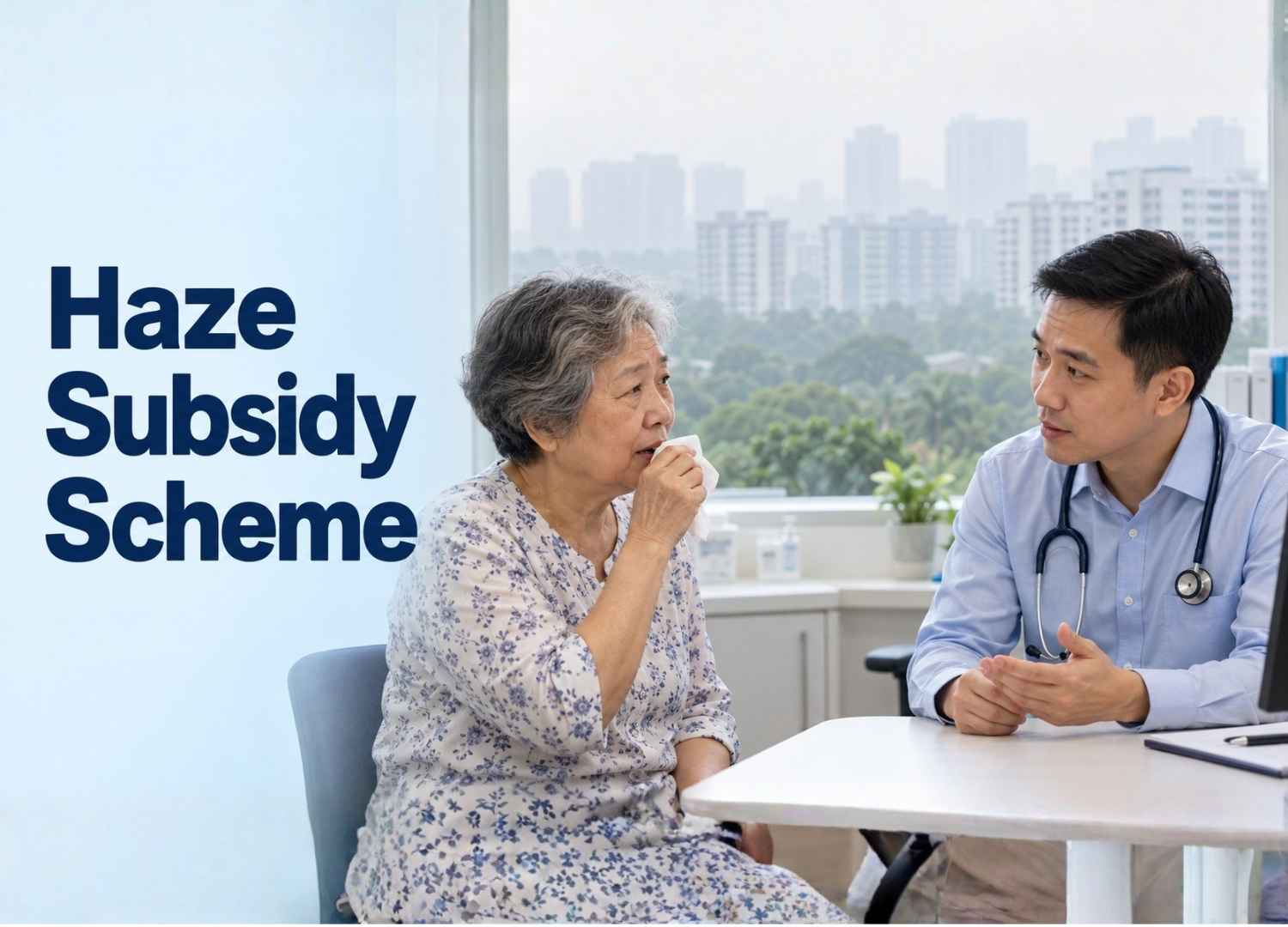
The Haze Subsidy Scheme (HSS) was activated by the Ministry of Health on 12 October 2026. Eligible Singapore Citizens pay no more than $10 for treatment of haze-related conditions, such as asthma, bronchitis, allergic rhinitis, conjunctivitis and upper respiratory tract infections, at participating Public Health Preparedness Clinics (PHPCs) and all polyclinics. At GP clinics, it covers all children aged 18 and below, all seniors aged 65 and above, and PA, PG, MG, MFEC and CHAS Blue or Orange cardholders of any age. At polyclinics, all Singapore Citizens qualify.
Persistent coughs, itchy eyes, sore throats and asthma flares have become common complaints in Singapore over the past few weeks as transboundary haze continues to affect air quality. Children, seniors and people with existing lung or heart conditions are most likely to feel the effects.
On 9 October, the 24-hour PSI reached 192 in the central region at 6pm, the highest reading so far this year, with the west close behind at 187, according to National Environment Agency (NEA) data reported by Bernama. Readings across all five regions have stayed largely in the unhealthy range (101 to 200) for much of October. The haze has also arrived alongside the Influenza A season, and the Health Minister has noted a week-on-week rise in patients with respiratory issues at emergency departments and polyclinics.
In response, the Ministry of Health (MOH) has activated the Haze Subsidy Scheme for the first time since 2015. This guide explains who qualifies, what the scheme covers, what to bring to the clinic, and, just as importantly, how to tell when haze symptoms need a doctor’s attention.
What Is the Haze Subsidy Scheme?
The Haze Subsidy Scheme is a temporary MOH programme that lowers the cost of treating haze-related conditions during periods of transboundary haze. It runs alongside the Public Health Preparedness Clinic (PHPC) scheme, a network of GP clinics that MOH activates during public health events to provide coordinated, subsidised primary care. PHPCs were last used on this scale during COVID-19.
According to the MOH announcement of 11 October 2026, the scheme started on 12 October 2026 at participating PHPCs and all polyclinics. Of about 1,370 clinics in the PHPC network, close to 1,000 had agreed to take part by the day of the announcement.
The scheme has a track record. When it was last activated in 2015, it ran from 16 September to 23 November and supported around 50,000 haze-related clinic attendances at PHPCs and polyclinics, according to MOH.
Who Is Eligible for the Haze Subsidy Scheme?
The Haze Subsidy Scheme is open to Singapore Citizens only. Who qualifies depends on where you seek treatment, and the amount you pay depends on which scheme card you hold.
| Group (Singapore Citizens) | Where You Can Use the Subsidy | You Pay for Haze-Related Treatment |
|---|---|---|
| Public Assistance (PA) cardholders | Participating PHPCs and polyclinics | Fully subsidised |
| Pioneer Generation (PG) and Merdeka Generation (MG) seniors | Participating PHPCs and polyclinics | No more than $5 |
| All children aged 18 and below (no scheme card needed) | Participating PHPCs and polyclinics | No more than $10 |
| All seniors aged 65 and above (no scheme card needed) | Participating PHPCs and polyclinics | No more than $10 |
| CHAS Blue or Orange cardholders of any age | Participating PHPCs and polyclinics | No more than $10 |
| Medical Fee Exemption Card (MFEC) holders of any age | Participating PHPCs and polyclinics | No more than $10 |
| All other Singapore Citizens | Polyclinics only | No more than $10 |
What Does the Haze Subsidy Scheme Cover?
The scheme covers treatment for haze-related conditions, which MOH lists as allergic rhinitis, asthma, bronchitis, conjunctivitis, chronic obstructive pulmonary disease (COPD), upper respiratory tract infections, and their complications. Your doctor decides whether your condition is related to the haze.
The subsidy applies to one visit per day. Medication for the haze-related condition is given in a reasonable quantity for that episode of illness, not as a long-term supply. Teleconsultations may also be subsidised, though if your doctor needs to see you in person, the subsidy applies to that physical visit instead.
Some things fall outside the scheme. N95 masks are not covered, and neither is treatment for unrelated conditions. If you see your doctor about a non-haze problem during the same period, other schemes such as CHAS may still apply.
What to Bring and How to Find a Participating Clinic
Bring your NRIC (or birth certificate or student pass for children) and any government scheme card that applies to you, such as your CHAS, PG, MG, PA or MFEC card. Digital cards are accepted. No separate consent form is needed.
Participating clinics display a PHPC decal or a Haze Subsidy Scheme poster at the entrance. You can also search for PHPCs on GPGoWhere, the government’s GP clinic directory, linked from the MOH haze page. If you are unsure, call the clinic before you visit and ask whether the subsidy is available that day.
How Haze Affects Your Body: Common Symptoms
Haze is made up mainly of fine particles called PM2.5, which are small enough to travel deep into the lungs. For most healthy people, short-term exposure causes irritation rather than lasting harm. Typical haze symptoms include itchy or watery eyes, a runny or blocked nose, sneezing, a scratchy throat and a dry cough. These usually ease within hours of spending time in cleaner indoor air.
The picture is different for people with asthma, COPD, heart disease or allergic rhinitis, and for young children and seniors. In these groups, haze can act as a trigger, so a condition that was well controlled may start to flare. Wheezing, chest tightness and needing a reliever inhaler more often are common early signs.
Seek urgent medical care (call 995 or go to the nearest Emergency Department) if you or someone in your care has:
- Breathlessness at rest, or difficulty speaking in full sentences
- Chest pain or chest tightness that does not settle
- A reliever inhaler that is not helping, or is needed more often than every 4 hours
- Bluish lips or fingertips
- New confusion, unusual drowsiness or fainting, particularly in older adults
- In a child, fast breathing, or the skin pulling in between the ribs with each breath
Protecting Yourself and Your Family During the Haze
Check the 24-hour PSI forecast on the National Environment Agency’s haze website (haze.gov.sg) each evening and plan the next day’s outdoor activities around it. When the PSI is in the unhealthy range, MOH advises healthy people to reduce prolonged or strenuous outdoor exertion, and advises seniors, pregnant women and children to keep it to a minimum. People with chronic lung or heart disease should avoid it.
At home, keep windows closed during hazy periods and, if you have an air purifier, run it in the room where you sleep. Drink plenty of water, as hydration helps soothe an irritated throat. If you have asthma, COPD or heart disease, make sure your regular medicines and reliever inhaler are within reach and that you have enough supply for the coming weeks.
MOH advises that healthy people do not need N95 masks for short exposures such as commuting to school or work, or indoors. Vulnerable people who must be outdoors for several hours when the PSI is above 200 may consider one, but should check with their doctor first if they have heart or lung problems.
These are supportive measures, not substitutes for a proper diagnosis.
When Should You See a Doctor in Singapore During the Haze?
See a doctor if your symptoms last more than a few days, keep coming back each time you go outdoors, or interfere with your sleep, work or school. Seek review sooner if you have asthma, COPD or heart disease and your usual medicines are not controlling your symptoms as well as before, or if you develop a fever, as this may suggest an infection alongside the haze. Parents should have a child checked if a cough lingers or their breathing seems faster or noisier than usual.
You do not need a referral to see a GP, and walk-ins are welcome at all DR+ clinics during operating hours.
DR+ clinics are Public Health Preparedness Clinics, so eligible Singapore Citizens can use the Haze Subsidy Scheme at a DR+ clinic near you. Please bring your NRIC and scheme card when you visit. Patients who are not eligible for the subsidy, including permanent residents and foreigners, are also welcome to see our doctors for haze-related symptoms at the usual consultation charges.
Our doctors also provide ongoing chronic disease management for conditions such as asthma, so you can continue care with the same family doctor once the haze clears.
Speak to a DR+ doctor in Singapore today to take the first step toward a clearer diagnosis.
Conclusion
The haze is expected to stay with us for a few more weeks, with the Meteorological Service Singapore expecting the monsoon transition only in late October or early November. For most people, haze symptoms are uncomfortable but short-lived. For children, seniors and anyone living with asthma, COPD or heart disease, they deserve closer attention. The Haze Subsidy Scheme makes it easier to get that attention early, at a lower cost. If you or someone in your family is struggling with symptoms, book a consultation with our DR+ team.
Frequently Asked Questions
Who is eligible for the Haze Subsidy Scheme in 2026?
The Haze Subsidy Scheme is open to Singapore Citizens only. At participating Public Health Preparedness Clinics (PHPCs), it covers all children aged 18 and below and all seniors aged 65 and above, with no scheme card needed, as well as holders of Public Assistance, Pioneer Generation, Merdeka Generation, MFEC, and CHAS Blue or Orange cards of any age. At polyclinics, all Singapore Citizens are eligible. The scheme started on 12 October 2026.
How much will I pay under the Haze Subsidy Scheme?
Public Assistance cardholders receive fully subsidised treatment for haze-related conditions. Pioneer Generation and Merdeka Generation seniors pay no more than $5, and other eligible Singapore Citizens pay no more than $10. If the total bill is lower than the cap, you pay the lower amount. No GST is charged on these fees, and the subsidy applies to one visit per day.
Which conditions are covered by the Haze Subsidy Scheme?
The scheme covers haze-related conditions, namely allergic rhinitis, asthma, bronchitis, conjunctivitis, chronic obstructive pulmonary disease (COPD), upper respiratory tract infections, and their complications. The attending doctor decides whether a condition is related to the haze. N95 masks and treatment for unrelated conditions are not covered, although schemes such as CHAS may apply to other illnesses.
Can permanent residents and foreigners use the Haze Subsidy Scheme?
No. The Haze Subsidy Scheme is limited to Singapore Citizens. Permanent residents and foreigners can still see a GP or visit a polyclinic for haze-related symptoms, but normal consultation charges apply. Some employers’ medical benefits may cover part of the cost, so it is worth checking your company’s healthcare policy before your visit.
How long will the Haze Subsidy Scheme last?
MOH has not announced an end date for the 2026 scheme and will inform the public when it closes. The Health Minister expects the haze to persist for a few more weeks, and the Meteorological Service Singapore expects the monsoon transition in late October or early November. In 2015, the scheme ran from 16 September to 23 November.
About DR+ Medical & Paincare
DR+ Medical & Paincare (pronounced Doctor Plus) is a network of 12 GP clinics across Singapore’s heartlands and part of Singapore Paincare Holdings Limited. DR+ provides family medicine, chronic disease management, health screening, vaccinations and pain care by GPs trained in the Painostic® methodology. Walk-ins are welcome.
Medical Disclaimer
This article is intended for general informational purposes only and does not constitute medical advice. Please consult a qualified healthcare professional for diagnosis and treatment tailored to your individual condition.
Latest Articles