CONTENTS
Quick Answer:
Pain after shingles that lingers once the rash has healed is usually a condition called postherpetic neuralgia (PHN). It happens when the shingles virus damages nerve fibres during the outbreak, causing them to send abnormal, exaggerated pain signals even after the skin has recovered. PHN can cause burning, stabbing, or aching pain lasting months or, in some cases, years. It is more common in older adults and those who had a severe initial outbreak, and it can usually be managed with the right combination of medication and nerve-targeted treatment.
Has your shingles rash healed, yet the pain is still there? If the burning, stabbing, or aching sensation lingers weeks or even months after the blisters have crusted over and faded, you are not imagining it, and you are not alone. This lingering discomfort has a name: postherpetic neuralgia, or PHN. It is distinct from the sharp, rash-associated pain of active shingles, and it behaves differently, responds to different treatments, and requires a different kind of clinical attention. This article explains why pain after shingles can persist, what is happening beneath the skin, and what treatment pathways are available for patients in Singapore.
Understanding Why Shingles Can Leave Lasting Nerve Pain
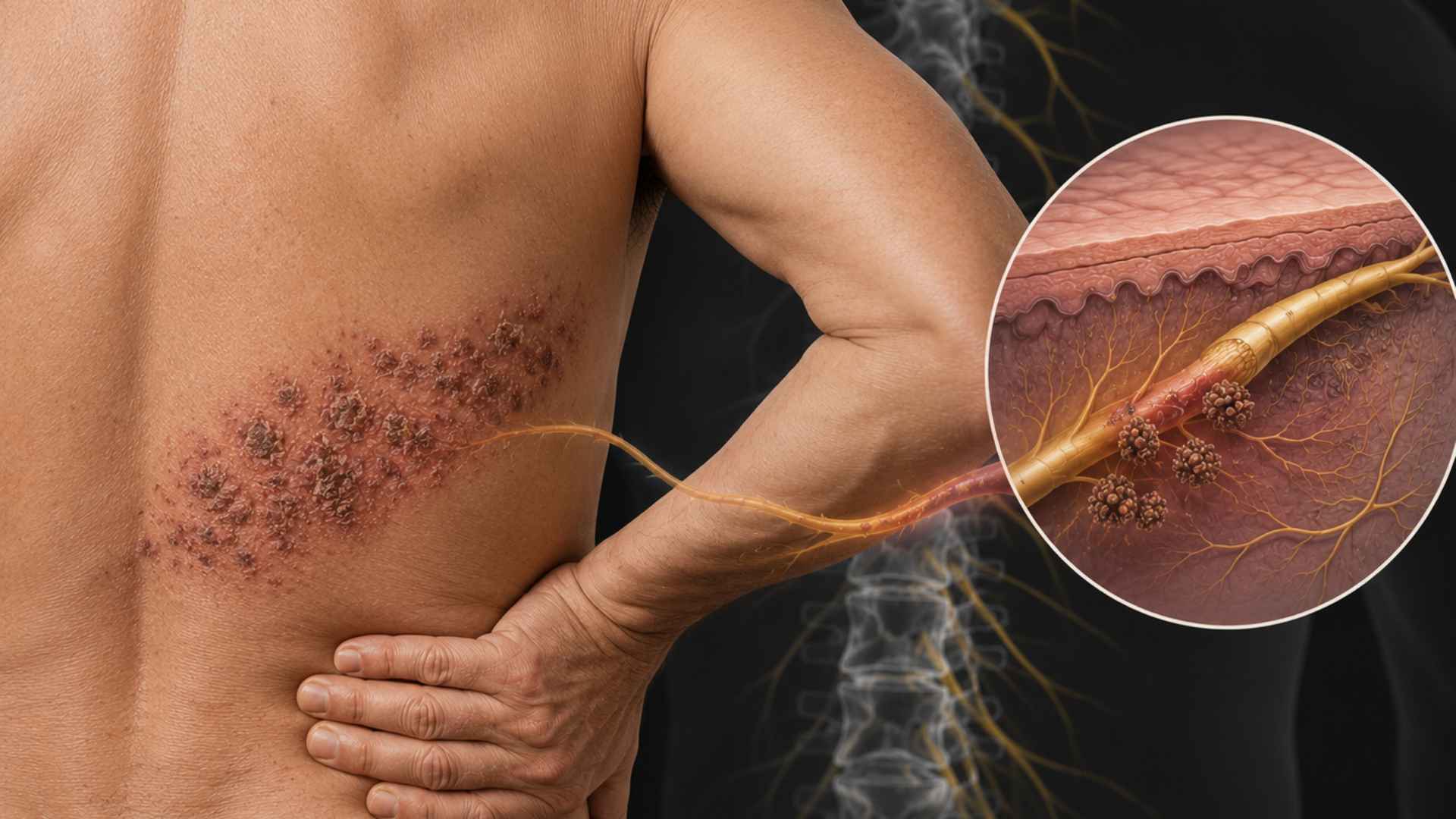
Shingles, or herpes zoster, occurs when the chickenpox virus that has lain dormant in the nerve roots since childhood reactivates later in life, travelling along a nerve pathway to the skin. As the virus spreads, it can cause inflammation and damage along that nerve, not just the visible rash on the skin surface. In some patients, this nerve damage does not heal in step with the skin. The nerve fibres remain irritated or become miswired, continuing to fire pain signals to the brain long after the rash itself has resolved. In Singapore, this is not a rare complication. Research published by SingHealth estimates that around 4.5 percent of adults aged 50 and older could go on to develop PHN, a figure that reflects both the country’s ageing population and the fact that shingles risk itself rises steeply with age. Understanding this mechanism, nerve sensitisation rather than ongoing skin infection, is the first step to understanding why the pain does not simply fade on its own timeline like a healing wound.
What Causes Pain After Shingles to Continue?
Several factors influence whether a patient develops persistent nerve pain after a shingles episode, and recognising them helps explain why some people recover quickly while others do not.
Age
The risk of PHN rises significantly after the age of 60, and continues climbing with each decade beyond that. Older nerves appear to repair themselves less efficiently after the viral damage caused by shingles, which is part of why age is consistently the strongest single risk factor identified in clinical research.
Severity of the Original Outbreak
Patients who experienced a more severe initial rash, extensive blistering, or intense pain during the acute shingles episode tend to have a higher likelihood of ongoing nerve pain afterwards, since a more aggressive viral attack on the nerve appears to correlate with more lasting nerve disruption.
Delayed Antiviral Treatment
Antiviral medication is most effective at limiting nerve damage when started within 72 hours of the rash appearing. When treatment is delayed beyond this window, whether due to a missed diagnosis or simply not seeking care promptly, the virus has more time to affect the nerve before treatment can intervene.
Weakened Immune System and Rash Location
Patients who are immunocompromised, whether due to chronic illness, diabetes, cancer treatment, or certain medications, often experience more severe shingles outbreaks and a higher rate of complications, including PHN. Rash location plays a role too. Shingles affecting the face or torso appears to carry a somewhat higher risk of persistent nerve pain than outbreaks on the limbs, likely related to the density and sensitivity of nerve branches in these areas.
Underlying Nerve Sensitisation
In some patients, the central nervous system itself becomes sensitised during the acute shingles episode, and the spinal cord and brain essentially “learn” to amplify pain signals from the affected area, a phenomenon called central sensitisation. This explains why pain can sometimes feel disproportionate to any visible skin changes, and why it can be triggered by stimuli, such as light clothing contact, that would not normally cause discomfort.
Where Does the Pain Usually Occur?
Pain after shingles follows the path of the original rash, which in turn follows a specific nerve, or dermatome, on one side of the body. Most commonly, this means the pain sits somewhere on the torso, tracing a band-like pattern around the chest, back, or abdomen on one side, since thoracic nerves are the most frequently affected by shingles. When the original outbreak involved the face, particularly around the eye or forehead, lingering pain in this area warrants closer monitoring, as facial and ophthalmic involvement carries a higher risk of complications affecting vision. Pain in the neck or upper limb suggests cervical nerve involvement, while lower back or leg pain points to lumbar or sacral nerves. In every case, the pain stays confined to the same side and the same band of skin that the original rash covered. It does not typically spread to the opposite side of the body, and pain appearing in an entirely different location should prompt a fresh assessment rather than being assumed to be related to the earlier shingles episode.
Symptoms That Often Accompany Pain After Shingles
Beyond the main ache or burning feeling, patients with PHN often notice a few other symptoms as well. One common one is allodynia, which means everyday touch, such as a shirt collar or bedsheet brushing against the skin, causes pain that feels far worse than it should. Many patients also describe paraesthesia, an odd tingling, itching, or numb feeling underneath the pain itself. Because the discomfort is often worse at night or whenever the skin is touched during sleep, poor sleep and daytime tiredness are common too, and living with pain that does not let up can also affect mood and concentration over time.
Most cases of pain after shingles settle with time and the right treatment. Even so, see a doctor promptly, rather than waiting for a routine appointment, if you notice any of the following:
URGENT: SEE A DOCTOR PROMPTLY IF YOU EXPERIENCE
- Pain or rash affecting the eye, or any change in vision
- Fever, spreading redness, or pus suggesting skin infection
- Sudden weakness or numbness beyond the original rash area
- Confusion or severe headache accompanying the pain
- Pain that is rapidly worsening rather than gradually settling
- New rash appearing in a different location on the body
How Is Pain After Shingles Diagnosed?
Diagnosing postherpetic neuralgia begins with a detailed clinical history. Your doctor will ask about the timeline of your original shingles rash, how long ago it healed, where exactly the pain is located, and how the character of the pain has changed since the rash cleared. A physical examination typically follows, checking the affected skin for any residual scarring, testing sensation along the nerve pathway, and gently assessing for allodynia by lightly touching the area. In most cases, PHN is a clinical diagnosis, meaning it is identified through this history and examination rather than through blood tests or imaging. However, your doctor may order further investigations if the pain pattern is unusual, if there is a concern about an alternative cause, or if the location of the pain, such as near the eye, calls for closer evaluation. This assessment also allows the doctor to gauge severity and functional impact, which guides the choice of treatment that follows.
Pain After Shingles Treatment in Singapore: What Are Your Options?
Effective management of pain after shingles starts with an accurate diagnosis, since the right treatment plan depends on how long the pain has persisted, its severity, and how much it is affecting daily life. Our detailed overview of postherpetic neuralgia covers the condition in more depth, including how DR+ pain-trained GPs approach diagnosis and ongoing care. Treatment generally follows a stepwise approach, beginning with medications that target nerve pain specifically, and progressing to targeted procedures for patients whose pain does not settle with medication alone.
Nerve-Targeted Medications
Unlike standard painkillers, PHN typically responds better to medications originally developed for nerve-related conditions. Anticonvulsants such as gabapentin and pregabalin are commonly used first-line options, working by calming the overactive nerve signalling that drives PHN pain. Certain tricyclic antidepressants, such as low-dose amitriptyline or nortriptyline, are also used for their nerve pain-modulating properties, prescribed cautiously in older patients due to potential side effects.
Topical Lidocaine Patches
For patients whose pain is concentrated in a specific patch of skin, particularly where allodynia is prominent, topical lidocaine patches applied directly over the affected area can provide localised relief with minimal systemic side effects, making them a suitable option for many older patients managing multiple medications.
Peripheral Nerve Block
When pain does not adequately respond to medication, a Peripheral Nerve Block may be considered. This involves injecting local anaesthetic and anti-inflammatory medication around the affected nerve to interrupt the pain signal, and can be used both to confirm which nerve is involved and to provide therapeutic relief. This is one of the Myospan treatments available at DR+ clinics, performed by our pain-trained GPs as an outpatient procedure.
Referral for Advanced Pain Procedures
For patients with severe or treatment-resistant PHN, DR+ doctors may refer to Singapore Paincare Center, where consultant pain specialists offer advanced Neurospan procedures for complex nerve pain that has not responded to primary care management. This ensures a clear pathway from community-level care to specialist intervention when needed.
Preventing Future Episodes
Since PHN only develops after a shingles outbreak, prevention is an important part of the conversation. The shingles vaccine significantly reduces the risk of developing shingles in the first place, and by extension, the risk of PHN. This is particularly relevant for adults aged 50 and above, or anyone with a weakened immune system, and is worth discussing with your doctor even if you have never had shingles before.
A Doctor’s Perspective
One pattern we see often in our heartland clinics is the patient who assumes lingering discomfort after shingles is simply the skin “still healing,” particularly among older patients who may be managing several chronic conditions at once and are used to some degree of ongoing ache. The distinction that matters clinically is between residual skin sensitivity, which usually fades within four to six weeks of the rash clearing, and true nerve-driven pain, which tends to persist beyond three months, changes character over time, and is often accompanied by allodynia rather than simple tenderness. We also notice that patients who delayed seeking treatment for their initial shingles rash, sometimes because the early symptoms were mistaken for a skin allergy or insect bite, are more likely to present later with more entrenched nerve pain that takes longer to settle. The takeaway is straightforward. Pain that continues to interfere with sleep, clothing tolerance, or daily activity a month or more after the rash has healed should not be treated as something to simply wait out. Earlier assessment allows nerve-targeted treatment to begin sooner, when it tends to be more effective, rather than after pain patterns have become more established.
Managing Pain After Shingles Day-to-Day
Alongside medical treatment, several practical measures can help patients cope with PHN symptoms while nerve pain settles. Wearing soft, loose-fitting clothing over the affected area reduces friction-related discomfort, and some patients find cool compresses soothing during flare-ups. Keeping a simple pain diary, noting what worsens or eases symptoms, can help your doctor fine-tune your treatment plan over time. These are supportive measures, not substitutes for a proper diagnosis.
When Should You See a Doctor in Singapore?
If pain from a shingles outbreak persists beyond a month after the rash has cleared, or if it is affecting your sleep, mood, or ability to carry out daily activities, it is worth arranging an assessment rather than waiting to see if it resolves on its own. This is equally true if you are experiencing new or worsening pain, numbness, or any of the red flag symptoms outlined earlier in this article. No referral is needed to see a GP for pain after shingles, and walk-ins are welcome at DR+ clinics across Singapore. Speak to a pain-trained GP to find out what is driving your symptoms and which treatment approach may be right for you.
Conclusion
Pain that continues after a shingles rash has healed is a recognised medical condition, not something to dismiss as unusual or something you simply have to live with. Understanding that postherpetic neuralgia stems from nerve changes, rather than an unhealed skin injury, helps explain why it needs its own treatment approach, one that targets the nerve pathway directly rather than relying on standard painkillers alone. With appropriate assessment and a stepwise treatment plan, many patients do find meaningful relief. If you are dealing with pain after shingles, consider consulting a specialist to find out if this treatment is right for you, and speak to a DR+ doctor in Singapore today to take the first step toward a clearer diagnosis.
Frequently Asked Questions
What does pain after shingles usually mean?
Pain that continues after the shingles rash has healed usually indicates postherpetic neuralgia, a condition where the nerve damaged during the shingles outbreak continues to send pain signals even after the skin has recovered. It typically presents as burning, stabbing, or aching pain in the same area the rash previously covered, sometimes with heightened sensitivity to light touch.
Can pain after shingles go away on its own?
For many patients, PHN gradually improves over weeks to months as the affected nerve slowly recovers, and some cases resolve within three to six months without specific intervention. However, pain that is severe, worsening, or lasting beyond a few months is less likely to resolve without treatment and should be assessed by a doctor for a tailored management plan.
What are the red flags to watch for after shingles?
Seek prompt medical attention if pain or rash affects the eye or vision changes, if there are signs of skin infection such as fever or spreading redness, if new weakness or numbness develops, or if pain is rapidly worsening rather than gradually improving. These symptoms may indicate complications requiring more immediate evaluation.
What treatments are available for pain after shingles without surgery?
Non-surgical options include nerve-targeted medications such as gabapentin, pregabalin, and certain tricyclic antidepressants, topical lidocaine patches for localised pain, and minimally invasive procedures such as peripheral nerve blocks. Most patients are managed successfully with these approaches before any consideration of more advanced interventions.
How is pain after shingles diagnosed at DR+?
DR+ pain-trained GPs diagnose pain after shingles through a detailed clinical history covering your shingles timeline and the character of your current pain, combined with a physical examination of the affected area. This is typically sufficient for diagnosis, with further investigations reserved for atypical presentations or when a different cause needs to be ruled out.
About DR+ Medical & Paincare
DR+ Medical & Paincare is a primary care clinic brand under Singapore Paincare Holdings Limited, offering GP and pain management services across 12 heartland locations in Singapore. DR+ doctors are trained under the Painostic® methodology, combining everyday family medicine with a focused approach to diagnosing and managing pain conditions, including nerve pain following shingles.
Medical Disclaimer: This article is intended for general informational purposes only and does not constitute medical advice. Please consult a qualified healthcare professional for diagnosis and treatment tailored to your individual condition.