CONTENTS
Heel pain that is sharpest with the first steps in the morning is one of the most common foot complaints seen in Singapore clinics. In most cases, the cause is plantar fasciitis. Many people improve with stretching, better footwear and time. For those who do not, shockwave therapy for plantar fasciitis is one of the next options doctors consider.
This guide explains how the treatment works, what the research shows and who it suits. It also covers how many sessions are needed and what recovery involves.
What is shockwave therapy for plantar fasciitis?
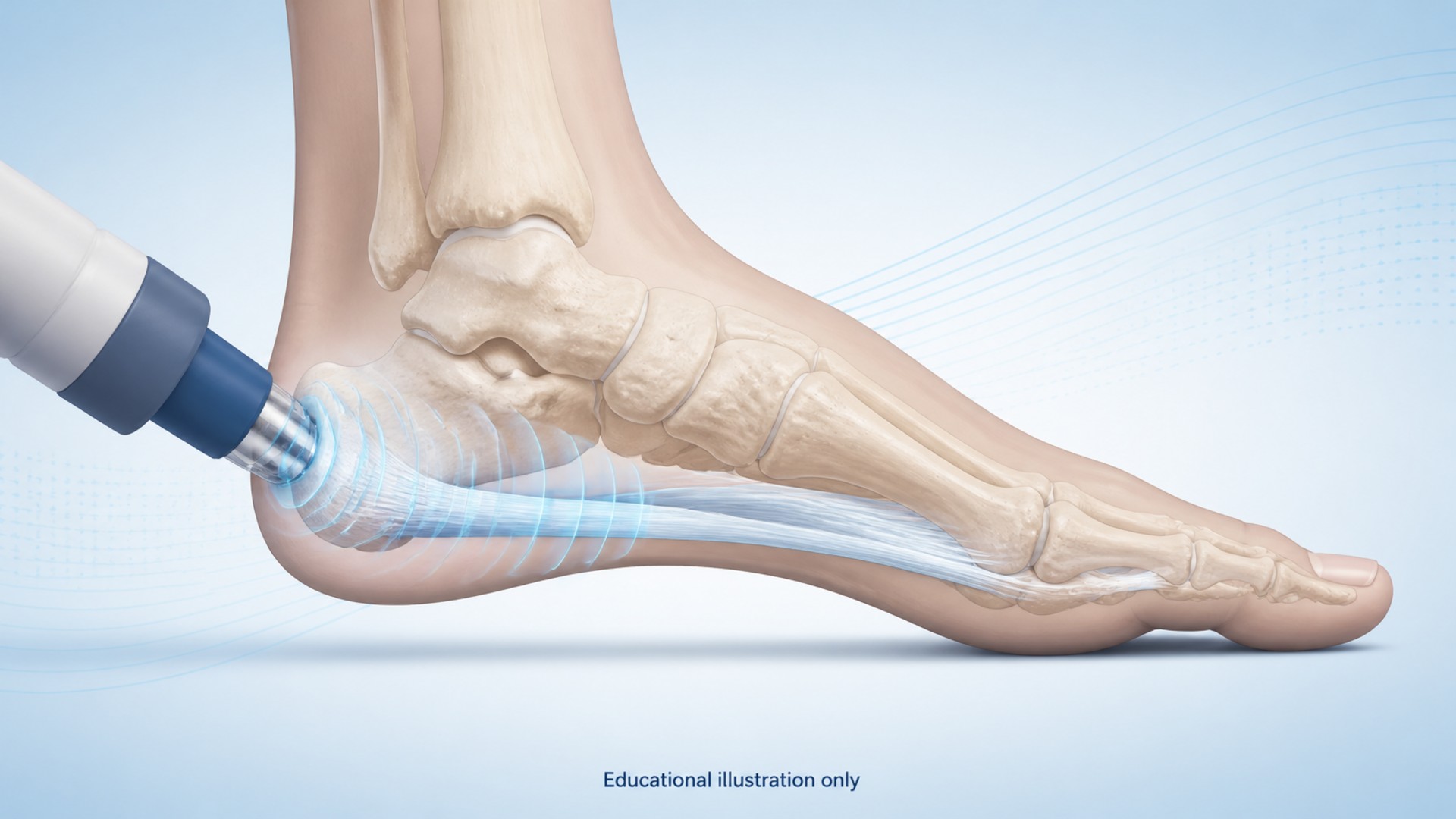
Shockwave therapy is a non-invasive treatment that delivers high-energy sound waves through the skin to the painful part of the heel. “Extracorporeal” means the energy comes from outside the body. There are no needles, cuts or anaesthesia.
The plantar fascia is a thick band of tissue that runs along the sole, from the heel bone to the toes. It supports the arch with every step. When it is overloaded for months, the tissue near the heel can thicken and stop healing properly. ESWT for plantar fasciitis aims to restart that stalled repair process.
Focused vs radial shockwave
There are two main types of shockwave therapy. They differ in how deep the energy travels and where it peaks.
| Focused shockwave | Radial shockwave | |
|---|---|---|
| Energy pattern | Converges on a set point beneath the skin | Spreads outwards from the skin surface |
| Depth | Reaches deeper tissue | Strongest near the surface |
| Typical use | Deep tendon and fascia problems, such as the heel insertion | Broader, more superficial areas |
Because the plantar fascia attaches to the heel bone beneath a thick fat pad, the treatment needs to reach below the surface. Focused shockwave, the type used at DR+ clinics, is designed to deliver its energy at that depth.
How does shockwave therapy help heel pain?
Shockwave therapy is thought to help heel pain by stimulating the body’s own repair process and calming pain signals.
The pulses create a controlled stimulus in the tissue. This may encourage new blood vessel growth and the release of growth factors involved in healing. The treatment also appears to reduce the sensitivity of local pain nerve endings, which can ease pain over time.
It is not a quick fix. The goal is to help the fascia heal, so improvement usually builds gradually over several weeks to a few months after the course.
Does shockwave therapy work for plantar fasciitis?
Research supports shockwave therapy for chronic plantar fasciitis. A 2017 meta-analysis of nine randomised trials covering 935 patients found a higher success rate with shockwave therapy than with sham treatment. Closer to home, a SingHealth departmental audit reported a success rate of about 70% for plantar fasciitis.
Put simply, shockwave therapy can be a useful next step when heel pain has not settled with simpler care. It does not just mask the pain. Instead, it encourages the plantar fascia to restart its own repair, which is why improvement tends to build gradually over weeks rather than overnight.
The treatment is also easy to fit into daily life. There are no needles, no wound to care for and usually little or no downtime, so most people continue working between sessions. Paired with regular stretching and sensible changes to how long you stand or walk, it can give the heel a better chance to recover.
Results vary between individuals, so progress is reviewed during the course and the plan is adjusted where needed.
Who is shockwave therapy for plantar fasciitis suitable for?
Shockwave therapy is usually suitable for adults with chronic plantar fasciitis. This means heel pain that has lasted three months or longer despite stretching, supportive footwear and rest. It is often considered by people who stand or walk for long hours at work and by active adults who want to keep exercising. It also suits those who prefer a non-invasive option without needles.
Before shockwave therapy is recommended, the diagnosis needs to be confirmed. Plantar fasciitis typically causes pain under the inner heel that is worst with the first steps in the morning. Pain at the back of the heel, burning or tingling, or a deep ache in the centre of the heel may point to other causes of heel pain, such as the Achilles tendon, nerve irritation or a thinned fat pad. At DR+, doctors trained in the Painostic® pain assessment methodology examine the foot. They may also use in-clinic Point-of-Care Ultrasound (POCUS) to check the plantar fascia.
When shockwave therapy may not be suitable
Shockwave therapy may not be suitable during pregnancy or over areas of infection or tumour. It also needs caution in people with bleeding disorders or on some blood-thinning medicines. A recent steroid injection into the heel, or diabetes with reduced feeling in the feet, also needs careful review before treatment.
How many sessions of shockwave therapy will you need?
Most courses of shockwave therapy for plantar fasciitis involve three to five sessions, spaced one to two weeks apart. Each session usually takes 10 to 20 minutes.
The exact number depends on how long the pain has been present, how thick the fascia is, and how the heel responds. Longer-standing cases sometimes need more sessions. The doctor reviews progress during the course and adjusts the plan.
Because the treatment works by encouraging repair, most people notice gradual change rather than instant relief. Some improvement may appear after the first few sessions. The fuller effect is often assessed around three months after the course ends.
What happens during and after a session?
A shockwave therapy session for plantar fasciitis takes about 10 to 20 minutes in the clinic. No anaesthesia is needed, and most people walk out and return to their usual day straight after.
During the session
You lie or sit comfortably with the foot supported. The doctor feels for the most tender point on the heel and applies a layer of gel to the skin. The applicator is then held against the heel and delivers a series of pulses to the plantar fascia.
Most people feel a strong, rapid tapping. It can be uncomfortable over the sore spot, but the energy level is adjusted to what you can tolerate. Many people find the treatment becomes easier to tolerate as the session goes on.
After the session
The heel may feel sore, red or slightly swollen for a day or two. This is a common reaction and usually settles on its own. Research on shockwave therapy for plantar fasciitis shows that side effects are usually mild and short-lived, and serious complications are rare. If pain keeps increasing or swelling does not settle, see your doctor.
You can usually go back to work and light daily activities the same day. SingHealth advises avoiding aggravating activities, such as running, until two weeks after the course ends. In the meantime, keep up gentle calf and plantar fascia stretches, wear supportive footwear at home, and avoid walking barefoot on hard HDB tiles.
Other treatment options for plantar fasciitis
Shockwave therapy is one of several options, and most people start with simpler measures. A doctor can help decide which plantar fasciitis treatment suits your stage of recovery.
Activity modification and footwear
Reducing long periods of standing and high-impact exercise gives the fascia a chance to settle. Cushioned, supportive shoes, heel cups or arch supports can lower strain on the heel. For people carrying extra weight, gradual weight management may also reduce the load on the feet.
Stretching and physiotherapy
Calf and plantar fascia stretches, done daily, are a core part of treatment. A physiotherapist can add strengthening exercises and guide a gradual return to sport or long walks.
Pain medication
Short courses of painkillers may help during flare-ups. A doctor can advise which option is suitable, especially for people with stomach, kidney or heart conditions.
Coreflex Injections
Coreflex Injections contain a mix of local anaesthetic, anti-inflammatory and muscle relaxant medication to settle pain and inflammation at the source. Relief often begins soon after the injection, with the fuller effect usually seen within the first three weeks. A doctor will discuss whether an injection or shockwave therapy better suits your situation.
What do doctors often see with shockwave therapy for plantar fasciitis?
Doctor’s Insight
Our doctors often see patients who believe they have plantar fasciitis, but the heel pain has a different source. In older adults, the fat pad under the heel can thin with age. That pain sits more in the centre of the heel and feels like a deep bruise. It does not respond to shockwave therapy in the same way. In people who have had several steroid injections into the heel, fat pad thinning is also worth checking. Ultrasound helps make this distinction quickly, because a typical plantar fasciitis heel shows a thickened fascia near the bone.
Another common pattern is the patient who stops stretching once shockwave therapy begins. Shockwave therapy prompts the fascia to repair, but the tissue still needs the right load to heal well. Many patients in Singapore spend long hours standing in retail, food and beverage or healthcare jobs, then walk barefoot on tiled floors at home. Without changes to that daily load, results tend to be slower.
Timing also changes the advice. Heel pain of a few weeks usually settles with conservative care. Pain that has lasted beyond three months, or keeps returning, is where shockwave therapy is more often discussed. An early assessment helps confirm the diagnosis and keeps more treatment options open.
When to see a doctor for heel pain
Heel pain is worth having assessed if it lasts more than two to three weeks, keeps returning, or affects work and exercise. No referral is required to see a DR+ doctor. Some symptoms need prompt attention.
Seek prompt medical attention if you notice:
- Heel pain after a fall or jump, or pain that makes it hard to bear weight
- Swelling, redness or warmth in the heel, especially with fever
- Numbness, tingling or burning that spreads across the foot
- A wound, blister or colour change on the foot if you have diabetes
- Heel pain at night or at rest that is unrelated to movement
- Pain in both heels together with joint pain or stiffness elsewhere
Is shockwave therapy right for your heel pain?
Shockwave therapy for plantar fasciitis is a non-invasive option for heel pain that has not settled with time, stretching and footwear changes. Research supports its use in chronic cases, and side effects are usually mild. It tends to work better when the diagnosis is confirmed first and the treatment is paired with daily stretching and sensible load management.
DR+ offers focused shockwave therapy in Singapore across its network of heartland clinics, with assessment by Painostic®-trained GPs. Speak to a DR+ doctor to find out if this treatment is right for you.
Frequently Asked Questions
How many sessions of shockwave therapy for plantar fasciitis are needed?
Most people need three to five sessions of shockwave therapy for plantar fasciitis, spaced one to two weeks apart. Each session usually takes 10 to 20 minutes. Longer-standing cases may need more. Improvement builds gradually, and the full effect is often judged around three months after the course. Your doctor will review your progress and adjust the number of sessions as needed.
Can shockwave therapy make plantar fasciitis worse?
Some people feel extra heel soreness for a day or two after a session. This is a common reaction to the treatment and usually settles without help. Studies show serious complications are rare. If pain keeps getting worse, or swelling does not settle within a few days, see your doctor so the heel can be reassessed and the treatment plan reviewed.
What is shockwave therapy for plantar fasciitis?
Shockwave therapy for plantar fasciitis, also called ESWT, is a non-invasive treatment for long-lasting heel pain. A handheld device sends sound wave pulses through the skin into the tissue near the heel bone. These pulses are thought to help the tissue heal and calm pain signals. There are no needles, and most people go back to their usual day straight after.
Does shockwave therapy work for plantar fasciitis?
Research suggests shockwave therapy can help plantar fasciitis that has lasted for months. A 2017 review of nine trials found it worked better than a sham treatment. A SingHealth audit reported a success rate of about 70%. Results vary, and stretching remains important.
How painful is shockwave therapy for plantar fasciitis?
Most people find shockwave therapy uncomfortable rather than very painful. It feels like strong, rapid tapping over the sore part of the heel, and the area may feel tender during treatment. The energy level can be adjusted to your tolerance. Afterwards, mild soreness, redness or bruising may occur for a few days. Most people walk out of the clinic and carry on with their day.
What should I avoid after shockwave therapy for plantar fasciitis?
After shockwave therapy, avoid activities that strain the heel, such as running and jumping, during the course and for about two weeks after it ends. Wear supportive footwear and avoid walking barefoot on hard floors. Keep up the stretches your doctor or physiotherapist recommends. Follow the specific instructions you are given.
How much does shockwave therapy cost for plantar fasciitis?
The cost of shockwave therapy for plantar fasciitis depends on the clinic and how many sessions you need. The number of sessions varies from person to person, so a consultation is the first step. During your visit, a DR+ doctor can explain how many sessions to expect and the fees involved. You can then decide on the plan that suits you.
About DR+ Medical & Paincare
DR+ Medical & Paincare is a primary care GP clinic group under Singapore Paincare Holdings Limited, with 12 clinics across Singapore. DR+ GPs are trained in the Painostic® pain assessment methodology and offer Myospan injection treatments, Extracorporeal Shockwave Therapy (ESWT) and Point-of-Care Ultrasound alongside comprehensive GP and family medicine services. No referral is required.
Medical Disclaimer: This article is intended for general informational purposes only and does not constitute medical advice. Please consult a qualified healthcare professional for diagnosis and treatment tailored to your individual condition.
Latest Articles