
Diabetic Foot Ulcer
Overview
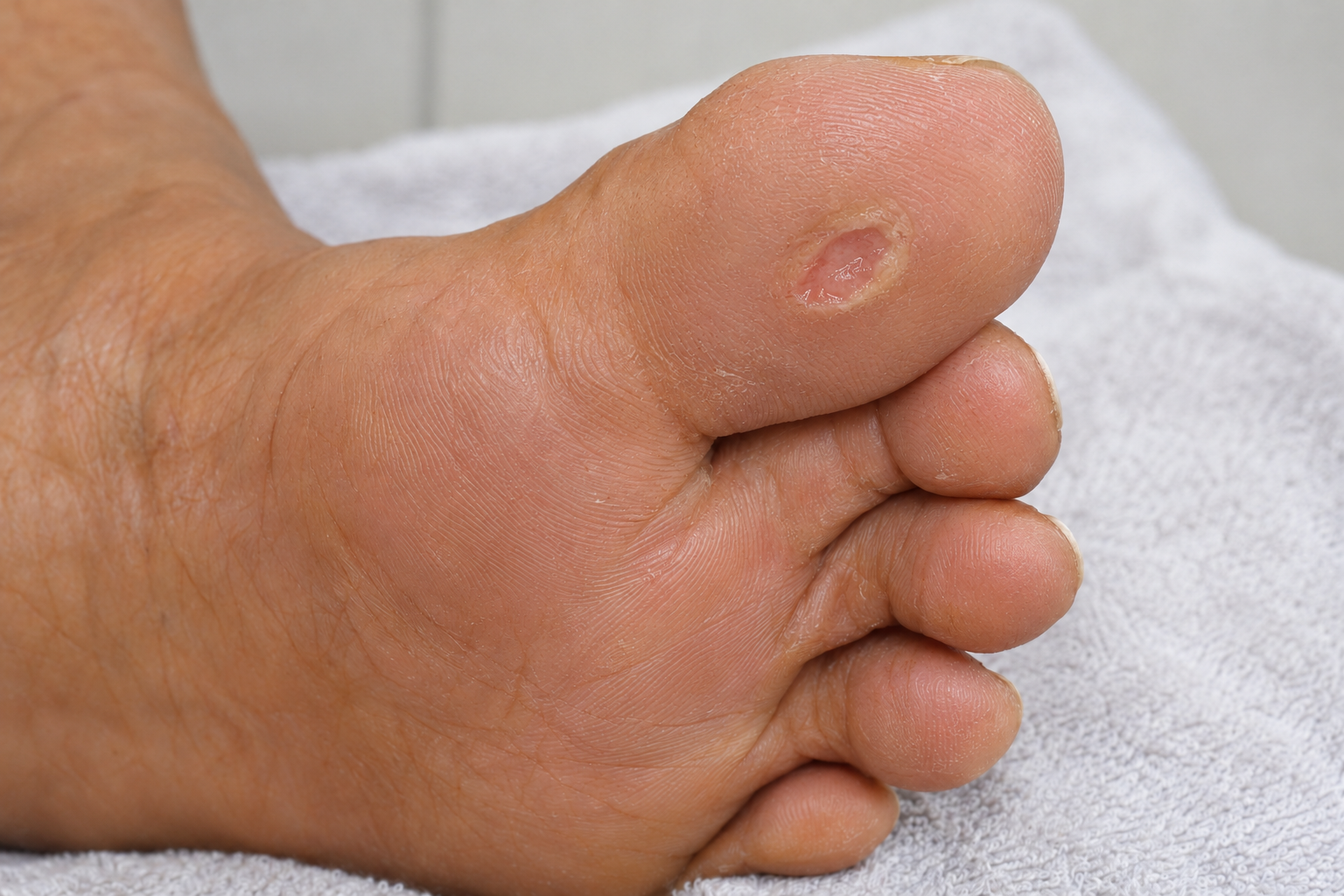
A diabetic foot ulcer, also called a diabetic foot wound or diabetic ulcer, is an open wound on the foot of a person with diabetes that heals more slowly than normal. It usually forms on the sole, toes or heel, where nerve damage, reduced blood flow and repeated pressure combine. Because feeling in the foot is often reduced, many ulcers are painless and go unnoticed until they leak, smell or become infected.
At DR+, a diabetic foot ulcer assessment covers the wound, the blood flow and sensation in the foot, and blood sugar control. Wound care and diabetes management are then planned together. For ulcers that remain slow to heal despite regular wound care, the doctor may consider blood clot therapy, also called autologous blood clot therapy. This treatment uses a small amount of the patient’s own blood, turned into a clot and placed over the wound as a natural, protective cover.
What Is a Diabetic Foot Ulcer?
There are 3 types of diabetic foot ulcer:
Neuropathic ulcer
Caused by nerve damage. Forms under pressure points such as the ball of the foot, often surrounded by callus.
Ischaemic ulcer
Caused by poor blood flow. Tends to appear on the toe tips, heel rim or edges of the foot. It is often painful, and the foot may feel cool.
Neuro-ischaemic ulcer
Has features of both and needs closer monitoring.
What Causes a Diabetic Foot Ulcer?
A diabetic foot ulcer rarely has a single cause. It usually develops when several of these factors affect the same part of the foot.
Nerve Damage (Peripheral Neuropathy)
Long-term high blood sugar damages the nerves in the feet. Without normal sensation, pressure from a tight shoe or a blister no longer registers as pain. Walking continues on the injured area, and the skin breaks down
Reduced Blood Flow (Peripheral Arterial Disease)
Narrowed leg arteries reduce the oxygen and nutrients reaching the skin. Skin with poor circulation breaks down more easily and heals slowly once injured.
Pressure, Calluses and Foot Deformity
Clawed toes, bunions and stiff joints concentrate weight on small areas of the foot. The skin thickens into callus, which can bleed and break down underneath, forming an ulcer hidden below the hard surface.
Footwear and Walking Barefoot
Shoes that are too tight, too loose or have rough inner seams rub against the toes and edges of the foot. Walking barefoot at home or on hot pavements exposes a numb foot to cuts and burns that may go unnoticed.
Poorly Controlled Blood Sugar
Sustained high glucose levels slow wound repair and weaken the body’s ability to fight infection, so a small wound is more likely to become infected.
Other Risk Factors
Other factors that raise the risk of an ulcer forming or recurring include a previous ulcer or amputation, kidney disease, smoking, and a long duration of diabetes. Poor eyesight can also make daily foot checks difficult.
What Are the Symptoms of a Diabetic Foot Ulcer?
Symptoms depend on the type and depth of the ulcer. Because sensation is often reduced, the first sign is frequently something seen or smelled. Common presentations include:
Fluid or staining on socks: Often the first thing noticed, before the wound itself is seen.
An open sore on the sole, toes or heel: Usually round or oval, with a pink, yellowish or pale base.
Callus with a dark spot underneath: A sign of bleeding or breakdown below thickened skin.
Redness, swelling or warmth: In part of the foot or the whole foot, compared with the other side.
Unpleasant smell: Often a sign the wound has become infected.
Pain, or no pain at all: Ulcers from poor blood flow are often painful, while ulcers from nerve damage are often painless.
Noticed a Foot Wound That Is Not Healing?
Book a consultation with our DR+ team for a detailed assessment and a personalised wound care plan.
What Are the Complications of a Diabetic Foot Ulcer?
Left untreated, a diabetic foot ulcer can become infected. Infection may spread to the deeper tissues of the foot, causing cellulitis or an abscess. It may also reach the bone (osteomyelitis), which needs prolonged treatment and often hospital care.
Where blood flow is very poor, tissue can die and turn black (gangrene). Severe infection or gangrene may require removal of a toe, part of the foot or the lower leg to control the spread. Ulcers can also return after healing, particularly if the pressure, footwear or blood sugar problems that caused them are not addressed.
How Is a Diabetic Foot Ulcer Diagnosed?
Wound Assessment
The doctor asks how the wound started and how long it has been present. The wound’s size and depth are measured, and the wound base, surrounding skin and any callus are examined. The wound is also checked for signs of infection.
Sensation Testing
A monofilament or tuning fork is used to test for loss of protective sensation in the feet, which shows whether nerve damage is a factor.
Blood Flow Assessment
The doctor checks the foot pulses and, where needed, uses a handheld Doppler device or compares blood pressure at the ankle and arm (ankle-brachial index) to assess circulation.
Further Tests
Depending on the findings, the doctor may arrange a wound swab, blood tests such as HbA1c and a full blood count, or an X-ray to check for bone infection. If blood flow appears poor, the doctor will refer for vascular assessment.
What Are the Treatment Options for a Diabetic Foot Ulcer?
Diabetic foot ulcer treatment focuses on caring for the wound while addressing the reasons it is not healing. A 2023 review in JAMA identified removal of dead tissue (debridement), reducing pressure on the ulcer, treating poor blood flow and infection, and early referral for multidisciplinary care as first-line therapies. Healing time varies with the size and depth of the wound, blood flow and blood sugar control.
Wound Cleaning and Dressing
The wound is cleaned and dead tissue or callus around it is removed, so that healthy tissue is exposed. A dressing suited to the wound is applied and changed at intervals advised by the doctor.
Pressure Offloading
Reducing weight on the ulcer, by resting the foot, is essential, particularly for ulcers under the ball of the foot or toes. The doctor may advise padding, a recommended shoe or boot, or reduced walking while the wound heals.
Infection Management
Infected ulcers are treated with antibiotics chosen according to the severity of the infection and, where available, swab results. Deep infection or suspected bone infection is referred for hospital care.
Blood Sugar Management
Good blood sugar control supports healing. Diabetes medication and diet are reviewed as part of chronic disease management. Eligible patients may use CHAS, Healthier SG or MediSave for diabetes care within each scheme’s limits.
Blood Clot Therapy
For long-lasting ulcers that have been slow to improve with regular wound care, the doctor may consider blood clot therapy. A small amount of the patient’s own blood is mixed with a clotting agent in a single-use kit to form a clot, which is placed over the cleaned wound as a natural, protective cover. Treatment is usually done once a week, alongside regular wound care. It is considered only when the wound is not infected and has good blood flow.
Dr. Jeffrey Loh
DR+ Medical & Paincare Marsiling
MCR No: M10324A | MBBS (SG) |DIP. OCC. HEALTH (SG) | CERT. PRACTICAL ANDROLOGY (SG)
Dr Jeffrey Loh is a family physician at DR+ Medical & Paincare Marsiling, where he has cared for the community since 2006. His clinical interests include diabetes management, wound care and minor surgery for skin conditions and minor traumatic injuries.
Before joining DR+, Dr Loh ran minor procedure clinics at National Healthcare Group Polyclinics and worked in accident and emergency and orthopaedics. He draws on this experience to assess and treat wounds while managing underlying conditions, such as diabetes, that can affect recovery.
Dr Loh graduated in Medicine and Surgery from the National University of Singapore in 2001 and has been accredited as a Family Physician by the Singapore Medical Council since 2012.

Still have questions about your wound?
Our clinic team is happy to help. Send us your question and we will get back to you.
When Should You See a Doctor for a Diabetic Foot Ulcer?
Any foot wound in a person with diabetes should be checked early. See a doctor if:
- A blister, cut or crack on the foot has not improved within a few days
- You notice fluid or staining on your socks
- A callus has a dark spot or blood underneath it
- Part of the foot is red, swollen or warmer than usual
- You have numbness or tingling in your feet
- You have had a foot ulcer before
How Can You Prevent and Manage a Diabetic Foot Ulcer?
Daily foot care is the most practical way to lower the risk of an ulcer forming or returning:
- Check your feet every day, including the soles and between the toes, using a mirror or asking a family member if needed.
- Keep blood sugar within the targets agreed with your doctor.
- Wear well-fitting covered shoes and clean socks, and check inside shoes before putting them on.
- Avoid walking barefoot, including at home.
- Moisturise dry heels, keeping cream away from between the toes.
- Cut toenails straight across, and have corns and calluses managed by a healthcare professional.
- Stop smoking to improve blood flow to the feet.
- Have a diabetic foot check at least once a year, or more often if you have nerve damage or a previous ulcer.
Frequently Asked Questions (FAQ) About Diabetic Foot Ulcers
What does a diabetic foot ulcer look like?
A diabetic foot ulcer usually looks like a round or oval open sore. It is most often found on the ball of the foot, under the big toe, on the toe tips or on the heel. The base may be pink and moist, yellowish or pale, and it is often surrounded by thick callus. Some ulcers are hidden under a callus with a dark or bloody spot. Fluid staining on a sock is a common first sign.
Are diabetic foot ulcers painful?
Many diabetic foot ulcers are painless, because nerve damage from diabetes reduces sensation in the feet. This is why ulcers can grow larger before they are noticed. Ulcers caused mainly by poor blood flow are more likely to be painful, particularly at night. New pain in a foot that was previously numb can be a sign of infection and should be checked promptly.
Can a diabetic foot ulcer heal on its own?
A diabetic foot ulcer is unlikely to heal well without treatment. Nerve damage, reduced blood flow and high blood sugar slow normal healing, and continued pressure on the wound can make it larger. Small, early ulcers often respond to cleaning, dressing and resting the foot. Any foot wound in a person with diabetes that has not improved within a few days should be checked by a doctor.
Can a diabetic foot ulcer be life-threatening?
A diabetic foot ulcer can become serious if infection spreads into the deeper tissues, bone or bloodstream, or if poor blood flow leads to gangrene. Hospital care, and sometimes amputation, may then be needed to control the infection. Fever, rapidly spreading redness, black or grey skin, or a bad-smelling discharge need same-day care at an Emergency Department. Early assessment of any foot wound can help reduce this risk.
How can I prevent a diabetic foot ulcer?
Check your feet every day, including the soles and between the toes. Keep blood sugar within the targets agreed with your doctor, wear well-fitting covered shoes and avoid walking barefoot, even at home. Moisturise dry heels, cut toenails straight across, and have corns and calluses managed by a healthcare professional. A diabetic foot check at least once a year helps detect changes before a wound forms.
Our Clinics

Singapore 730018
- Mon: 8:00am – 9:00pm
- Tue – Fri: 8:00am – 4:30pm, 7:00pm – 9:00pm
- Sat: 8:00am – 12:30pm
- Sun & PH: Closed
-
Kindly note that clinic’s last registration is 15 minutes before closing time.
-
(Last registration timing – Mon: 8:45pm, Tue – Fri: 4:15pm & 8:45pm, Sat: 12:15pm)
Need Advice On Your Condition?
Please fill out the form and we will be in touch with you shortly.