
Diabetic Wound Care & Foot Ulcer Treatment
Diabetic foot wound not healing? At DR+ Paincare & Medical, we provides personalised diabetic wound care , from early blisters to slow-healing ulcers, including blood clot therapy when suitable. No referral required.
Overview
Diabetic wound management is the medical care of cuts, blisters and ulcers in people with diabetes, usually on the feet, that heal slowly or not at all.
At DR+ Medical & Paincare Clinic, our doctors assess and treat diabetic wounds in the neighbourhood. For wounds that are large, deep or slow to heal, we also offer autologous blood clot therapy, an advanced treatment made from your own blood.
What Is Diabetic Wound?
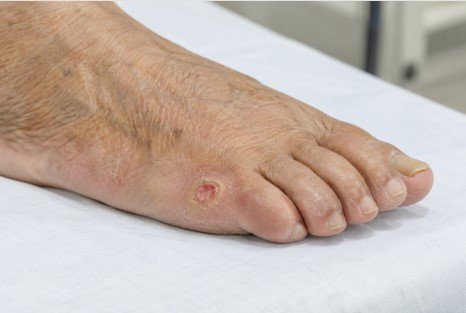
A diabetic wound is a break in the skin of a person with diabetes that heals more slowly than normal, most often on the feet. The most common type is a diabetic foot ulcer: an open sore on the sole, toes or heel that forms where nerve damage, poor blood flow and pressure combine. Without proper care, it can become infected and, in serious cases, lead to amputation.
Many diabetic wounds start small: a blister from new shoes, a crack in dry skin, a cut while trimming nails, or a callus that breaks down underneath. Because feeling in the feet is often reduced, these can go unnoticed until they are larger or infected.
Types of Diabetic Foot Ulcer
A diabetic foot ulcer is the most common type of diabetic wound: an open sore on the foot that is not healing. Doctors group foot ulcers into three types, based on what is causing them.
| Type | Main Cause | What It Usually Looks Like |
|---|---|---|
| Neuropathic Ulcer | Nerve damage, so pressure and injury go unnoticed | Often painless; under the ball of the foot or big toe; surrounded by thick callus; foot feels warm |
| Ischaemic Ulcer | Poor blood flow from narrowed arteries | Often painful; on toe tips, heel or edges of the foot; pale base; foot feels cool with weak pulses |
| Neuro-ischaemic Ulcer | Both nerve damage and poor blood flow | Mixed features; slower to heal and needs closer monitoring |
Knowing the type matters, because it decides the treatment: a neuropathic ulcer needs pressure taken off it, while an ischaemic ulcer may need blood flow restored first.
Why do diabetic wounds heal slowly?
Diabetic wounds heal slowly for three main reasons: nerve damage stops you feeling the injury, poor circulation starves the wound of oxygen and nutrients, and high blood sugar weakens the cells that fight infection and rebuild tissue. Together, these stall the wound in its early inflammatory stage.
That is why early treatment matters. About 9.1% of Singapore residents aged 18–74 have diabetes (MOH National Population Health Survey 2024), and HealthHub reports about two major limb amputations a day in Singapore due to diabetes-related ulcers or gangrene. Singapore General Hospital notes that approximately 85% of these amputations can be avoided with regular screening and early treatment.
Early Warning Signs of A Diabetic Foot Ulcer
Check your feet daily, including between the toes and the soles. See a doctor promptly if you notice:
- A blister, cut or crack that has not improved in a few days
- Red, purple or darkened skin, or a spot that feels warmer than the rest of the foot
- Swelling of the foot or ankle
- Fluid or pus staining your socks
- An unusual smell from the foot
- Hard, thick skin (callus) with dark spots underneath, which can hide an ulcer
- A wound that has become larger, deeper or more painful
Red flags: go to A&E immediately
Go to the nearest Emergency Department if you have a foot wound with fever or chills, rapidly spreading redness, black or grey skin, a foul-smelling discharge, or a foot that is suddenly cold, pale and painful. These can be signs of serious infection, gangrene or blocked blood flow, which need hospital care the same day.
Noticed any of these signs?
Get your foot wound checked early. Send us an enquiry and our clinic team will get back to you.
Stages of A Diabetic Foot Ulcer
Doctors often grade diabetic foot ulcers with the Wagner classification. The grade guides where and how the wound is best treated.
- Grade 0: No open wound, but an at-risk foot (callus, deformity, numbness)
- Grade 1: Superficial ulcer in the skin only
- Grade 2: Deeper ulcer reaching tendon, joint capsule or bone, without abscess
- Grade 3: Deep ulcer with abscess or bone infection (osteomyelitis)
- Grade 4: Gangrene of part of the foot
- Grade 5: Gangrene of the whole foot
Diabetic Wound Treatment Options
Treatment for a diabetic wound depends on its size and depth, the blood flow to the foot, whether it is infected and your overall health. Most wounds need a combination of approaches, adjusted as the wound heals, and good blood sugar control supports all of them.
| Treatment | What It Does | When It May Be Used |
|---|---|---|
| Wound Cleaning and Debridement | Removes dead tissue and debris so healthy tissue can grow | Most diabetic wounds |
| Wound Dressings | Keep the wound clean, protected and at the right moisture level | Every diabetic wound |
| Offloading | Takes pressure off the wound with special footwear, boots or casts | Wounds on the sole, heel or other pressure points |
| Infection Treatment | Antibiotics, and drainage if needed | When there are signs of infection |
| Advanced Wound Therapies | Support healing with treatments such as blood clot therapy, negative pressure wound therapy or skin substitutes | Wounds that are large, deep or slow to heal |
| Restoring Blood Flow | Vascular procedures such as angioplasty or bypass | Wounds with poor circulation |
| Surgery | Removes infected tissue or bone, or closes large wounds | Deep infection, gangrene or large wounds |
How We Treat Diabetic Wound At DR+?
At DR+ Medical & Paincare Clinic, our doctors treat diabetic wounds at every stage, from early blisters and small ulcers to wounds that are large, deep or slow to heal. Each patient gets a wound care plan tailored to their wound, health and daily routine, which may include cleaning and removal of dead tissue, dressings chosen for the wound, infection treatment, offloading advice and blood sugar management. Many early wounds heal with this care alone.
Advanced Treatment: Blood Clot Therapy
For wounds that need more support, we also offer autologous blood clot therapy, an advanced treatment that uses your own blood. A small blood sample is turned into a clot in the clinic and placed on the wound as a natural, protective covering, giving it the cells, platelets and proteins your body already uses to heal. It is applied once a week alongside your usual wound care, and can be started from your first visit if your wound is suitable.
Benefits of Blood Clot Therapy

Uses your own blood
We use a small amount of your own blood, so nothing from a donor or animal is involved. A fresh clot is made at every visit.

Performed in the clinic
The clot is made and applied at our Marsiling clinic during the same visit, with no hospital stay needed.

Minimal discomfort
Most people feel only a small needle prick when we draw blood.

Complements your wound care plan
It works alongside the wound cleaning, footwear advice, infection care and blood sugar support you already get from us.
It may suit wounds that are large, deep or slow to heal, as long as blood flow is adequate and any infection is under control. Our doctors will advise whether it is right for your wound.
Each session takes about 30–45 minutes: a small blood draw, the clot is formed and applied, and the wound is dressed. You go home the same day, and doctors reviews progress at every weekly visit. As with any wound treatment, there is a small risk of irritation or infection, which is checked at every visit.
Wondering if blood clot therapy is suitable for you?
Our doctors will assess your wound, blood flow and overall health, and explain whether it may be an option for you.
What happens during diabetic wound treatment at DR+ Clinic?
Assessment
Doctor examines and measures the wound, checks for infection, tests sensation (monofilament test) and blood flow in the foot, and reviews your blood sugar control.
Your personalised treatment plan
Based on the assessment, Dr Loh recommends the right starting point: wound care alone for a small, new wound; wound care combined with advanced treatment from the first visit for a wound that is large, deep or slow to heal; or treating infection or poor blood flow first.
Wound care tailored to you
Depending on your wound, this includes cleaning and removal of dead tissue (debridement), dressings matched to the wound, antibiotics if there is infection, and offloading advice on footwear or boots that fit your daily routine.
Blood sugar management
Your diabetes medication and diet are reviewed as part of your chronic disease care.
Advanced treatment (if necessary)
For a wound that is large, deep or not shrinking as expected, advanced treatment can be added. The wound is measured at every visit so the plan can be adjusted.
Referral when needed
If the wound shows poor circulation, deep infection or gangrene, we refer you promptly to a hospital or vascular team.
Dr Jeffrey Loh
DR+ Medical & Paincare Marsiling
MCR No: M10324A | MBBS (SG) |DIP. OCC. HEALTH (SG) | CERT. PRACTICAL ANDROLOGY (SG)
Dr Jeffrey Loh is a family physician at DR+ Marsiling, where he has cared for patients in the community since 2006. He graduated in Medicine and Surgery from the National University of Singapore in 2001 and has been accredited as a Family Physician by the Singapore Medical Council since 2012.
Before joining DR+, Dr Loh ran minor procedure clinics at National Healthcare Group Polyclinics and worked in accident and emergency and orthopaedics. His special interests include chronic disease management, such as diabetes, and minor surgery, which he brings to the assessment and care of diabetic wounds.
How long does a diabetic wound take to heal?
Healing time varies from a few weeks for a small, clean wound to several months for a deep ulcer. It depends on the wound’s size and depth, blood flow, infection, blood sugar control and how well pressure is kept off the foot. A common benchmark is that a wound should shrink by about half within four weeks of good care; if it has not, your treatment plan should be reviewed.
Caring for your wound and feet at home
- Keep the dressing clean and dry, and change it as instructed
- Do not walk barefoot, even at home
- Keep weight off the wound and wear the footwear or boot recommended
- Take medication and check blood sugar as advised
- Stop smoking, which reduces blood flow to the feet
- Never self-treat with ointments, heat or sharp tools
- Return early if the wound becomes redder, more painful, smelly or starts to discharge
Prevention starts with a yearly diabetic foot screening, or more often if your feet are at higher risk. At DR+, diabetic foot checks are part of chronic disease care and are available to Healthier SG enrollees. Daily habits matter too: check your feet, moisturise (but not between the toes), cut nails straight across and wear well-fitting covered shoes.
Still have questions about your wound?
Our clinic team is happy to help. Send us your question and we will get back to you.
Why Choose DR+ Medical & Paincare Marsiling for Diabetic Wound Care?

Advanced treatment available in the clinic
For wounds that are large, deep or slow to heal, autologous blood clot therapy can be done in the clinic, often from your first visit if suitable.

No referral required
No appointment or referral is needed.

CHAS and Healthier SG clinic
Eligible patients may use CHAS or Healthier SG chronic subsidies, as well as MediSave, for diabetes care, within each scheme’s limits. Our team will explain what applies to you.

Integrated care
Your wound, blood sugar, medication and diet are managed together by the same doctor, as part of your ongoing chronic disease care
Our Clinics

Singapore 730018
- Mon: 8:00am – 9:00pm
- Tue – Fri: 8:00am – 4:30pm, 7:00pm – 9:00pm
- Sat: 8:00am – 12:30pm
- Sun & PH: Closed
-
Kindly note that clinic’s last registration is 15 minutes before closing time.
-
(Last registration timing – Mon: 8:45pm, Tue – Fri: 4:15pm & 8:45pm, Sat: 12:15pm)
Frequently Asked Questions
What is the best treatment for a diabetic wound that won't heal?
There is no single best treatment. A non-healing diabetic wound needs cleaning and removal of dead tissue, infection control, pressure offloading and good blood sugar control. For wounds that are large, deep or not improving, advanced options such as blood clot therapy may be added, provided blood flow is adequate and infection is under control.
Does DR+ Marsiling offer advanced treatment for diabetic wounds?
Yes. At DR+ Marsiling, Dr Jeffrey Loh treats slow-healing diabetic wounds with autologous blood clot therapy, applied weekly in the clinic alongside your wound care plan. A consultation is needed first to check that your wound and blood flow are suitable
Can a walk-in clinic drain an abscess?
Yes. All DR+ clinics accept walk-ins during opening hours, and drainage can often be done on the same day. You can WhatsApp +65 8777 9500 to check the queue first.
Can advanced treatment start on my first visit?
Yes, if your wound is suitable. Dr Loh assesses the wound, blood flow and any infection at your first visit. If the wound is clean and blood flow is adequate, blood clot therapy can be applied the same day. If there is infection or poor circulation, that is treated first.
How painful is draining an abscess?
The local anaesthetic injection stings for a few seconds. Infected skin does not numb as well as normal skin, so you may feel some pressure or discomfort during drainage. Tell the doctor if you do, as more anaesthetic can be given. The throbbing usually eases once the pus is released.
Can a GP treat a diabetic foot ulcer?
Yes. Many superficial and moderate diabetic foot ulcers can be managed by a GP with wound care experience, with regular follow-up. Deep infections, gangrene or poor circulation need hospital or vascular care, and your GP will refer you.
Can an abscess go away without drainage?
A small boil may drain and heal on its own with warm compresses. A larger abscess usually needs to be drained, because antibiotics alone often cannot reach the pus inside
Why is my diabetic wound not healing?
The most common reasons are poor blood flow, infection, high blood sugar and continued pressure on the wound. Smoking and ill-fitting shoes also slow healing. A doctor can check which factors apply to you.
How do I know if my diabetic wound is infected?
Signs of infection include increasing redness, warmth, swelling, pain, pus or a bad smell. Fever or rapidly spreading redness is an emergency and needs same-day hospital care.
Do I need a referral to see a doctor at DR+ Marsiling?
No referral is needed. You can walk in during opening hours or call 8777 9500
Can I use Medisave or CHAS for diabetic wound care?
Depending on your eligibility and the care you receive. Diabetes is one of the chronic conditions under MOH’s Chronic Disease Management Programme, so MediSave and CHAS or Healthier SG chronic subsidies may help pay for consultations, tests and medicines to manage diabetes and its complications, within each scheme’s limits. Whether a specific wound treatment can be claimed depends on the scheme rules, so our clinic team will explain what applies to you before treatment starts.
Updated on 15 Oct 2026
Need Advice On Your Condition?
Please fill out the form and we will be in touch with you shortly