CONTENTS
Quick Answer:
Yes, obesity is a well-established contributor to knee pain. Extra body weight multiplies the mechanical load on the knee joint with every step, wearing down cartilage faster than it can repair itself, while fat tissue also releases inflammatory chemicals that intensify joint pain and stiffness. In Singapore, obesity prevalence rose from 10.5% to 12.7% of residents between 2019 and 2024, making this link increasingly relevant. Medically supervised weight loss can meaningfully reduce knee pain and slow further joint damage.
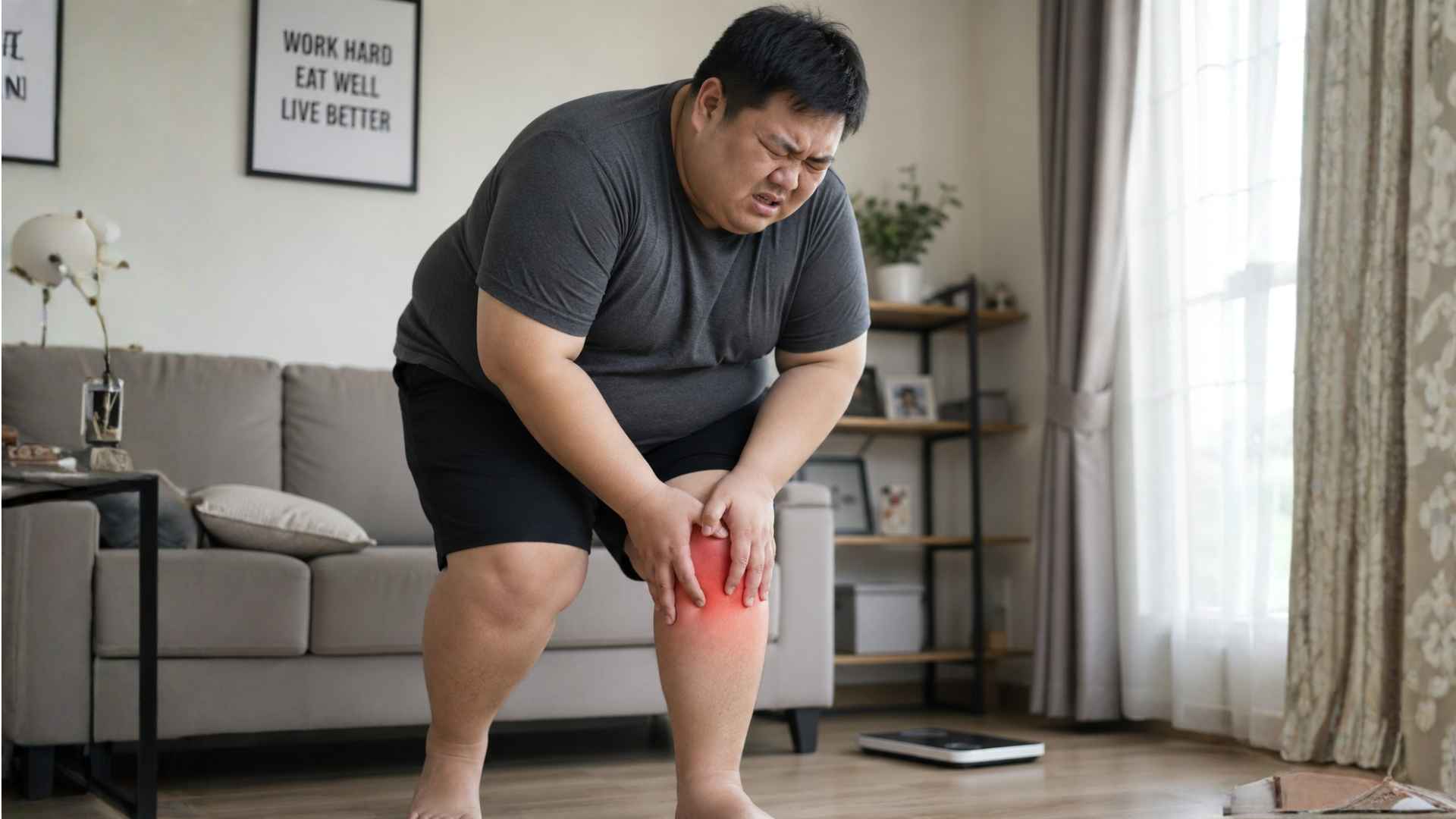
For many people in Singapore, knee pain shows up quietly at first. A dull ache after a flight of stairs at the MRT station. Stiffness getting up from a low stool at a hawker centre. A twinge that appears on the walk from the car park to the office. Over months or years, it can progress from an occasional nuisance to a daily limitation, and for a significant number of patients, body weight is a major, and modifiable, part of the picture.
It is worth being clear about what this article is, and is not, saying. Obesity does not mean someone is at fault for their knee pain, and not everyone who is overweight develops joint problems. But the mechanical and biological relationship between excess weight and the knee joint is well documented, and understanding it can help patients make sense of their symptoms and their options. This article explains how obesity affects the knee, what other factors typically contribute alongside it, how to interpret your own symptoms, and what evidence-based treatment looks like in Singapore.
Understanding the Knee: Why It Is Vulnerable to Extra Body Weight
The knee is the largest joint in the body and one of the few that bears your full body weight while also allowing a wide range of motion. It is formed where the femur, tibia, and patella meet, cushioned by cartilage and a pad of fibrocartilage called the meniscus, and stabilised by a network of ligaments and the surrounding thigh and calf muscles. This combination of load-bearing and mobility makes it mechanically efficient, but also particularly exposed to wear when the forces passing through it increase.
With each step of level walking, the knee experiences a load several times a person’s body weight, and this rises further when climbing stairs, squatting, or carrying items, activities that are part of everyday life in Singapore’s high-rise housing and public transport environment. For someone carrying additional body weight, this means the joint is repeatedly absorbing greater force, thousands of times a day, year after year. Singapore’s own data reflects why this matters at a population level. Obesity prevalence among residents rose from 10.5% in 2019 to 2020 to 12.7% in 2023 to 2024, according to the National Population Health Survey, and a local cohort study of Singaporean Chinese adults the higher a person’s BMI, the greater their risk of eventually needing a total knee replacement for severe osteoarthritis.
What Causes Knee Pain in People Living With Obesity?
Obesity contributes to knee pain through several distinct but overlapping mechanisms, not a single cause. In short: extra weight wears down the joint mechanically, fuels inflammation, and changes how you walk — often all at once, which is why treatment usually needs to address more than just the weight itself. Understanding each one helps explain why weight management is often part of, rather than the whole of, a treatment plan.
Mechanical Overload on Cartilage
Cartilage acts as a shock absorber between the femur and tibia, but it depends on regular loading and unloading to draw in nutrients and stay healthy. When a joint is chronically overloaded, cartilage cells cannot keep pace with the wear, and the cartilage thins faster than it regenerates. Over years, this progressive thinning is a central driver of knee osteoarthritis.
Systemic Inflammation From Fat Tissue
Body fat is not simply passive padding. It is metabolically active tissue that produces hormone-like chemicals known as adipokines (including leptin), which can trigger inflammation. These molecules circulate in the bloodstream and can also act locally around the knee, including through a fat pad situated just beneath the kneecap, contributing to inflammation within the joint itself, independent of mechanical load.
Altered Gait and Joint Alignment
Carrying extra weight, particularly around the abdomen, shifts a person’s centre of gravity and can change the way they walk. This often places uneven stress across the knee, with the inner, or medial, side of the joint typically bearing a disproportionate share of the load. Over time, this uneven wear can accelerate cartilage loss on one side of the joint more than the other.
Weakened Supporting Muscles
Reduced mobility and activity, which frequently accompany obesity, can lead to weaker thigh muscles, particularly the quadriceps. These muscles play an important role in stabilising the knee and absorbing shock during movement. When they weaken, more of the load is transferred directly to the joint structures rather than being shared with the surrounding muscles.
Increased Risk of Meniscus and Ligament Strain
Higher body weight increases the force involved in everyday movements such as pivoting, kneeling, or an awkward step, which raises the likelihood of meniscus tears and ligament strain, even without a dramatic injury. These injuries can also be slower to heal in the context of ongoing joint overload.
Referred Strain From the Hips and Lower Back
The knee does not work in isolation. Excess weight also increases strain on the hips and lower back, and the body often compensates elsewhere — for example, an altered stride to protect a painful hip can end up placing extra stress on the knee instead.
Accelerated Progression of Existing Osteoarthritis
For patients who already have early knee osteoarthritis, ongoing excess weight tends to accelerate its progression, meaning symptoms and joint damage can advance more quickly than they would at a lower body weight, even where the underlying degenerative process began for unrelated reasons such as age or a past injury.
Where Does It Hurt? Interpreting Your Symptoms by Location
Where knee pain is felt can offer useful clues about what is happening inside the joint, although it never replaces a proper clinical assessment.
- Front of the knee, around or behind the kneecap: often linked to patellofemoral irritation — irritation where the kneecap meets the thigh bone — which can be aggravated by extra load during stair climbing or prolonged sitting.
- Inner, medial side of the knee — medically called the medial compartment — one of the most common presentations in obesity-related joint problems, since this side typically bears the greatest share of uneven load, and is frequently associated with medial compartment osteoarthritis.
- Outer, lateral side: less typical in obesity-related cases and may point toward a different cause, such as iliotibial band irritation — irritation of the band of tissue that runs along the outer thigh.
- Back of the knee: can indicate fluid accumulation, sometimes felt as tightness or swelling behind the joint.
These patterns are a starting point for understanding your symptoms, not a diagnosis, and a knee that has begun changing in a new or unexpected way should always be assessed by a doctor.
Symptoms That Often Accompany Obesity-Related Knee Pain
Obesity-related knee pain rarely presents as pain alone. Many patients notice stiffness that is most pronounced first thing in the morning or after sitting for an extended period, easing gradually once they begin moving. Swelling around the joint is also common, reflecting the low-grade inflammation described earlier, and some patients describe a sensation of grinding or clicking, medically known as crepitus, as roughened cartilage surfaces move against one another. Reduced range of motion, such as difficulty fully bending or straightening the knee, and a general sense of instability or the knee giving way during weight-bearing activity, are also frequently reported as the condition progresses.
Certain symptoms warrant urgent medical attention rather than routine monitoring:
RED FLAGS — SEEK PROMPT MEDICAL ATTENTION
- Sudden, severe swelling or the knee locking in place and unable to bend or straighten
- Inability to bear any weight on the affected leg
- Visible deformity following an injury
- Fever accompanying a hot, swollen joint, which can indicate infection
- Numbness, tingling, or a change in skin colour below the knee
- Severe pain that does not ease with rest or simple pain relief
How Is Obesity-Related Knee Pain Diagnosed?
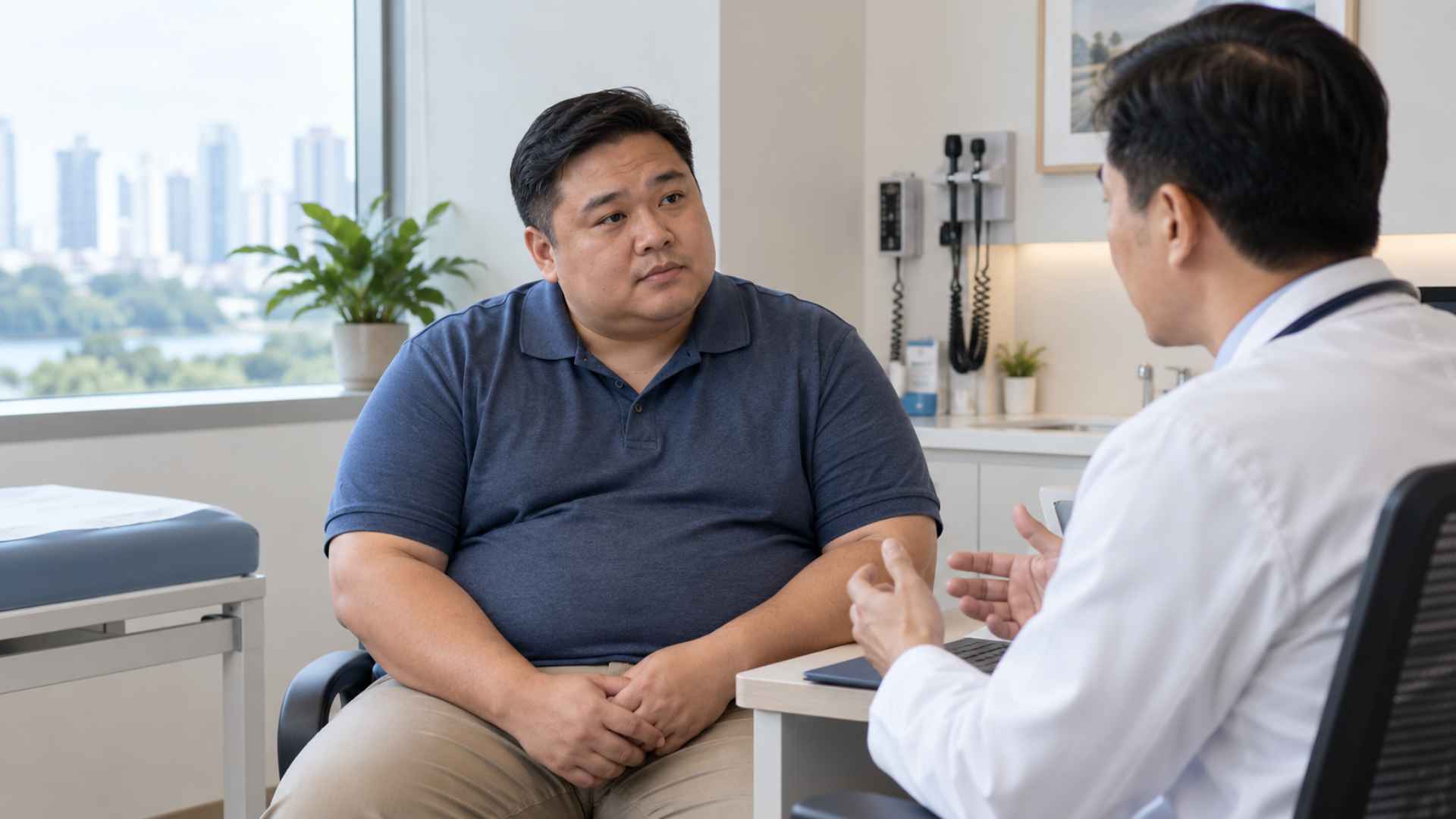
Diagnosis begins with a detailed history, covering how and when the pain started, its pattern throughout the day, previous injuries, and any family history of joint disease. Your doctor will also review broader health factors relevant to obesity, including blood pressure, blood sugar, and any hormonal conditions that may be contributing to weight gain itself. This is followed by a physical examination of the knee, assessing swelling, range of motion, stability of the supporting ligaments, and tenderness at specific points around the joint, which helps narrow down which structures are involved.
Where the history and examination suggest structural change, imaging may be recommended. An X-ray can show narrowing of the joint space and bone changes consistent with osteoarthritis, while an ultrasound can assess soft tissue, fluid, and inflammation in real time during the consultation. In parallel, a GP will typically assess body composition and relevant metabolic markers, since factors such as insulin resistance or thyroid dysfunction can affect both weight and joint symptoms, and identifying them shapes how the overall treatment plan is built.
Obesity and Knee Pain Treatment in Singapore: What Are Your Options?
Effective treatment for obesity-related knee pain starts with an accurate diagnosis of exactly which structures are affected and how, since the right combination of options differs from patient to patient. At DR+ Medical & Paincare, our pain-trained GPs assess the knee itself alongside the underlying weight and metabolic factors contributing to it, rather than treating either in isolation.
Activity Modification and Physiotherapy
Adjusting activity to reduce repetitive high-impact strain, combined with targeted physiotherapy to strengthen the muscles supporting the knee, particularly the quadriceps, is usually the starting point. Low-impact activities such as swimming or cycling allow patients to stay active while reducing joint loading during the initial phase of a treatment plan.
Coreflex Injections
For patients with significant inflammation and muscle spasm around the knee, Coreflex Injections combine a local anaesthetic, anti-inflammatory, and muscle relaxant to interrupt the pain cycle. Relief typically begins soon after treatment due to the anaesthetic component, with fuller results generally noticeable within one to three weeks.
Intra-Articular Injections
Where pain originates within the joint itself, Intra-Articular Injections deliver medication, which may include anti-inflammatory agents or hyaluronic acid, directly into the knee to reduce inflammation, ease pain, and support smoother movement.
GP Supervised Weight Management Programme
For many patients, addressing the weight side of the equation is what determines long-term outcomes for the knee. Our GP Supervised Weight Management Programme begins with blood tests and hormonal screening to identify what may be driving weight difficulty, such as insulin resistance, thyroid dysfunction, or PCOS, before building an individualised nutrition, activity, and, where clinically appropriate, medical plan around it. Reducing joint load through sustainable weight loss can ease pain and slow further cartilage wear, working alongside any direct knee treatment rather than replacing it.
No treatment option in this article should be understood as guaranteeing a specific outcome. Response to treatment varies between individuals, and your DR+ GP will discuss which combination of options is realistic and appropriate for your situation.
A Doctor’s Perspective
One pattern we see often at DR+ is two patients who both describe “knee pain from being overweight,” but who actually need quite different plans. The first has pain that is worse purely with load, such as stairs or long walks, and eases significantly with rest. This tends to reflect a more mechanical picture, cartilage and joint surfaces under excess strain, and often responds well to a combination of activity modification, targeted injection therapy, and gradual weight reduction. The second describes pain that is present even at rest, sometimes worse in the morning, with a background ache that doesn’t fully settle. This pattern more often points toward a stronger inflammatory component, driven partly by adipokine activity from fat tissue itself, and tends to need inflammation to be addressed more directly, alongside the mechanical side, before weight loss alone can make a meaningful difference.
The clinical takeaway is that “lose weight and the knee pain will go” is an oversimplification for a meaningful number of patients. The mechanical and inflammatory contributions often need to be identified and treated somewhat separately, even though they are connected. This is why we see real value in assessing the knee and the metabolic picture together rather than sending a patient off to lose weight in isolation and reassessing much later, by which point avoidable joint damage may already have progressed further than necessary.
Managing Obesity-Related Knee Pain Day to Day: Practical Tips
Small, consistent changes can meaningfully reduce daily knee strain while a longer-term treatment plan takes effect. Choosing low-impact activities such as swimming, cycling, or using a stationary bike helps maintain fitness and joint mobility without the repetitive pounding of high-impact exercise. Supportive, well-fitted footwear with adequate cushioning reduces the shock transmitted through the knee with every step, and using a stair rail or taking stairs at a slower, controlled pace can ease pressure during a common daily trigger. Maintaining consistent, gentle strengthening of the thigh muscles, guided by a physiotherapist where possible, helps the knee better absorb load over time. Even modest weight reduction, in the range of five to ten percent of body weight, has been associated in research with meaningful improvements in knee pain and function for many patients. These are supportive measures, not substitutes for a proper diagnosis.
When Should You See a Doctor in Singapore?
Knee pain that persists beyond a couple of weeks, worsens progressively, or begins to interfere with sleep, work, or daily mobility is worth having assessed rather than managed indefinitely on your own. This is especially true if you are also carrying excess weight, since the underlying mechanical and inflammatory processes tend to progress rather than resolve without intervention. Early assessment matters because it allows treatment, whether that means knee osteoarthritis management, targeted injection therapy, or a structured weight management plan, to begin before cartilage loss advances further.
No referral is required to see a GP in Singapore for knee pain, and walk-ins are welcome at all 12 DR+ clinics island-wide during operating hours. Speak to a pain-trained GP at DR+ to find out what may be contributing to your knee pain and whether treatment, including our GP Supervised Weight Management Programme, is right for you.
Conclusion
The link between obesity and knee pain is well established, driven by a combination of mechanical overload, inflammation, altered movement patterns, and muscle weakness, and it becomes more relevant in Singapore as national obesity rates continue to rise. Importantly, this relationship works in both directions: joint pain often makes it harder to stay active, which can make weight management more difficult, and the two issues frequently need to be addressed together rather than one after the other. If knee pain and excess weight have been affecting you, an assessment with a pain-trained GP can help identify exactly what is happening in the joint and build a realistic plan around it. Speak to a DR+ doctor in Singapore today to take the first step toward a clearer diagnosis.
Frequently Asked Questions
Does losing weight actually reduce knee pain?
For many patients, yes. Since walking transmits several times a person’s body weight through the knee joint, even a modest reduction in body weight can meaningfully lower the cumulative load the joint experiences each day. Research suggests that weight loss in the range of five to ten percent of body weight is often associated with noticeable improvements in pain and function, though results vary depending on how much joint damage has already occurred and other contributing factors.
Can knee pain from obesity go away on its own?
It is unlikely to fully resolve without some change, since the underlying mechanical overload and inflammation typically persist as long as the contributing factors remain unaddressed. Mild, occasional discomfort may ease with rest, but pain that is recurring or progressively worsening usually needs an assessment to identify its exact cause and an appropriate treatment plan, which may include weight management, physiotherapy, or targeted injection therapy.
What are the red flag symptoms I shouldn’t ignore?
Sudden severe swelling, a knee that locks and cannot be bent or straightened, inability to bear any weight, visible deformity after an injury, fever with a hot swollen joint, or numbness and colour change below the knee all warrant prompt medical attention rather than waiting to see if symptoms settle.
Are there non-surgical treatments for obesity-related knee pain in Singapore?
Yes. Options available at DR+ include activity modification and physiotherapy, minimally invasive injection therapies such as Coreflex Injections, Intra-Articular Injections, and a GP Supervised Weight Management Programme addressing the underlying metabolic contributors to weight gain. Surgical options are generally considered later, if conservative and minimally invasive treatments are insufficient.
How is obesity-related knee pain diagnosed at DR+?
A DR+ pain-trained GP takes a detailed history and performs a physical examination of the knee, assessing swelling, stability, and range of motion, alongside a review of relevant metabolic factors such as blood sugar and thyroid function. Where needed, imaging such as an X-ray or point-of-care ultrasound may be used to assess the extent of joint changes before a treatment plan is developed.
About DR+ Medical & Paincare
DR+ Medical & Paincare is a network of 12 heartland GP clinics across Singapore, offering primary care alongside pain-trained treatment for musculoskeletal conditions, including knee pain and osteoarthritis. DR+ GPs are trained under the Singapore Paincare Academy’s Painostic® methodology, bringing structured pain assessment and non-surgical treatment options, including a GP Supervised Weight Management Programme, to the community level.
Medical Disclaimer: This article is intended for general informational purposes only and does not constitute medical advice. Please consult a qualified healthcare professional for diagnosis and treatment tailored to your individual condition.
Latest Articles