CONTENTS
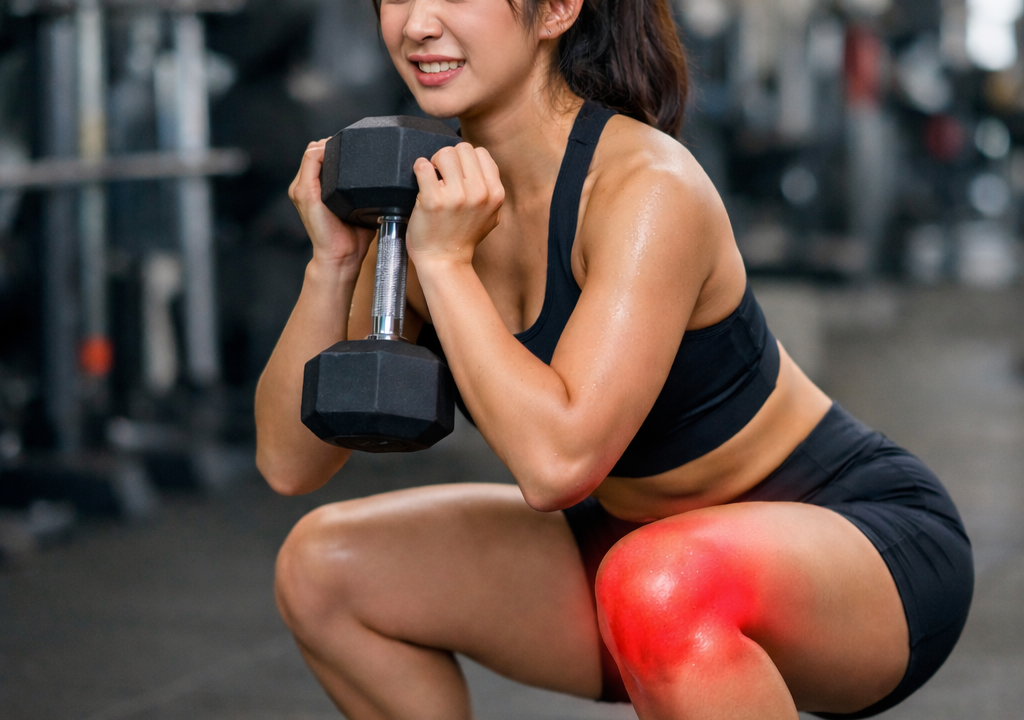
Knee pain after squats is one of the most common complaints among gym goers and athletes. If your knee hurts after squats, especially at the front of the knee or below the kneecap, it usually points to irritation from overload, muscle imbalance, or poor tracking.
Most cases are manageable. Most cases are not serious and improve with the right adjustments.
The important part is knowing whether you are dealing with temporary irritation or something that needs proper assessment. Consulting a knee pain doctor in Singapore can help identify the underlying cause early and prevent the problem from becoming chronic.
If knee pain after squats keeps returning, worsens, or starts affecting stairs and daily movement, it should not be ignored.
Why Do You Get Knee Pain After Squats?
Squatting places controlled load through the kneecap, tendon, cartilage, and surrounding muscles. When mechanics are efficient and progression is gradual, the knee tolerates this well.
Problems arise when:
-
Load increases too quickly
-
Hip strength is insufficient
-
Ankle mobility is restricted
-
Recovery is inadequate
-
Training continues despite early warning pain
Even small mechanical errors, repeated under load, can gradually irritate the joint.
The Biomechanics Behind Front Knee Pain
The kneecap sits in a groove on the thigh bone. During squats, it should glide smoothly.
If the hips are weak or the knees collapse inward, tracking may become slightly uneven. Over time, this increases stress at the front of the knee.
Important points many lifters misunderstand:
-
Knees moving over toes is not automatically harmful
-
Limited ankle mobility can force excessive forward knee stress
-
Weak glutes increase load on the kneecap
Front knee pain after squats is often more about load distribution than “bad knees.”
The Most Common Causes of Knee Pain After Squats
1. Patellofemoral Pain Syndrome
Patellofemoral pain syndrome is one of the leading causes of front knee pain after squats.
You may feel:
-
Dull ache at the front of the knee
-
Pain when descending stairs
-
Discomfort after leg day
-
Stiffness after prolonged sitting
This is especially common in lifters who increase load too quickly or spend long hours sitting, leading to weaker glute muscles.
2. Patellar Tendon Irritation
Pain below the kneecap after squats often suggests tendon overload.
The patellar tendon connects the kneecap to the shin bone. Repetitive loading without adequate recovery can cause inflammation or micro strain.
Symptoms include:
-
Sharp pain during deep squats
-
Tenderness just below the kneecap
-
Pain after jumping or sprinting
Athletes who combine squats with running or court sports are more prone to this.
3. Meniscus Irritation
If your knee hurts after squats and feels deep inside the joint, especially with twisting or locking, the meniscus may be involved.
The meniscus acts as a shock absorber between the thigh and shin bones. Excessive load or awkward twisting under weight may irritate it.
Warning signs:
-
Clicking or catching
-
Swelling after activity
-
Pain at full squat depth
Persistent symptoms should be assessed properly before returning to heavy loading.
4. Early Cartilage Wear
In adults over 30 or 40, knee pain after squats may sometimes reveal early cartilage thinning.
You may notice:
-
Morning stiffness
-
Mild swelling after workouts
-
Grinding sensation
-
Pain after prolonged sitting
Proper squats do not cause arthritis. However, if cartilage is already sensitive, loaded squats may trigger symptoms.
Where Exactly Is Your Knee Pain?
Location helps narrow the cause.
Front of knee: Often tracking irritation
Below kneecap: Tendon overload
Inner knee: Possible meniscus strain
Deep inside joint: Cartilage or meniscus
With swelling and instability: Needs assessment
If you are unsure, a proper examination can identify the exact structure involved.
Is Knee Pain After Squats Normal?
Some discomfort after leg day can be normal.
Here is how to tell the difference.
Normal Muscle Soreness
-
Appears 24 to 48 hours later
-
Feels like muscle tightness
-
Improves gradually
-
No joint swelling
Concerning Joint Pain
-
Sharp during squatting
-
Swelling within hours
-
Pain lasting more than 1 to 2 weeks
-
Knee feels unstable
If pain does not settle with temporary load reduction, it may not be simple soreness.
Common Gym Mistakes That Cause Knee Pain When Squatting
Many cases of knee pain after squats are linked to training habits.
Frequent mistakes include:
-
Increasing weight too quickly
-
Skipping warm-up sets
-
Weak hips from prolonged sitting
-
Knees collapsing inward
-
Dropping too deep without mobility
-
Training through early warning pain
Small errors repeated under load can gradually irritate the joint.
Should You Stop Squatting If Your Knee Hurts?
You may continue modified training if:
-
Pain is mild and improves during warm-up
-
No swelling is present
-
Pain remains low and controlled
Stop immediately if:
-
Pain is sharp during descent
-
Swelling develops
-
Knee locks or gives way
-
Walking becomes painful
Continuing heavy squats through joint pain increases risk of chronic irritation.
How To Fix Knee Pain After Squats
Most gym-related knee pain improves with structured correction.
Step 1: Reduce Load Temporarily
Avoid heavy or deep squats for 1 to 2 weeks. Let irritation settle.
Step 2: Strengthen Supporting Muscles
Focus on:
-
Glute strengthening
-
Hip abductor activation
-
Hamstring strengthening
-
Controlled split squats
-
Romanian deadlifts
Strong hips reduce knee stress.
Step 3: Improve Mobility
Restricted ankles and tight quadriceps increase forward knee stress.
Work on:
-
Ankle dorsiflexion drills
-
Calf stretches
-
Hip flexor mobility
Better mobility improves squat mechanics.
Step 4: Gradual Return
Stage 1: Pain-free bodyweight squat
Stage 2: Slow tempo squat
Stage 3: Light resistance
Stage 4: Gradual load progression
Avoid sudden spikes in volume.
When Self-Correction Is Not Enough
If symptoms persist beyond two weeks despite adjusting load and strengthening, it may indicate deeper tissue irritation.
At this stage, guessing can delay recovery. A focused assessment helps determine whether continued rehabilitation alone is sufficient or whether additional treatment should be considered.
What Happens During A Clinical Assessment?
If knee pain after squats does not improve, an evaluation may include:
-
Movement analysis
-
Squat mechanics review
-
Strength testing
-
Joint palpation
-
Stability testing
Imaging such as X-ray or MRI is only considered if structural injury is suspected.
Early identification allows targeted treatment instead of repeated trial and error.
Treatment Options If Knee Pain Persists After Squats
If knee pain continues despite rest, ice, and activity modification, a proper medical assessment helps identify the exact structure involved. Treatment is then tailored according to the underlying cause, whether it is tendon irritation, cartilage stress, ligament strain, or early joint degeneration.
The aim is to restore proper function so you can return to squats safely.
1. Platelet-Rich Plasma (PRP) for Chronic Tendon or Overuse Injuries
PRP therapy uses a concentrated portion of your own blood that contains growth factors which may support tissue healing.
It is commonly considered for:
-
Chronic patellar tendon pain
-
Persistent tendon irritation after sports
-
Symptoms lasting several months despite rehabilitation
PRP is typically used when pain has become prolonged and is not settling with conservative measures alone. The goal is to support the body’s natural repair response rather than simply suppress symptoms.
2. Coreflex Injections for Persistent Knee Pain
Coreflex is used in selected cases where ongoing inflammation or joint-related pain continues to affect movement.
It is often considered for individuals who:
-
Experience pain during squats or stair climbing
-
Have symptoms linked to tendon or joint lining irritation
-
Have not responded fully to rest and physiotherapy
Treatment decisions are based on clinical findings and imaging where necessary.
3. Intra-articular Injections for Cartilage-Related Discomfort
If knee pain is related to cartilage wear or early degenerative changes, hyaluronic acid injections may help improve joint lubrication.
Better joint lubrication can reduce friction and improve comfort during movement, especially for active individuals who want to continue gym training or sports.
4. Shockwave Therapy for Stubborn Tendon Irritation
Shockwave therapy may be used for persistent tendon conditions that do not improve with exercise therapy alone.
It works by stimulating circulation and promoting tissue recovery in chronically irritated areas.
FAQ: Knee Pain After Squats
Why does my knee hurt after squats but not during?
Inflammation can build up after loading. Tendon irritation often feels worse later rather than during the exercise itself.
Can squats damage your knees?
When performed with proper form and progressive loading, squats do not damage healthy knees.
Is front knee pain after squats serious?
Most cases are mechanical and reversible. Persistent swelling or instability requires assessment.
Should I use knee sleeves?
Knee sleeves may provide warmth and compression, but they do not fix underlying tracking or strength issues.
When can I return to heavy squats?
Once you can squat pain-free at bodyweight and light resistance without swelling, gradual progression is appropriate.
When to Seek Assessment
Consider a medical evaluation if:
-
Knee pain lasts more than 2 to 3 weeks
-
Pain keeps returning when you resume squats
-
There is swelling, clicking, or instability
-
Training performance is limited by discomfort
Persistent knee pain after squats should not be dismissed as “just overuse.” Early assessment can prevent minor irritation from progressing into more significant joint problems.
Key Takeaways
Knee pain after squats is common, especially among active individuals who train consistently. In many cases, the issue is mechanical and improves with proper load management and strengthening.
However, pain that keeps returning is a signal. It usually means something in the joint, tendon, or movement pattern has not fully recovered.
If knee pain after squats is affecting your training, stairs, or daily movement, consider visiting your nearest DR+ Medical & Paincare clinic for an evaluation.
Latest Articles